


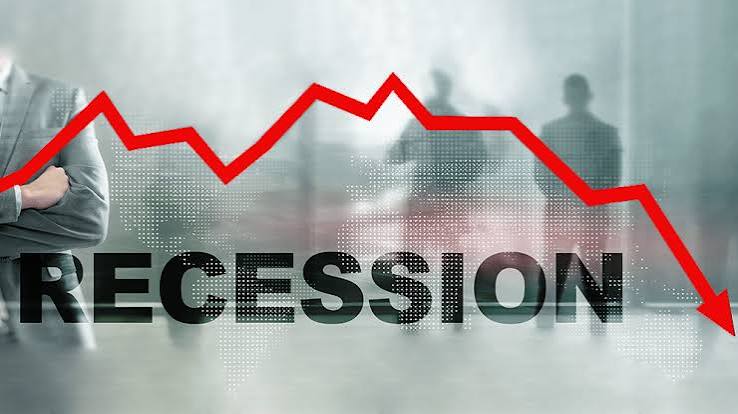
Is Australia Heading for a Recession, or Something Far Worse?
Jamie McIntyre Warns Australians to Prepare for Economic Turmoil, Rising Taxes and an Increasingly Uncertain Future
Australian Business Review | Interview with Jamie McIntyre
As Australian households grapple with mortgage pressures, housing affordability, the rising cost of living and economic uncertainty, Australian entrepreneur, property developer and financial commentator Jamie McIntyre believes the country faces challenges far greater than another economic downturn.
McIntyre, who has spent almost three decades identifying investment cycles and global economic trends, says Australians have become dangerously complacent after enjoying one of the longest periods of economic prosperity in modern history.
He claims his investment predictions and strategies have helped his investor clients generate more than $10 billion in wealth over the past three decades, through major financial trends involving gold, silver, Australian and US property, Bitcoin and international real estate.
Among the examples McIntyre highlights are recommending gold at approximately US$300 an ounce, Bitcoin at US$75, and later selling Bitcoin at US$110,000.
A hypothetical US$100,000 investment in Bitcoin at US$75, sold at US$110,000, would have grown to approximately US$146.7 million, before fees and taxes.
Similarly, a US$100,000 investment in gold at US$300 an ounce would be worth approximately US$1.3 million at a gold price of US$3,900.
McIntyre also points to his acquisition of approximately 400 American properties around the bottom of the US property market in 2010, when the Australian dollar was exceptionally strong and subsequently reached approximately US$1.10.
For decades, he encouraged Australian investors to accumulate property, arguing that well-selected Australian real estate could double approximately every seven to ten years over the long term.
However, several years ago, McIntyre began warning investors to diversify internationally, particularly towards emerging lifestyle destinations such as Bali and Lombok, Indonesia.
He believes the growing interest in these destinations among Australians and Europeans supports his prediction that increasing numbers of Westerners would seek more affordable lifestyles overseas.
“Successful investing is about identifying major financial trends before they become obvious to everybody else,” McIntyre says.
“People can call my predictions controversial, but I believe my track record speaks for itself.”
The Controversial Financial Forecaster Who Says His Warnings Are Coming True
McIntyre is also the founder of the Australian National Review (www.anr.news) and host of the controversial The McIntyre Report, where he discusses global economics, financial markets, government policy, international affairs and what he describes as the growing influence of a globalist agenda over Western nations.
For years, McIntyre says he has warned Australian National Review readers that Western economies face an increasingly dangerous combination of excessive government debt, rising taxation, mass immigration, expanding surveillance, declining affordability and growing social division.
He believes these developments reflect more than isolated economic and political decisions.
“I’ve been warning readers for years about what I believe is a globalist agenda that threatens the prosperity and freedoms of Western countries.
“Look at what’s happening across Britain, France, Germany and increasingly Australia.
“The rising cost of living, social unrest, growing surveillance and increasing financial pressure on ordinary working families are exactly the kinds of developments I’ve been warning about.
“What was once dismissed as controversial is now, in my opinion, unfolding before our own eyes.”
McIntyre has frequently attracted critical media coverage, some of which he describes as misleading or false.
He argues that vested interests have little incentive to see ordinary Australians become financially independent or challenge conventional investment thinking.
“I believe there are powerful vested interests that don’t want ordinary Australians listening to independent voices challenging the financial establishment.
“Rather than examining my predictions and the outcomes, some critics prefer attacking my credibility.
“I consider my forecasting record to be among the strongest in Australian financial commentary.
“Time has consistently vindicated many of my controversial views, particularly when it comes to major financial trends.”
McIntyre now believes Australia is approaching one of its most dangerous economic periods in generations.
His message is confronting: Australians should seriously consider relocating some of their assets, and potentially themselves, overseas before economic and social conditions deteriorate further.
“Australia Is Heading for a Recession, and Potentially Something Much Worse”
Australian Business Review: Jamie, with Australians facing interest rate pressures, increasingly unaffordable housing and a cost-of-living crisis, do you believe Australia is heading for a recession?
Jamie McIntyre:
“Yes. I believe Australia is heading for a recession, and quite possibly something significantly worse.
“Most Australians have never experienced a prolonged, serious economic downturn.
“Paul Keating famously described the 1991 recession as ‘the recession we had to have’. Although Australia experienced a brief recession during COVID in 2020, the country has largely enjoyed more than three decades without the sort of prolonged economic pain experienced in earlier generations.
“Australians have grown up believing that property prices always rise, the economy always recovers and their standard of living will continue improving.
“Unfortunately, I believe that assumption is about to be seriously challenged.
“I’ve been warning Australians for the past three or four years to consider moving some of their assets overseas, diversifying internationally and establishing alternative residency options.
“Not because I dislike Australia. Quite the opposite. It’s because I believe Australia is becoming increasingly vulnerable economically, politically and socially.”
“Look at What’s Happening Across Europe”
Australian Business Review: You have suggested Australia’s problems extend beyond interest rates and the economy. What do you mean?
McIntyre:
“Look at what’s happening across parts of Europe.
“Look at the social tensions, demonstrations, political division and public frustration in countries such as Britain, France and Germany.
“I believe Australia is heading towards similar problems.
“We’re already seeing growing concerns about crime, social cohesion and community safety in Australian cities, including Melbourne.
“My concern is that governments are failing to address the underlying problems while continuing policies that, in my view, make those problems worse.
“I also question whether some of these policy outcomes are entirely accidental. I believe there are broader international political and economic agendas influencing the direction of Western countries.
“That’s my interpretation, and people are free to disagree. But Australians should be asking much harder questions about where their country is heading.
“As social tensions increase, I predict governments will respond with more surveillance, more regulation and greater restrictions, all justified in the name of public safety.
“The irony is that Australians could find themselves surrendering more freedoms while being told those measures are necessary to protect them.”
“Australians Are Becoming Asset-Rich but Cash-Poor”
Australian Business Review: Australia is still regarded internationally as a wealthy country. Are things really that bad?
McIntyre:
“Australia should be one of the wealthiest countries on Earth.
“We have enormous natural resources, a relatively small population and tremendous economic potential.
“Yet millions of Australians are struggling financially.
“People might own a house supposedly worth $1.5 million or $2 million, but what does that really mean if they can’t afford their mortgage, insurance, electricity, groceries or council rates?
“They’re wealthy on paper but increasingly poor in their everyday lives.
“Governments at every level continue finding new ways to tax people, regulate them and increase their costs.
“I predict taxes will rise, government charges will rise, compliance costs will rise and the cost of owning property will continue increasing.
“Australia risks becoming a country where people spend their entire working lives servicing debt and paying government charges simply to maintain a basic standard of living.”
Could Australia’s Property Market Crash?
Australian Business Review: You’ve spent almost 30 years encouraging Australians to invest in property. Are you now predicting a property crash?
McIntyre:
“Yes, in certain markets, and I believe we’re already seeing significant corrections in some locations.
“I recently came across an example involving a Byron Bay property reportedly selling for approximately $12.65 million before subsequently changing hands for around $4.5 million.
“That particular transaction needs to be independently verified, and it certainly wouldn’t represent the entire Australian property market. But it illustrates the scale of losses that can occur when buyers pay inflated prices.
“People have been conditioned to believe Australian property can only go up.
“For decades, I told investors Australian property could double approximately every seven to ten years over the long term. That strategy worked extremely well through previous cycles.
“But economic conditions change, and investors must adapt.
“I wouldn’t expect every Australian market to perform the same way.
“Perth and Southeast Queensland are two markets I believe could remain relatively resilient because they continue attracting people relocating from more expensive parts of Australia.
“However, even those markets aren’t immune to a serious national economic downturn.
“The bigger issue is that Australian property has become extraordinarily expensive relative to household incomes.
“Continuously increasing population growth and housing demand may support prices, but that doesn’t automatically make property affordable or the economy healthy.
“At some point, something has to give.”
“Australia Is Vulnerable to a Major Global Crisis”
Australian Business Review: You’ve also warned about Australia’s vulnerability to international disruptions. What concerns you most?
McIntyre:
“Australia is geographically isolated and heavily dependent on international supply chains.
“Consider fuel.
“Australia relies significantly on imported refined petroleum products. A major international supply disruption could have serious consequences for transportation, food distribution and business operations.
“Then consider electricity infrastructure, telecommunications, banking and cyber security.
“What happens if a major cyberattack disrupts banking systems or electricity networks?
“What happens if international shipping routes are interrupted?
“What happens if another major cryptocurrency exchange suffers a serious security incident, leaving customers unable to access their funds?
“People assume the systems they rely upon will always function.
“But recent history has demonstrated that financial institutions, exchanges, supply chains and critical infrastructure can experience major disruptions.
“I’m not predicting every one of those events will occur simultaneously. I’m saying Australians need to understand the risks of being completely dependent on a single country and its institutions.
“Having your entire financial future tied to one economy is not diversification.”
Immigration, Population Growth and Social Division
Australian Business Review: You’ve also expressed concerns about Australia’s immigration policies. Why?
McIntyre:
“I believe Australia needs a serious national discussion about immigration levels, infrastructure capacity, housing affordability and social cohesion.
“Immigration has played a major role in Australia’s economic development. But population growth must be balanced against housing supply, infrastructure, employment opportunities and the ability of communities to integrate successfully.
“My concern is that governments increasingly rely on population growth to support headline economic figures and housing demand rather than focusing sufficiently on productivity and improvements in living standards.
“Australians are entitled to question whether current immigration settings serve their long-term interests.
“I’m also concerned about declining birth rates and the demographic challenges facing many Western countries.
“These are legitimate subjects for public debate.
“I believe Australia is changing rapidly, and many Australians feel they have had little meaningful say in the speed or direction of those changes.
“Whether people agree with my views or not, they should be able to debate these questions openly without being dismissed.”
“Perth Could Be the Last Stop Before Bali”
Australian Business Review: You now spend much of your time developing property projects in Bali and Lombok. Is that connected to your outlook for Australia?
McIntyre:
“Absolutely.
“I’ve watched Australians relocate from Sydney and Melbourne to Queensland and Western Australia, seeking a better lifestyle and more affordable living.
“Perth, in some ways, is becoming the second-last stop before Bali.
“And I say that partly tongue-in-cheek, but there’s a serious trend behind it.
“More Australians are discovering they can potentially enjoy a better lifestyle in places such as Bali and Lombok for significantly less money.
“Many Europeans are making similar decisions.
“They’re not necessarily leaving because they’re poor. Some are financially successful people who simply no longer believe their home countries offer the lifestyle, freedom or value they once did.
“That’s one reason I’ve been investing heavily in property development in Indonesia.
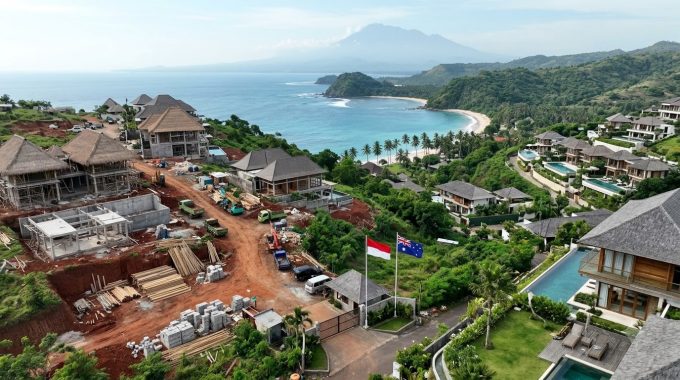
“Through LUX Property Group, we’re developing accommodation, villas, resorts and residential communities in Bali and Lombok, including our larger Nesara Bay City project in South Lombok.
“My investment thesis is that international relocation and demand for alternative lifestyle destinations will continue growing over the coming years.
“Of course, overseas property carries its own risks, including legal, currency, regulatory and liquidity risks. Investors need to understand those before committing capital.
“But I believe the long-term demographic trend towards international lifestyle migration is substantial.”
“I Believe the West Is Heading for an Economic Reckoning”
Australian Business Review: Are you suggesting this is a problem affecting the entire Western world rather than just Australia?
McIntyre:
“Yes.
“I believe many Western economies are heading towards a major economic reckoning.
“Look at government debt, declining housing affordability, increasing taxation, growing regulatory burdens and pressure on middle-class living standards.
“These problems aren’t unique to Australia.
“I believe governments have become increasingly dependent on debt, asset inflation and taxation to maintain systems that are becoming more expensive and less sustainable.
“And rather than undertaking meaningful structural reform, they often respond by borrowing more, taxing more and regulating more.
“That approach has limits.
“I also believe some powerful international interests benefit from these arrangements, although the extent to which outcomes are deliberately coordinated is open to debate.
“My forecast is that Western households will experience increasing financial pressure and social division.
“The danger is that many people won’t recognize how much their circumstances have deteriorated until their options have become limited.”
What Should Australians Do Now?
Australian Business Review: That’s a fairly confronting outlook. What practical advice would you give Australians who are worried about their financial future?
McIntyre:
“Focus on what you can control.
“You can’t control the Reserve Bank. You can’t control government taxation policy. You can’t control international conflicts or global financial markets.
“But you can control how exposed you are to those risks.
“Firstly, I would seriously consider diversifying assets internationally.
“If you’ve made substantial wealth through Australian property, congratulations. But don’t automatically assume the same strategy that worked for the past 30 years will work for the next 30.
“Secondly, consider establishing a Plan B in another country.
“That doesn’t mean everyone should sell their home and move overseas tomorrow.
“Some Australians have businesses, children, elderly parents and other family responsibilities that make relocation difficult.
“But you can still investigate alternative residency options, overseas banking arrangements, international investments and places where you could live if circumstances changed.
“Thirdly, reduce unnecessary debt and financial dependence where possible.
“And finally, educate yourself about international opportunities.
“Don’t assume Australia is the only place where you can live, invest, work or retire successfully.
“The world is much bigger than Australia.”
“The Biggest Risk Is Doing Nothing”
Australian Business Review: If you could leave Australians with one final message, what would it be?
McIntyre:
“Don’t confuse the past with the future.
“Australia has enjoyed extraordinary prosperity over the past three decades.
“Millions of Australians have accumulated considerable wealth through property, superannuation and business ownership.
“But that doesn’t guarantee the next three decades will look anything like the last three.
“I’ve spent much of my career studying economic cycles, investment opportunities and changing global trends.
“One thing I’ve learned is that the people who adapt early generally have more choices than those who wait until circumstances force them to act.
“I believe Australians are approaching one of those turning points.
“Will Australia experience another recession? In my opinion, yes.
“Could the economic and social consequences be substantially worse than most people anticipate? I believe that’s a very real possibility.
“Should Australians panic? No.
“Should they prepare? Absolutely.
“You don’t need to abandon Australia to have a Plan B. But you do need to recognize that keeping all your wealth, your investments and your future tied to one country is a risk in itself.
“Whether you ultimately relocate or not, having options gives you freedom.
“And in the years ahead, I believe freedom, financial independence and flexibility will become increasingly valuable.”
⸻
About Jamie McIntyre
Jamie McIntyre is an Australian entrepreneur, investor, author, financial commentator and international property developer.
He is the founder of the Australian National Review (www.anr.news) and host of The McIntyre Report, where he challenges mainstream narratives surrounding economics, finance, politics and international affairs.
For almost three decades, McIntyre has discussed major investment cycles involving gold, silver, Australian and US property, Bitcoin and emerging international markets.
He claims his financial forecasts and investment strategies have helped investor clients generate more than $10 billion in wealth.
McIntyre also points to his acquisition of approximately 400 US properties following the global financial crisis as an example of his contrarian investment approach.
Despite frequently attracting controversy and critical media coverage, McIntyre maintains that his willingness to challenge conventional financial thinking has helped investors identify opportunities well before they became mainstream.
He is also the founder of LUX Property Group, which is developing residential, resort and hospitality projects across Bali and Lombok, Indonesia, including the planned Nesara Bay City development in South Lombok.
He believes the coming decade will see an acceleration in the international movement of capital and people away from increasingly expensive Western economies towards alternative lifestyle and investment destinations.
Australian National Review: www.anr.news
Nesara Bay City: www.nesarabaycity.com
Editor’s note: This is a drafted interview based on statements supplied for Jamie McIntyre, not an independently verified published interview. The investment track record, $10 billion wealth-creation figure, historical property transactions, media allegations and political interpretations reflect McIntyre’s stated claims and opinions. The illustrative gold and Bitcoin returns are mathematical examples, not independently verified client results. These claims require supporting evidence before publication.













Leave a comment