


What makes this hardening more consequential is that it is now coordinated with China. In July, Chinese and Russian naval vessels conducted (Opens in new window) joint navigation in the waters surrounding Japan and held live-fire exercises inside Japan’s exclusive economic zone.
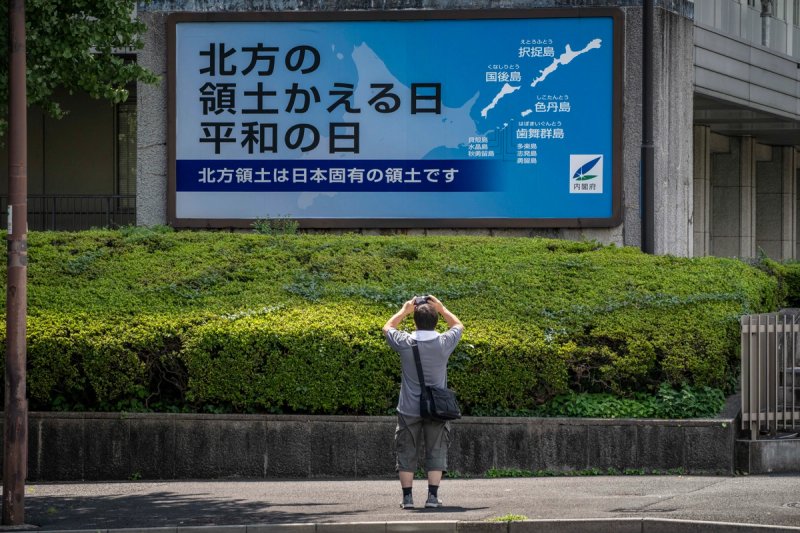
China’s diplomatic position on the islands is also shifting. On 13 October, a Chinese delegation visited (Opens in new window) Iturup, known in Japan as Etorofu, to explore joint projects, including in fisheries. Beijing’s foreign ministry framed (Opens in new window) the trip as business activity conducted by private companies, distancing the government from it, but it also stated (Opens in new window) that “the outcomes of the victory of the World Anti-Fascist War must always be respected and upheld” when asked about the visit. That phrasing echoes the language Moscow uses to justify its control of the islands, and it marks a notable departure from the 1960s, when Mao Zedong expressed support for their return to Japan.
Beijing’s actions suggest a deliberate recalibration, likely driven by what it views as Japanese militarisation and by Prime Minister Sanae Takaichi’s remarks on Taiwan. From China’s perspective, Russian control of the islands is preferable to Japanese control, since islands returned to Japan could one day host US military personnel or equipment.
Japan has already been pushing to strengthen its military capabilities amid a volatile geopolitical environment. Under Takaichi, the defence budget has exceeded (Opens in new window) $58 billion for the first time in the nation’s history, and in October she told (Opens in new window) parliament that Japan would “deepen concrete and realistic considerations” regarding the defence of sea lanes, including the introduction of nuclear-powered submarines. Such a step, however, remains a difficult prospect given its technological demands and the Self-Defence Forces’ serious personnel shortages (Opens in new window).
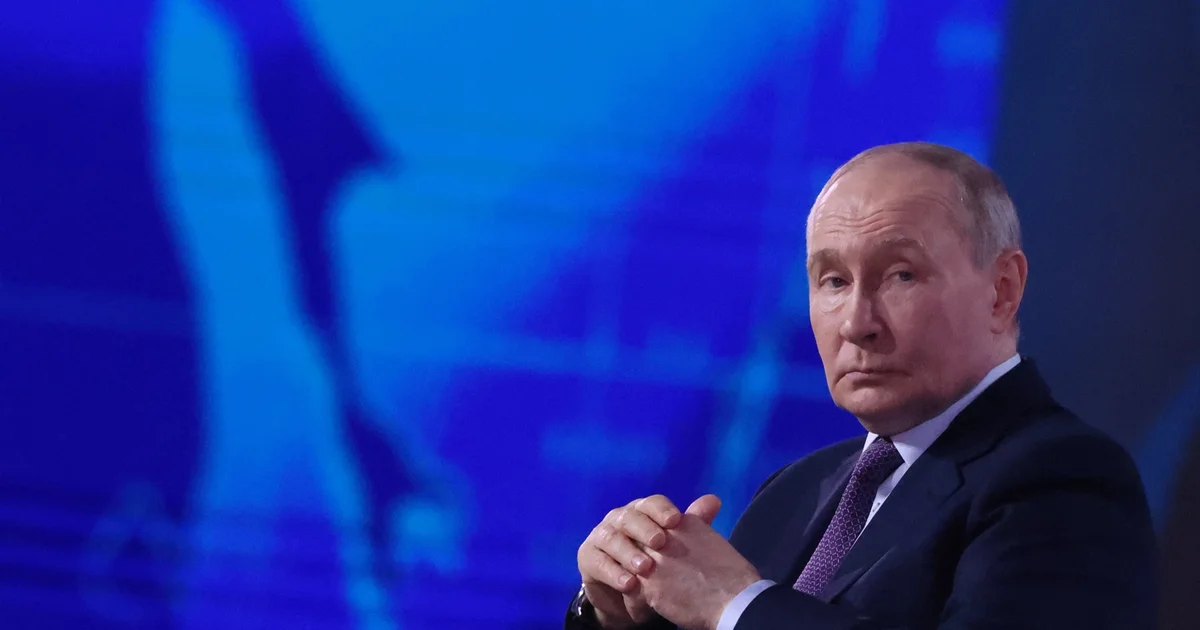
Tokyo’s room for manoeuvre is also limited by energy (Opens in new window). Japan holds stakes in the Sakhalin-2 oil and gas project in the Russian Far East, and roughly 10% of the liquefied natural gas it imported in 2025 came from Russia. Moscow is clearly aware of this leverage, with Putin saying (Opens in new window) last month that Russia was “interested in cooperation with Japan” and would support Japanese companies that continue to work with it.
Washington’s posture (Opens in new window) complicates matters further. As US–China relations improve and President Donald Trump pursues better ties with Putin, a more conciliatory US approach towards Beijing, Moscow and Pyongyang (Opens in new window) could leave room for further provocations aimed at Japan, whose relations with all three neighbours are deteriorating.
The combination of a frozen Russia–Japan relationship, growing Sino–Russian coordination around Japan, and an ally in Washington with other priorities leaves Tokyo in a difficult position (Opens in new window).
Diversifying its energy supply, including through closer cooperation with Europe, would reduce Moscow’s leverage but do little to resolve the islands dispute. More broadly, the situation risks fuelling a regional arms spiral. Although public opinion and its pacifist constitution still constrain Japan, Takaichi’s electoral mandate, a worsening threat environment and growing doubts about its partner’s reliability are likely to push Tokyo further towards military options.
Beijing and Moscow, in turn, would gain greater incentive to deepen their military cooperation against what they portray as Japanese militarisation (Opens in new window). The effects could also extend to Seoul, which, facing a persistent North Korean threat and similar uncertainty about the US alliance, may follow Japan in a more militarised (Opens in new window) direction, intensifying the vicious cycle in an already volatile region.
Greater defence cooperation between Seoul and Tokyo could strengthen both countries’ relatively precarious security situations in the region, however here too historical disagreements create obstacles and limitations for how far cooperation can go. As such, the trend towards greater militarisation seems likely to accelerate in the short term, despite the potential grave consequences.








Leave a comment