


That identity has been pursued aggressively long before June. Beijing has weaponised its dominance of critical minerals, restricting rare earth exports to pressure Washington (Opens in new window) and Tokyo (Opens in new window). Its forces have rehearsed a blockade (Opens in new window) of Taiwan with live fire and exclusion zones meant to deter American intervention. Its state hackers are pre-positioned (Opens in new window) inside US water, power and communications networks.
In contrast, the summit between President Xi and US President Donald Trump in May displayed an America far less sure of itself.
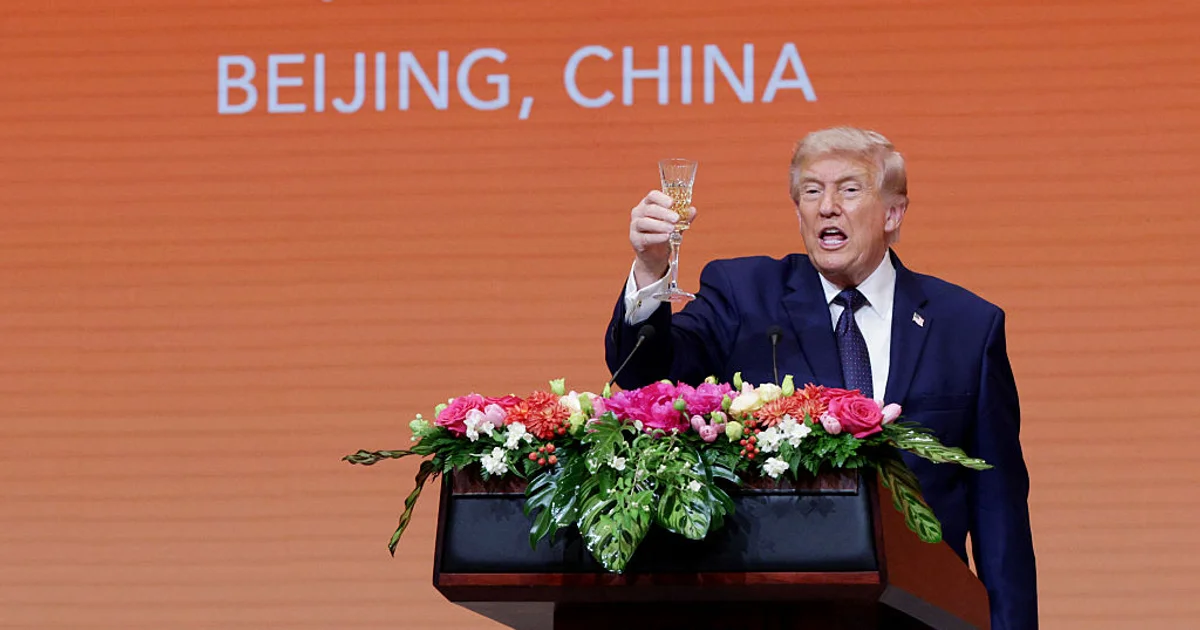
Against the backdrop of China’s provocations, Trump travelled to Beijing, praised Xi, and said the bilateral relationship was “better than ever before (Opens in new window)”. He even called Taiwan arms sales a “good negotiating chip” (Opens in new window). In effect, Trump gave Beijing the strategic stability it sought (Opens in new window), and gave allies and partners fresh reason to doubt foundational US commitments.
The most revealing takeaway was not what Xi and Trump agreed on but what it exposed about the deeper strategic condition of the two powers.
Whereas Beijing’s narrative, and the actions supporting it, are remarkably consistent, Washington remains caught between competing visions of its role. Is it still the leader of the free world? An offshore balancer focused on preventing the rise of competitors? A nationalist power prioritising domestic renewal?
On some days, Washington appears determined to resist China’s rise at all costs. The 2026 National Defense Strategy (Opens in new window), while more restrained than previous strategies, commits the United States to deterring China in the Indo-Pacific. The White House has requested an unprecedented defence budget of US$1.5 trillion (Opens in new window). Exercise Balikatan (Opens in new window), the US-Philippines military exercise, featured more participating nations than ever before and rehearsed territorial defence against a simulated invasion days before the Trump-Xi summit – a not-so-subtle nod towards Taiwan.
But capability without credibility will not deter China, and credibility is the missing part. Trump’s conduct in Beijing was not the calculated ambiguity Washington has long maintained over Taiwan, where deliberate vagueness about its commitment has helped keep the peace. It signals US uncertainty about its very role, with Washington appearing willing to renegotiate the foundations of its position in Asia.
When adversaries question credibility, they test limits. When allies question it, they stop relying on guarantees and begin providing for themselves. Both eventualities risk escalation and miscalculation. Japan finds itself at the centre of this problem. Reports that Trump defended Prime Minister Takaichi (Opens in new window) during the summit suggest continued support for America’s closest ally. Yet the broader pattern of American behaviour has left Japan, like many allies, doubting US commitments.









Leave a comment