


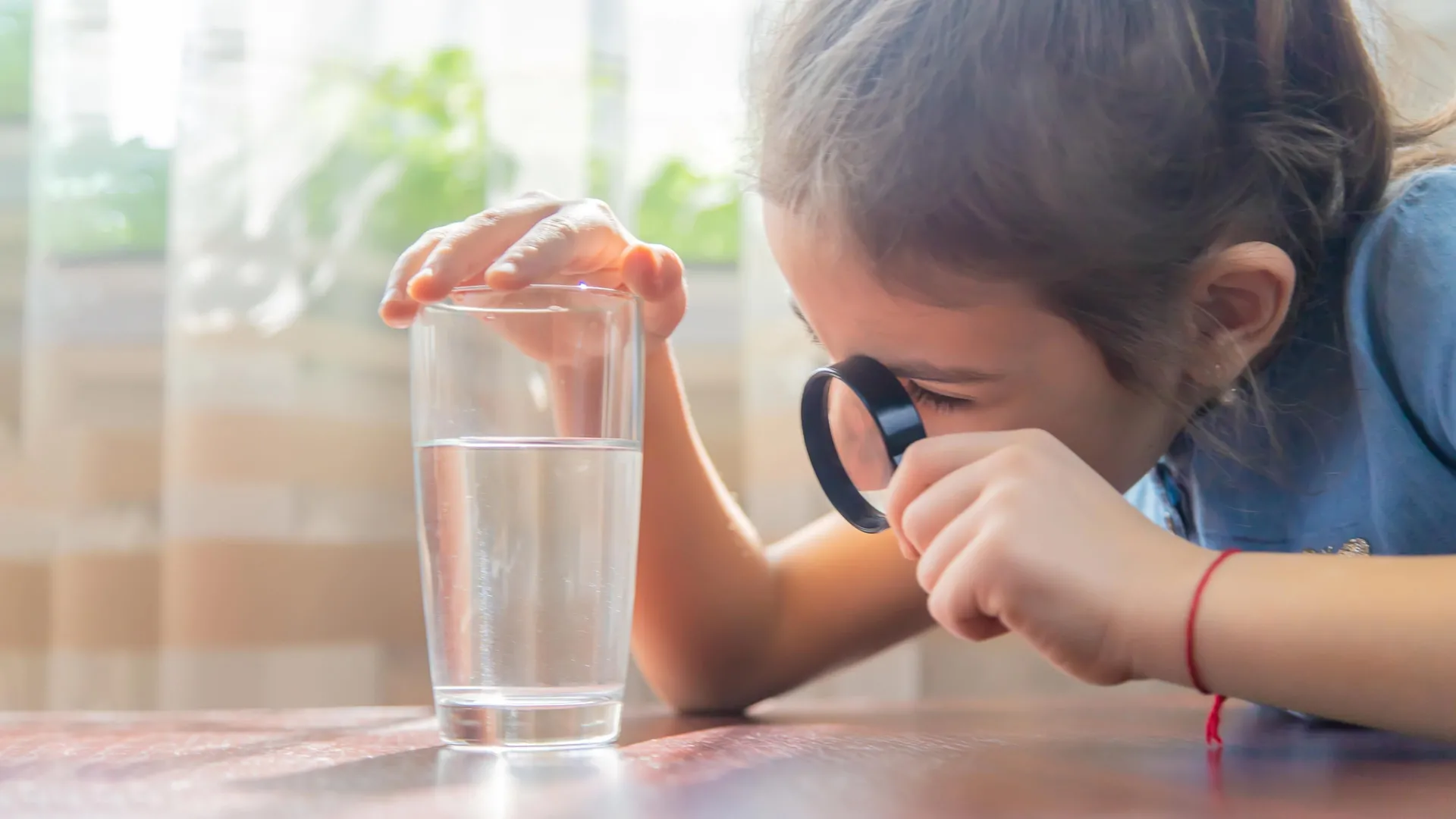
Nanoplastics are already a concern because people may ingest them directly, but new research points to another possible danger. These tiny plastic particles may also make harmful bacteria more difficult to control.
In a study published in Water Research, Virginia Tech researcher Jingqiu Liao and an international team found that nanoplastics can interact with environmental microbes in ways that may create indirect risks to human health, especially through drinking water systems.
“It is very important to better understand the adverse effects of the nanoplastics on human health, and not just in humans but also in the environment, which indirectly influences human health,” said Liao, assistant professor of civil and environmental engineering. “The nanoplastics can make the antimicrobial-resistant pathogens better survive, which could be harmful to the environment and would have public health implications.”
Nanoplastics May Complicate Water Treatment
The researchers reported that bacteria exposed to nanoplastics can become more resistant to disinfectants. That could create serious problems for water treatment facilities and distribution networks designed to keep drinking water safe.
“When the nanoplastics interact with the biofilm and the bacteria inside them, they can strengthen the biofilm and make it more resistant to any kind of measures that are going to keep the water clean,” said Liao, who is also an affiliate with Fralin Life Sciences Institute’s Global Change Center.
Jingqiu Liao is an assistant professor of civil and environmental engineering. Photo by Peter Means for Virginia Tech.
Nanoplastics are a smaller category of microplastics. They range from about one to 1,000 nanometers in size and cannot be seen with the naked eye. In this study, the researchers examined how these particles affect the formation of biofilms inside drinking water systems.
How Bacterial Biofilms Form
Biofilms are groups of bacteria that attach themselves to surfaces, including the inner walls of water pipes. The microbes produce a protective material around themselves that helps shield the community from environmental threats.
Biofilms are not always harmful. In some settings, they can help remove undesirable substances. Inside drinking water distribution systems, however, they can pose a risk because some of the bacteria they contain may cause disease.
The issue is further complicated by bacteriophages, which are viruses that infect bacteria. Before this research, scientists knew relatively little about how nanoplastics might affect the relationships among biofilms, bacteria, and these viruses.
“The primary process that we were particularly interested in is how the bacteria and the bacteriophages interact with each other during the process when the nanoplastics influence the biofilm as a whole,” said Liao, also an affiliate with the Fralin Life Sciences Institute’s Center for Emerging, Zoonotic, and Arthropod-borne Pathogens.
Studying Microbes and Antibiotic Resistance
Liao specializes in microbial ecology and metagenomic analysis. Her previous work has explored how soil contributes to the spread of antibiotic resistance.
She also recently received a Scaling Scholarship Award through the College of Engineering’s Major Grants Initiative for work connected to the Nature Communications publication, “Differential roles of deterministic and stochastic processes in structuring soil bacterial ecotypes across terrestrial ecosystems.”
Nanoplastics Trigger Multiple Bacterial Responses
The researchers studied a biofilm made up of E. coli and Pseudomonas aeruginosa. When the biofilm was exposed to nanoplastics, the bacteria responded in several ways:
Different bacteria “talk” with one another and release substances that make the biofilm thicker, heavier, and more protective.
Prophages, which are phages that insert their own genomes (DNA) into the genomes of bacterial hosts, become active. They destroy the bacterial cells they inhabit while producing large numbers of new virus particles.
The bacteria defend themselves against the prophages by using clustered regularly interspaced short palindromic repeats (CRISPR) of DNA or RNA cells to target the viruses as part of an antiviral defense system.
An illustration of the three responses from the bacteria when the nanoplastics come into contact with the biofilm. Image courtesy of Jingqiu Liao.
Tougher Biofilms Could Threaten Water Systems
The study found that exposure to nanoplastics increased the physical strength of the biofilm and made it more resistant to disinfectants.
The authors conclude that “the increased mechanical strength of the biofilm and its resistance to the disinfectants highlight a potential challenge for water treatment and distribution systems, as nanoplastics may increase the formation of difficult-to-eradicate biofilms on the surface of some water treatment and distribution systems.”
These findings suggest that nanoplastics may make it easier for stubborn biofilms to develop on surfaces used in water treatment and delivery, increasing the difficulty of removing them.
More Research Is Needed
Liao said additional studies are necessary to identify the molecular processes that drive the responses of complex biofilms containing multiple microbial species.
She also noted that particle size may play an important role. Microplastics are larger than nanoplastics and could affect interactions between bacteria and phages in different ways.
“Overall, our findings provide novel insights into the interplay between nanoplastics and bacterium-phage dynamics, highlighting increased microbial risks associated with waterborne nanoplastics,” Liao said.
Other researchers in the study include the following:
- Haibo Wang, associate professor, Research Center for Eco-Environmental Sciences, Chinese Academy of Sciences, Beijing, China
- Hui Chen, associate research fellow, Research Center for Eco-Environmental Sciences, Chinese Academy of Sciences, Beijing, China
- Chujin Ruan, postdoctoral fellow, environmental microbiology, Swiss Federal Institute of Aquatic Science and Technology, Dübendorf, Switzerland
- Cory Schwarz, postdoctoral fellow, civil and environmental engineering and Rice WaTER Institute, Rice University, Texas
- Baoyou Shi, professor, Research Center for Eco-Environmental Sciences, Chinese Academy of Sciences, Beijing, China
- Pedro J.J. Alvarez, professor, civil and environmental engineering and Rice WaTER Institute, Rice University, Texas
- Pingfeng Yu, postdoctoral fellow, College of Environmental and Resource Sciences, Zhejiang University, Hangzhou, China











Leave a comment