


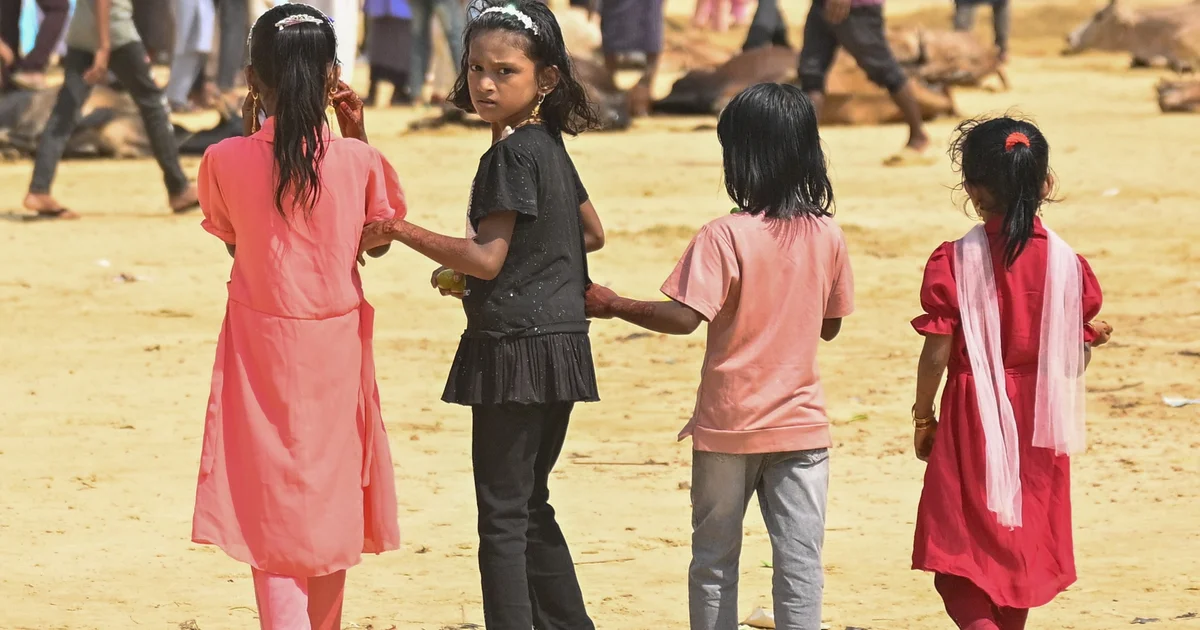
Furthermore, international justice still focuses primarily on spectacular acts of violence – mass killing, rape, village burnings and forced deportation – while paying less attention to the slower bureaucratic process through which a people are erased. For Rohingya children, genocide did not begin in August 2017. It began at birth.
The 1982 Citizenship Law rendered generations of Rohingya children stateless. Subsequent policies denied them birth registration, legal identity, education, healthcare and freedom of movement, turning childhood itself into a condition of exclusion. These measures were not merely precursors to genocide; they formed part of the machinery through which the destruction of the Rohingya was pursued.
Seen through children’s experiences, Myanmar exposes another limitation of international justice. Accountability remains overwhelmingly event-centred rather than generation-centred.
Courts investigate crimes committed during identifiable periods. Investigators collect evidence linked to particular attacks. Reparations usually follow judgments years – or decades – later.
Children experience atrocity differently.
A child who witnessed massacres in 2017 may now be entering adulthood having never completed formal schooling, obtained legal identity or received sustained psychological support. Lost childhood cannot simply be restored through a future financial award. Justice delayed for children means that justice is overtaken by development itself.
This temporal mismatch suggests that accountability should be measured differently. Convictions remain essential, but they cannot become the sole benchmark of success. International justice should also ask whether children recover their education, identity, mental health and ability to participate fully in society. In other words, accountability should be assessed not only by the punishment of perpetrators but by the restoration of future generations.
The recent Legal Action Worldwide report (Opens in new window), Myanmar’s 2017 “Clearance Operations” through the Eyes of Rohingya Children and Genocide, demonstrates whychildren’s participation is essential to accountability. Too often, concerns about protection lead institutions to exclude children from investigations altogether. Through interviews with 86 Rohingya children and young people, it uncovered evidence often absent from adult accounts, including attacks on schools, family separation, developmental trauma, identity destruction and the cumulative effects of statelessness. These testimonies do more than document suffering; they strengthen the evidentiary basis for establishing genocidal intent and producing a more complete historical record.
A child-centred approach is not simply a procedural improvement but integral to the guarantees of non-recurrence that transitional justice seeks to achieve. By restoring children’s identity, education, participation and development, accountability becomes an investment in preventing future atrocities rather than merely documenting past ones.
The report also reminds us that children’s experiences are profoundly gendered. Rohingya girls have faced sexual violence, trafficking and heightened risks of child marriage, while boys have been disproportionately exposed to killings, forced labour and recruitment by armed actors. Child-centred accountability must therefore also be gender-responsive if it is to capture the full reality of atrocity.
Myanmar should prompt a broader rethink of international justice. Child specialists should be embedded in investigations from the outset, while education, mental health and legal identity should be recognised as integral to reparations rather than left to humanitarian responses. Accountability and humanitarian action must also work together, ensuring that children’s immediate protection and long-term justice are no longer treated as separate agendas.
Above all, international justice should adopt an intergenerational approach to accountability – judging success not only by convictions, but by whether children can reclaim the futures atrocity sought to erase.











Leave a comment