


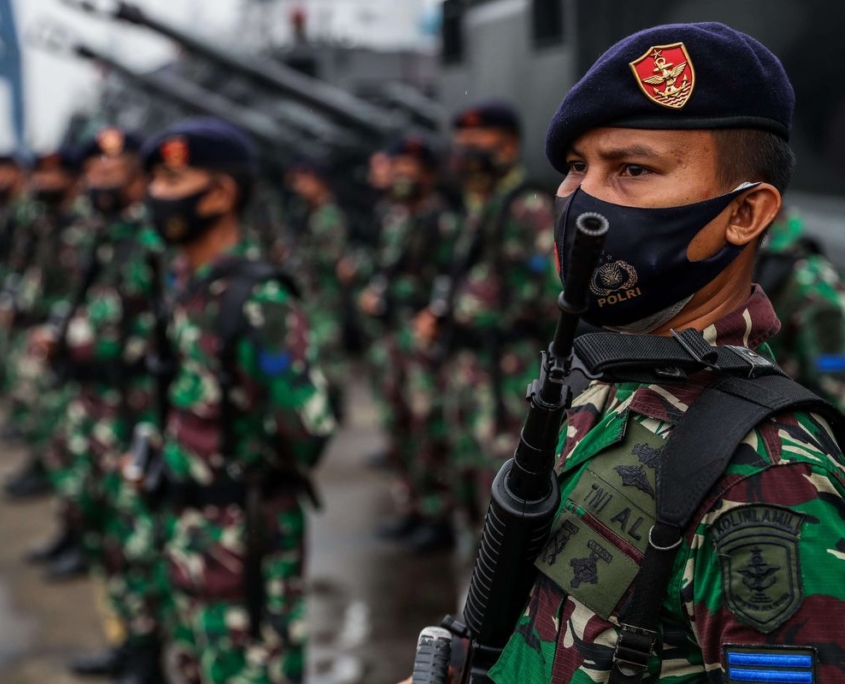
Kompas.com/Garry Lotulung
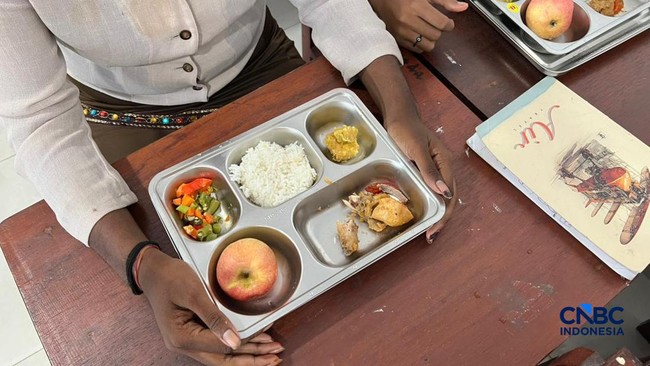
Under the Prabowo Subianto government, the Indonesian Military’s (Tentara Nasional Indonesia, TNI) long-cherished role in national economic development and governance has been vastly enhanced. The TNI seems to be everywhere. Active-duty officers now run ministries, head a state food company, and even manufacture medicine. Soldiers cook meals for Prabowo’s flagship nutrition program. Prabowo has long argued that the military provides an efficient and committed labour force for Indonesia’s development ambitions. But this too was his father-in-law, President Suharto’s argument, and that line justified a 32-year-long, vastly corrupt authoritarian military regime that ultimately had to be overthrown through people power.
Ironically, these political developments are occurring at a time of historic good relations between the Indonesian military and the Australian Defence Force. Much has changed since former president B.J. Habibie famously tore up the Agreement on Maintaining Security (AMS) in 1999, after Australia announced it would lead a force into East Timor. In the last two years under the Labor government, we have seen the Australia-Indonesia Defence Cooperation Agreement superseding the 2008 Defence Cooperation Agreement and this year, the Jakarta Treaty, or the Australia-Indonesia Treaty on Common Security, in which both countries agree to communicate on matters of mutual security. Both are landmark security agreements, but they occur at a time when the military’s domestic role is transforming rapidly.
To help us understand how civil-military relations are changing under the Prabowo government, and how that affects Australia’s defence relations with Indonesia, meet my guest, Dr Natalie Sambhi. Natalie is Founder and Executive Director of the independent think tank Verve Research, which provides analysis on Southeast Asian foreign policy and security issues. She is also a Non-Resident Fellow with the Brookings Institution, where she publishes on Indonesian foreign and defence policy issues as well as Southeast Asian security. Natalie holds a PhD on the history of the Indonesian military from the Strategic and Defence Studies Centre, Australian National University.
In 2026, the Talking Indonesia podcast is co-hosted by Dr Jacqui Baker from Murdoch University, Dr Elisabeth Kramer from the University of New South Wales, Ambyo from RMIT, Dr Jemma Purdey from the Australia-Indonesia Centre, Clara Siagian from the University of College London.










Leave a comment