


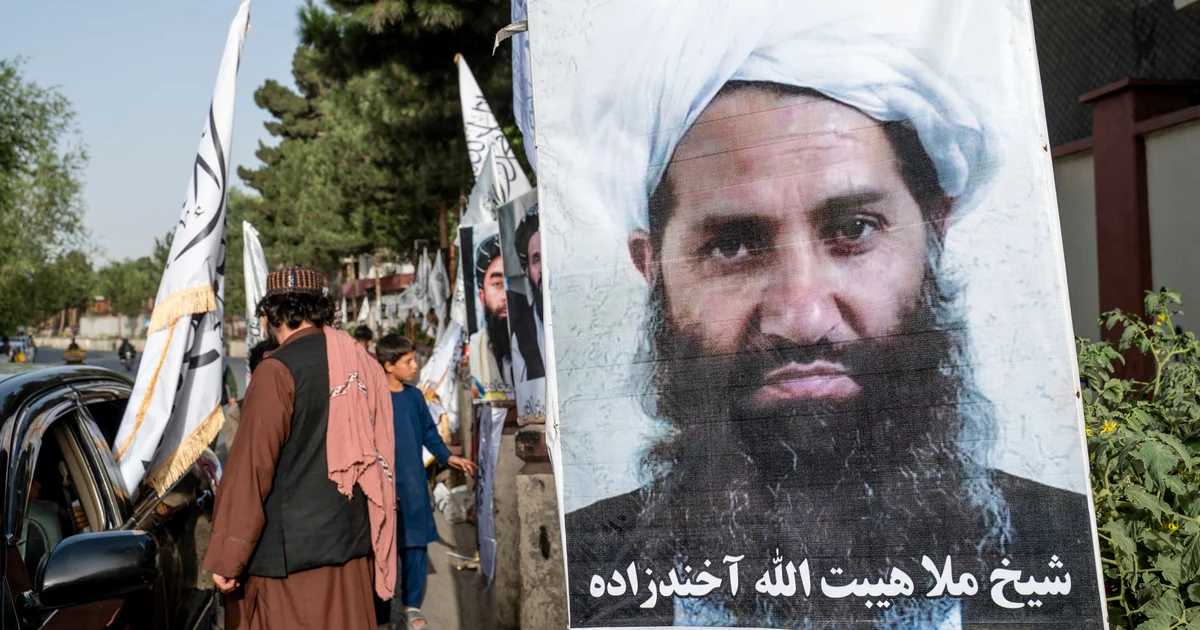
“The plight of Afghan women and girls is one of the gravest examples of gender persecution,” the ICC’s Deputy Prosecutor Nazhat Shameem Khan said. (Opens in new window) “Afghan women and girls are systematically discriminated against, on the basis of their gender. They deserve justice.”
The arrest warrants, she said, vindicated the rights of Afghanistan’s women and girls, “particularly their right to education”.
For five years, the Taliban have operated with brazen impunity, often doubling down when criticised. The Supreme Leader rules by decree (Opens in new window), with 166 orders specifically targeting the rights of women and girls. Misogynist subordination is a defining feature of Taliban rule.
The significance of the warrants lies in the court’s treatment of institutionalised discrimination as persecution. By including the education ministers, the ICC has extended individual accountability to officials responsible for administering the exclusions, alongside those directing them. The ICC’s judges found reasonable grounds to believe all four Taliban figures had ordered, induced or solicited persecution.
The court’s reasoning provides a basis for examining how governments use institutions to deprive people of fundamental rights on gender grounds.
It also sharpens the question for the Taliban’s diplomatic partners: what are they legitimising when they embrace this regime?
Mao Zedong, the founding father of the People’s Republic of China, claimed “women hold up half the sky,” yet Beijing welcomed a Taliban “ambassador” whose credentials were accepted by President Xi Jinping.
China, Russia, India and Iran pursue their own security and economic interests in Afghanistan. Governments seeking to return Afghan migrants and convicted criminals also have reasons for accommodating the Taliban. Domestic pressure to deliver deportations gives them the incentive, often while holding their noses.
France has confirmed talks with the Taliban to facilitate deportation of Afghans “in the country illegally and who pose a national security risk”. The foreign ministry described (Opens in new window) the discussion as strictly technical and said they did not amount to recognition of the regime.
The warrants confront that political convenience with allegations of individual criminal responsibility. Will governments attach demands over women’s rights to those dealings, or pay lip service to accountability while migration priorities dictate the terms?
The ICC warrants alone will not reopen classrooms or restore women’s freedom. Their force depends on what governments do with them.
If accommodation continues without consequences for persecution, the Taliban will have further reason to believe that the rights of Afghan women are a price the world is willing to pay.













Leave a comment