


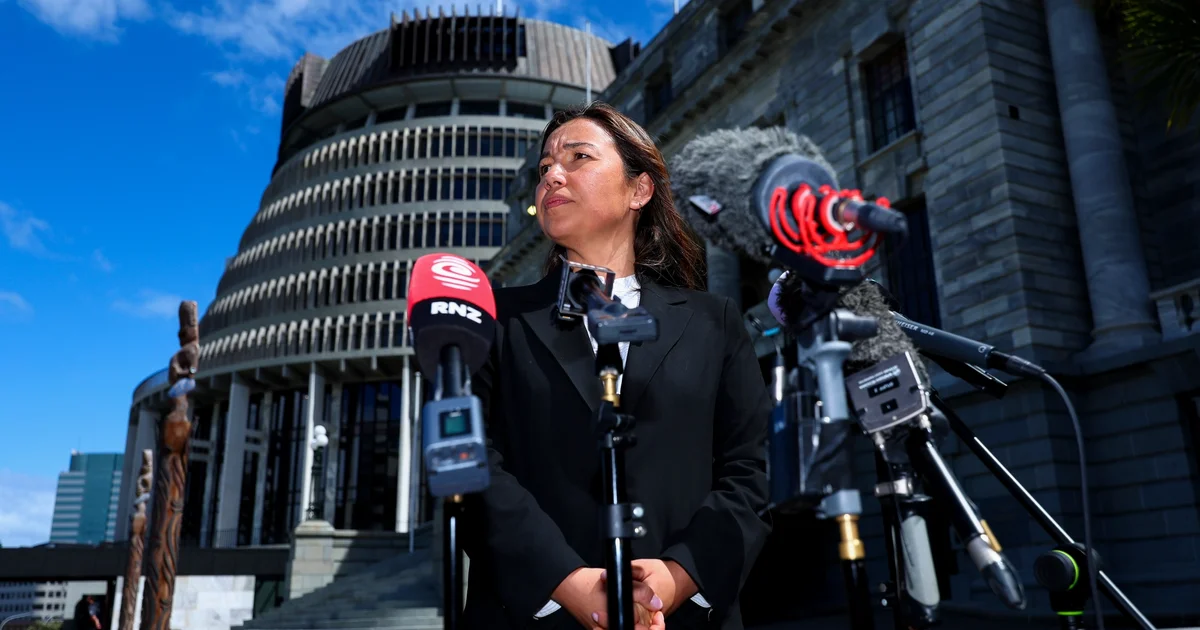
The same divide runs through how each side frames relationships with the US and China. Walters considers both powers are equally valuable to New Zealand as trading partners and has criticised Prime Minister Christopher Luxon’s 2024 description of the country as a potential “force multiplier (Opens in new window)” for Australia and the US as something that doesn’t serve New Zealand’s interests. Peters, by contrast, frames the moment as one demanding realism rather than sentiment, dealing with the world “as it is, not how we wish it would be”.
On defence, New Zealand First has called for the defence budget to reach 3% of GDP (Opens in new window) by the early 2030s, an ambition not shared by its own coalition partners (National favour a 2% of GDP (Opens in new window) commitment), let alone Labour’s Walters, who has rejected (Opens in new window) any percentage commitments. The right bloc has indicated openness to membership and collaboration on AUKUS Pillar II, with Peters calling Pillar II (Opens in new window) a “possibility worth exploring”. Labour, meanwhile, has ruled out (Opens in new window) joining any pillar, and The Greens and Te Pāti Māori oppose the framework outright.
Opportunity leader Qiulae Wong’s most notable foreign policy commitment came when she ruled out being part of a government that has Peters in the position of Foreign Minister, following an outburst from Peters (Opens in new window) aimed at Green MP Lawrence Xu-Nan, which Luxon labelled as “racist” and “offensive”. In response to Wong’s statement (Opens in new window) that Opportunity was considering ruling out working with New Zealand First entirely, Peters replied on X, “we long ago ruled out working with this bunch of pinko communists”. Luxon too has repeatedly, if less flamboyantly, ruled out working with Opportunity.
Wong, however, remains pragmatic, leaving the door open for a last-minute change of heart from Luxon, stating Opportunity will negotiate first with the party that gets the most seats. The sticking point in negotiations will be her party’s five bottom lines – bring prices down, clean up politics, fix the health system, revive ocean health, restore climate credibility – on which Labour, the Greens and Te Pāti Māori arguably sit closer than the right bloc. Continued antagonism from the right towards Opportunity only strengthens that position.
The winner of this weekend’s election will shape how New Zealand responds to a world undergoing its sharpest realignment since the Second World War. The decision may rest with a party that is yet to develop a foreign policy of its own.












Leave a comment