


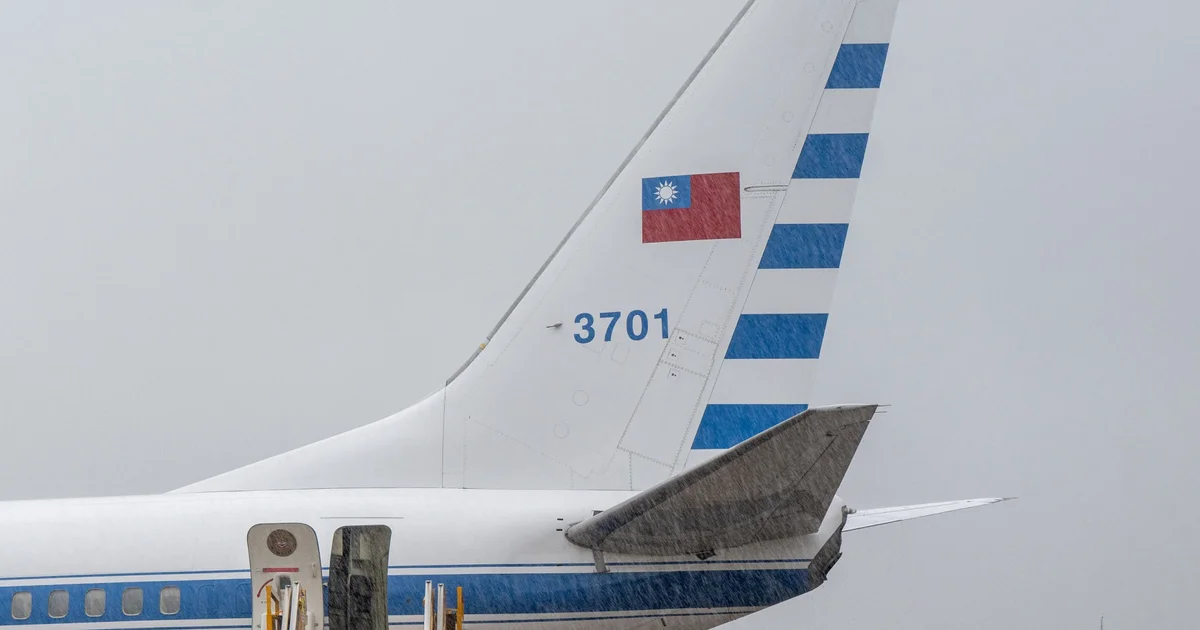
So, what could have prompted the decision? Was it an extension of China’s grey-zone activities (Opens in new window), or a show of loyalty arising from the China-Pakistan all-weather friendship?
There are two possible explanations for Pakistan’s decision. The first is that China asked Pakistan to impose the ban to reinforce the One China policy, discourage international engagement with Taiwan and demonstrate Beijing’s influence over its partners. Pakistan remains one of China’s most reliable supporters of its position on Taiwan.
The second possibility is that Pakistan imposed the ban on its own initiative to show its loyalty to China, particularly at a time when it is seeking closer ties with the United States. The Mecca Pact may have added to Islamabad’s incentive to reassure Beijing. Meanwhile, the China-Pakistan Economic Corridor, a flagship component of the Belt and Road Initiative, has become a security liability (Opens in new window) rather than a strategic and economic asset for Beijing. Against this backdrop, the ban may have been a token gesture to show that Pakistan’s efforts to move closer to Washington have not come at the expense of its relationship with China. Although overflight permissions have since been restored, at least for the time being, the message to Beijing is already delivered.
Pakistani airspace is useful for Taiwanese flights travelling to Middle East and Europe. If there is a renewed ban after the March 2027 deadline, it may not have major long-term implications for Taiwan, but rerouting would add to the duration and cost of operating these routes. The episode is also a reminder that Pakistan wants to remain useful to China and is willing to demonstrate that usefulness through decisions affecting Taiwan.
The greater concern is whether this sets a precedent. China could use similar pressure to influence other countries that are close to Beijing and strongly adhere to the One China policy, creating problems for Taiwanese airlines, particularly given Taipei’s lack of representation in the International Civil Aviation Organisation (ICAO). Restrictions on commercial aviation can potentially become another means of exerting pressure on Taiwan.
The decision is further evidence of China’s already formidable influence over Pakistan and Islamabad’s willingness to go further in demonstrating its loyalty to Beijing. But it does little for Pakistan. Applying the One China policy to commercial aviation imposes a restriction with little benefit beyond political signalling. More problematic is Pakistan’s readiness to extend its interpretation of the policy into areas not traditionally associated with it, adding new dimensions to and further complicating an already complex issue.










Leave a comment