


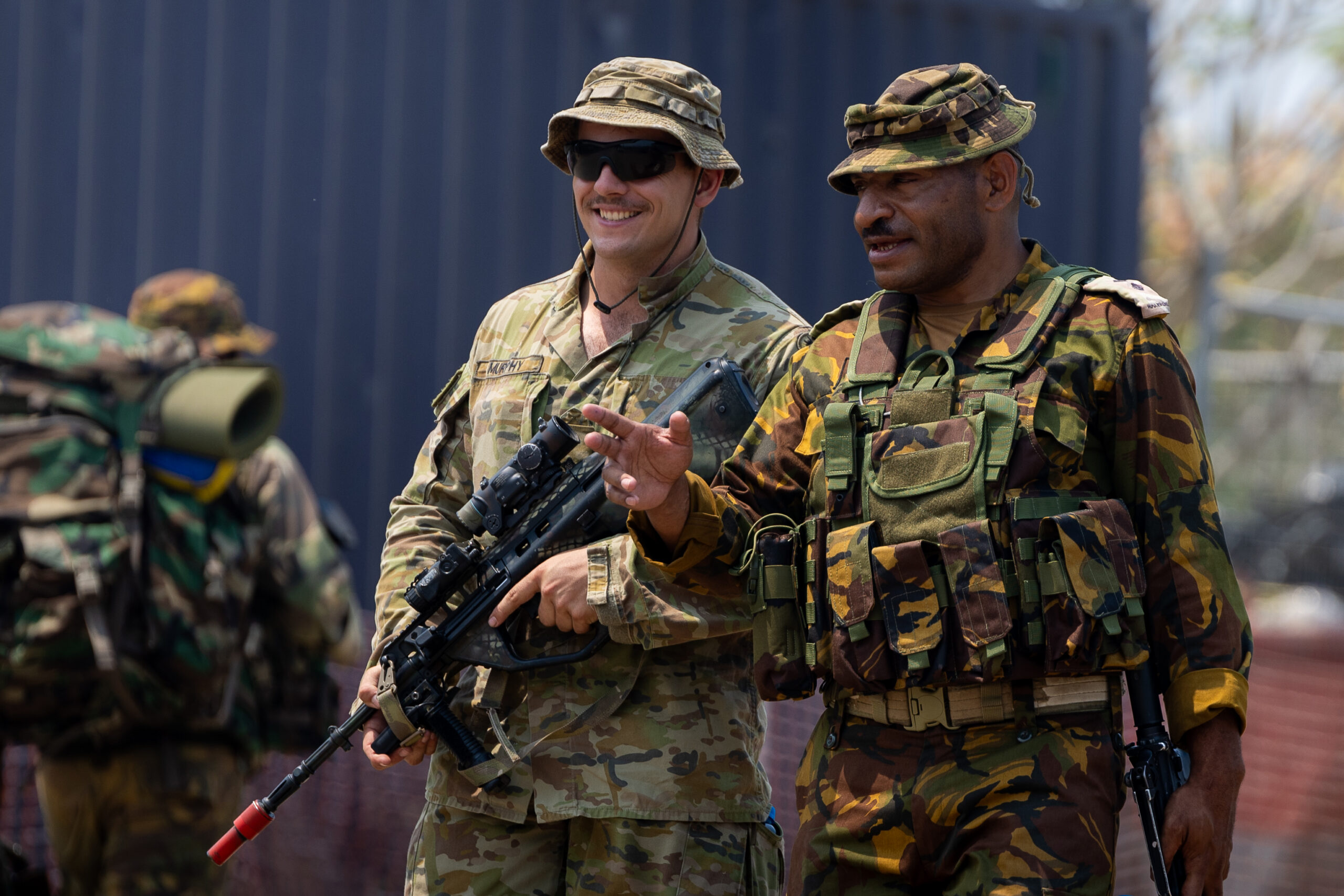
Australia’s recruitment of 100 Papua New Guinean university students and graduates into the Australian Defence Force will almost certainly attract corruption allegations. Canberra needs to begin publicly setting out a transparent, metrics-based selection process before applications open on 16 November.
These are among the most lucrative jobs available to PNG graduates, and most of the thousands of eligible applicants will be rejected. In PNG, an opaque selection process will be assumed to be corrupt, and those narratives will spread across WhatsApp and TikTok faster than Australia can counter them.
And with good reason. Wantok obligations – the kinship ties at the heart of PNG society – will put heavy pressure on anyone with influence over the selection process. Australia should over-communicate its criteria to make clear that Wantok obligations will not in fact make a difference. There must be no public doubt about how candidates are chosen.
The job offers are a result of the Pukpuk Treaty, the 2025 mutual defence pact allowing cross-border recruitment. The pilot will cost A$65 million. It will take 100 students and recent graduates aged 18 to 25 from three universities: the University of Papua New Guinea, Pacific Adventist University and the PNG University of Technology in Lae. The first cohort of successful applicants is due to be sworn into the Australian Defence Force by late 2027. Recruits will start on temporary visas and must apply for Australian citizenship once eligible.
The jobs offer Australian pay, a path to citizenship and significant local prestige. No other job open to young PNG graduates is comparable in benefits.
PNG’s formal economy absorbs few young people. Reliable data is scarce, but the best available, a 2020 survey of University of Papua New Guinea economics graduates, found that a quarter of respondents were still looking for work a year after graduating. This is the best case. Those in work were more likely to answer, and economics graduates are among the most employable. For the rest, the employment rate is probably close to 50 percent.
The three eligible universities have produced about 8,300 graduates since 2023. If we very conservatively assume that only a quarter of them will apply, not including ongoing students, more than 1,900 will be turned away.
Most students are not self-supporting. Rather, they’re helped by their wantoks. A term in the national pidgin Tok Pisin, ‘wantok’ means ‘one talk’ and describes a group who share kinship, language or regional connections. Wantoks are PNG’s most important social institution. Where the state fails to deliver basic services, they are the safety nets. People in wantoks help each other, and help is expected to flow both ways.
This significantly impacts university students. Students move far from home and pay high living costs. Their wantoks send money and gifts and often help with housing. Once the graduate lands a salaried job, wantoks expect some payback. Employed graduates may need to send money home and help others find work. Placing relatives in government jobs, especially in the police or military, brings prestige and for some is close to a binding obligation.
To Australians, it looks like nepotism. To many Papua New Guineans, it’s just how things work. So anyone involved in the selection process will face intense pressure. And many in PNG will assume that they gave in.
This is not unprecedented. In March, a viral video showed PNG Defence Force recruits who looked too old and unfit to serve. Allegations of bribery, forged certificates and tribal favouritism followed. There were also claims that the defence minister had favoured recruits from his own electorate. He denied those allegations but still stepped aside. Around 300 recruits were sent home, and soldiers, protesting against corruption, blockaded Port Moresby’s Murray Barracks. At the PNG Defence Force’s request, Australian Brigadier Nick Foxall was brought in to support the investigation as an outsider free of wantok ties.
That’s the environment in which Australia is recruiting. Allegations about selection could appear in traditional print media, but they’re more likely to spread through WhatsApp groups, Facebook and TikTok, where eye-catching and confrontational narratives are amplified. Goodwill towards Australia could quickly turn into resentment at the institutions and politicians people believe abused the system.
Reasonable choices carry risk too. The pilot aims to draw recruits from across PNG’s provinces. Unless the method of doing so is explained, regional balancing may be seen as wantok favouritism.
Australia should be transparent at every stage and err towards too much communication. Selection should rest on measurable criteria, which should be published with weightings when applications open. The message should be repeated often, in English and in Tok Pisin, on social media platforms that Papua New Guineans use.
Australia should say who will make the decisions. After each round, it should publish how many eligible people applied, which provinces and universities they came from, and the score cutoffs that separated those chosen from the rest. Unsuccessful applicants should also be told why.
Communication is cheap. A lack of communication could be expensive. In PNG, doubt will be read as corruption, and it could burn the goodwill these 100 jobs were meant to build.










Leave a comment