


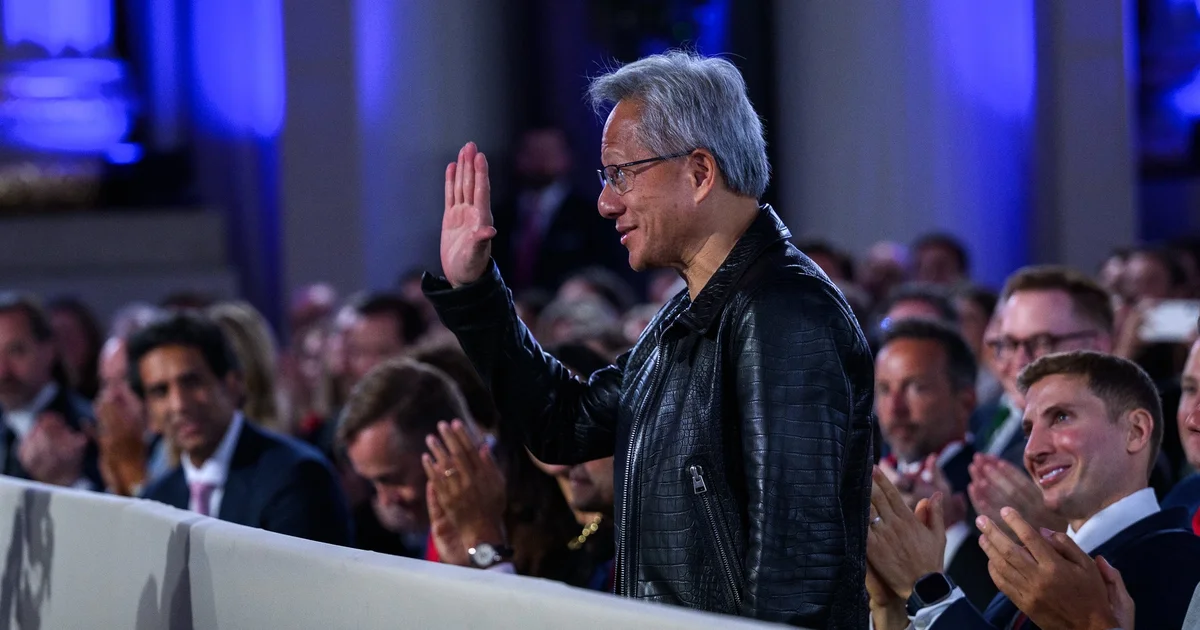
These companies, deeply tied to the Trump White House and at the vanguard of its definition of American power, are producing consequences that have a significance that rivals that of entire governments.
Governments around the world gain reasons every day to treat people like Jensen Huang as key geopolitical figures. This scandal shows that counterintelligence services need to account for that reality.
The FBI, the key counterintelligence service in the United States, has some efforts in place to protect private industry. They investigate attempts by foreign governments to infiltrate critical companies. Their goal is to protect classified information and hardware that could be stolen and repurposed.
As the public role that these executives play changes, so too does the problem of counterintelligence defence. A Silicon Valley executive who controls the technology used by military and intelligence services around the world may not themselves have access to classified information, but they can make consequential decisions about how the technology operates. These decisions could change what a country is capable of doing, or what technology an adversary is able to access.
Beyond the question of the appropriate counterintelligence protection for figures like Huang, there also comes the question of their political relationships.
Well before the public was made aware, Trump was informed (Opens in new window) about Huang’s relationship, including the intelligence community’s assessment that his mistress was tied to Chinese intelligence. Even after those briefings, Trump continued to speak with Huang and, once the scandal was revealed, publicly defended him.
Even once counterintelligence services adapt to the moving future, they can always be countermanded by chief executives who make political calculations about figures. Trump could have pushed Huang out, but in doing so would have alienated a key political ally, someone central to his strategic competition with China. Huang’s embrace of MAGA has also been helpful to Trump in building a political and economic support base in Silicon Valley.
The decision to do nothing with the information developed by the FBI was a political one, made because Trump saw Huang as indispensable.
This dynamic matters for every country that relies on American technology in both its civilian and public sectors. These new vulnerabilities will not stop at American borders.
The new generation of leaders taking centre stage in the United States must grapple with the seemingly insurmountable power that Silicon Valley has accumulated in the Trump era. Backlash to that very group was part of the substantial rebuke delivered by voters.
In governing, these new leaders from both parties will have to reimagine national security – including counterintelligence – to cover the public power now wielded by private actors.










Leave a comment