


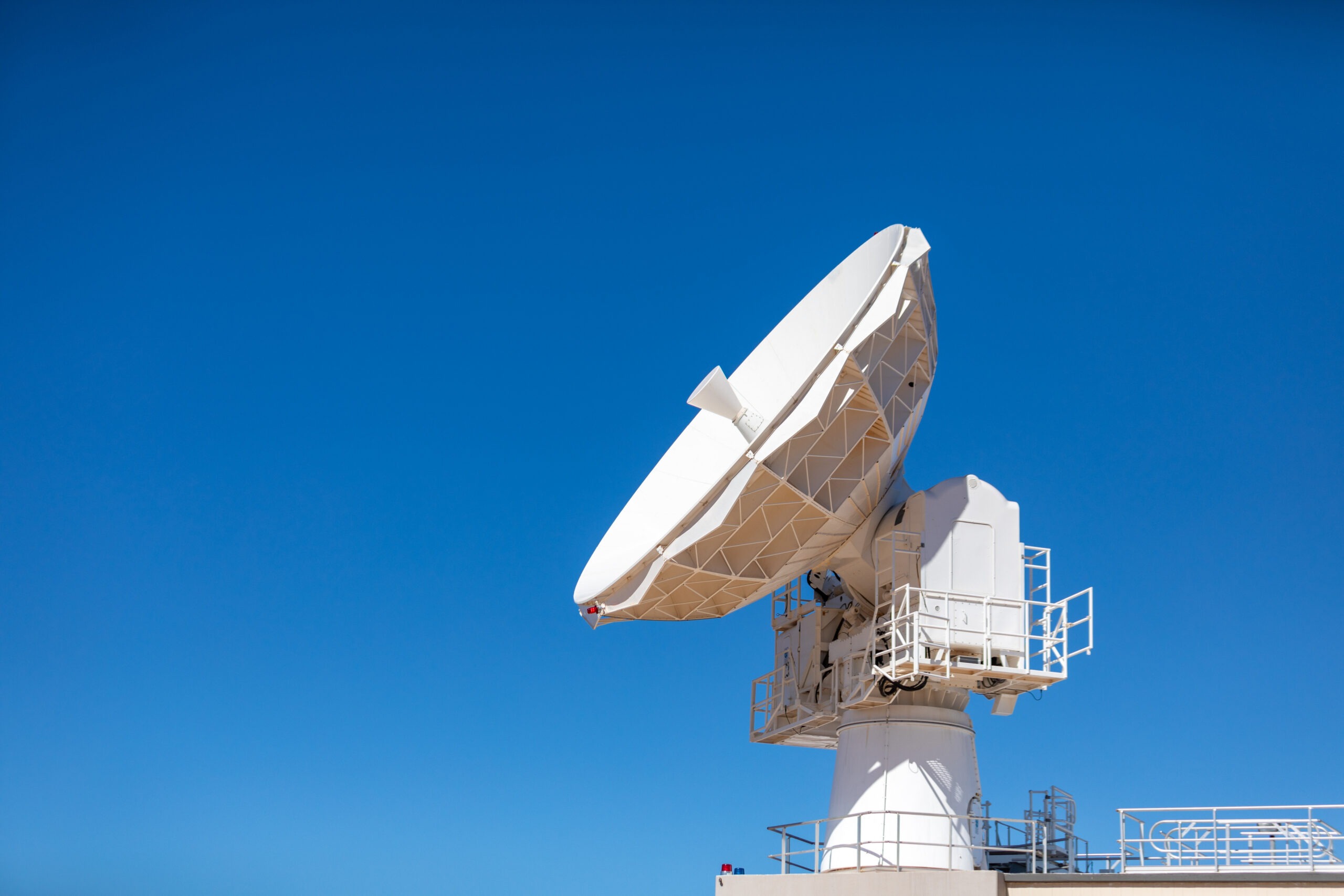
There is growing debate within the global space policy community about whether space is becoming a ‘warfighting domain’. As adversaries develop increasingly sophisticated counterspace capabilities, Australia should consider how to strengthen resilience and assure access to space. A panel at ASPI’s 2026 Defence Conference in June explored the implications of these evolving threats, the effectiveness of space law, and opportunities to work with allies such as Japan to strengthen collective deterrence in space to enhance resilience and assured access.
Although the space domain has supported terrestrial military operations since the early 1960s, the growing dependence of modern militaries on the space support to enable joint and integrated military operations has created stronger incentives for adversaries to develop and test counterspace capabilities. This is accelerating the weaponisation of space and is driving debate over whether space is becoming a warfighting domain.
Speaking at a conference panel titled ‘Space as a Warfighting Domain’, Major General Greg Novak, commander of the Australian Defence Force’s Space Command, emphasised the importance of the space domain. He said it was ‘a great source of military advantage, and as a result, it’s potentially a great source of military vulnerability.’ Still, Australian policy is to approach space as an operational domain rather than explicitly categorising it as a warfighting domain. Novak said:
Just to be clear, the warfighting domain lexicon, that’s not lexicon the Australian government subscribes to. I don’t think that means that there’s not a recognition of the fact that there’s a military stake in space, and we must be prepared to defend our national interests and our capabilities in the space domain. And that’s why I think that operational domain – that domain in its own right – is important lexicon. That does reflect our current position.
The space panel also considered legal frameworks and opportunities to manage the challenge of an increasingly contested space domain. Adelaide University space law expert Melissa De Zwart explored this dimension. She highlighted the complexity of the domain, especially given the ‘huge number of commercial actors in space … who are undertaking activities for or on behalf of governments, on behalf of military,’ noting that ‘many of them are very new, and many don’t come from a defence contracting background’.
Commercial space operators now provide many of the essential services modern societies rely on. This role is set to expand in the years ahead. De Zwart said that ‘as space becomes more valuable, it becomes more vulnerable. … Now we’re talking about putting up things like data centres for AI in space.’ She emphasised the importance of legal and regulatory measures to manage radical transformation in the use of space, particularly as commercial actors take on ever-larger roles.
The panel also explored opportunities for commercial collaboration with Japan. IHI Corporation’s Motoya Nakamura, head of the Satellite Constellation Project Group in the company’s Space Systems Business Development Department, explored how IHI’s space capabilities could support intelligence, surveillance and reconnaissance (ISR), particularly for maritime domain awareness, as well as potential collaboration on rocket development and launch. On the latter he said:
Australia has a vast land area and [is a] very promising candidate for a launch site. On the other hand, Japan has good capability for the rocket manufacturing and launching operation. By combining our capability and strength, we can improve the resilience of the space system, even in an emergency.
On satellite capabilities, Nakamura promoted IHI’s proposed ‘all-in-one’ low-Earth-orbit satellite constellation, with partnerships with both satellite operator ICEye and space technology company Inovor Technologies demonstrating this concept’s potential. The all-in-one concept would see various types of ISR satellites operating in a single constellation and sharing information among partners as part of a ‘capacity sharing initiative.’ Nakamura noted that:
By sharing the open capacity with each other, we can significantly improve the resilience, overall system resilience, and also revisit the rate for the actual operation or tactical operation.
Such an approach would also strengthen collective deterrence in orbit by strengthening critical infrastructure in space through denial of decisive effects of system shocks or strikes. Nakamura emphasised that military space collaboration that enhances partner deterrence, such as ‘a capacity sharing of satellite constellations are only possible with a trusted partner … like Australia and Japan.’
Australia is set to expand its role in the space domain. It recognises that space is congested and contested and that this affects Australia’s ability to ensure access. The growing counterspace challenge threatens the access of major allies and partners as well. With this in mind, Australia and its partners need to build greater resilience into our critical space capabilities and avoid the prospect of a catastrophic collapse of space support in a crisis. Major General Novak said that:
Resilience to me is about making sure that we design a system in the space domain, like it would for any other operational domain in the military. We want to make sure we’ve got no single points of failure. We want to make sure that when we’ve got critical capabilities, we are mitigating the risks of those capabilities not being available, and we’re developing a system that it can absorb losses and disruption and have a gradual degradation rather than a complete turn off of services with catastrophic effect.
A failure to achieve these goals would mean Australia risking facing not only a ‘day without space’, but potentially weeks or months without access to critical space services. To avoid this outcome, Major General Novak argued that Australia should draw on three complementary sources of capabilities to mitigate risk: Australian national space capabilities, cooperation with partners, and the commercial sector. The latter two create opportunities for deeper cooperation with Japanese companies such as IHI.
At the same time, strengthening space law and regulatory arrangements to promote norms of responsible behaviour in space will remain essential. De Zwart also said that resilience was particularly important given that much of the commercial orbital architecture was new and wasn’t designed to be hardened against attack. She noted that strengthening national space expertise was vital if resilience in space was to be achieved ‘because this is a technology and domain we are still learning to work in.’











Leave a comment