


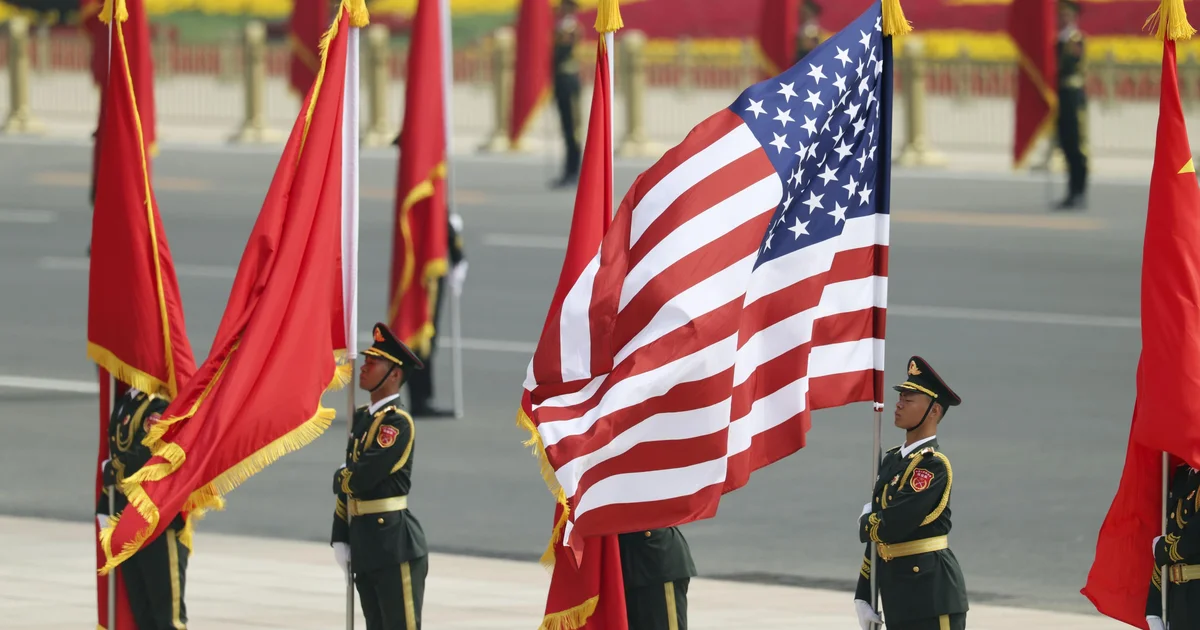
The origins of US hegemony can be traced back to the Monroe Doctrine of the 19th century, whereby Washington declared North, Central and South America to be its sphere of primary security interest with a view to preventing renewed meddling by European powers.
But Asia’s power structure is not at all like 19th–century Latin America. Then, with the large Spanish and Portuguese colonies newly independent and weak, the US faced no competitors. China’s neighbourhood includes India, Russia, Japan, Vietnam, South and North Korea, none of which will be pushovers if China seeks to impose on their interests. Those that are democracies will be hardest for China to win over. (Those that are not, like Vietnam, still need to consider public sentiment when it comes to China.)
How the Taiwan issue unfolds will be important, but a wild card. For what it is worth, my assessment is that the status quo will probably endure into the 2030s. But if change were to occur, a range of outcomes is possible, each of which would tip the scales differently.
Chinese pre-eminence in Asia is conceivable if many of its plans go smoothly, but this will not be straightforward. Others have a vote as well. Chinese hegemony in this region is certainly not inevitable.
US allies, faced with China’s growing power, are hardly going to be the ones to undo their security ties with Washington.
For China to attain global pre-eminence will be a much steeper climb.
The ingredients of US pre-eminence include: political and diplomatic convening power; economic weight; military strength with global reach; excellence and innovation in science and technology; the world’s best research and teaching institutions; deep and liquid financial markets (including venture capital); a trusted legal system; willingness to grant residency and citizenship; cultural appeal; a mother tongue which is the global lingua franca; and personal liberty.
These attributes combine to form a powerful magnet that draws in the world’s top entrepreneurs, students and talent of all kinds. Since the 1950s, for those with the means, New York and California have demonstrably been the most attractive places to be. Such pre-eminence contains a certain self-reinforcing element, where success builds on success.
China may well catch up to the US in some of these fields. It has pockets of excellence in research, technology and manufacturing. But it needs to catch up in essentially all of these areas – and then get out in front to be recognised as the new leader, so as to redirect the flow of global talent away from the US towards itself.
This will be a tall order. China’s economy has slowed and is looking more “normal”. Consumer confidence is stubbornly weak. The birthrate – a telling indicator of societal morale – is at its lowest point since 1949, with no sign of stabilising.
Yet it is China’s systemic impediments that are most constraining: the heavy hand of politics; restricted capital flows; untrusted statistics; information controls and censorship; the Great Firewall; the operation of the legal system; and a language few outsiders master.
China certainly has strengths and can point to many successes. Life there can be energetic and fascinating. But its national attributes, taken as a package, do not yet threaten the leading position of the United States. I question whether they ever will.












Leave a comment