


Could another country replace China as the world’s economic growth leader, or could China reset for a new phase of economic leadership? This is the key question Joe Ngai and Nick Leung address in their new book, The Next China is Still China.
The pattern of economic development in East Asia is often likened to a group of flying geese, where leaders progressively cede their place to others. In this spirit, Japan led East Asia’s postwar development until its leadership was assumed by South Korea and Taiwan, then by some of the economies of Southeast Asia and, more recently, China.
Thus, the question is, as China’s economy slows and matures, could another country assume the mantle of world economic growth leader? Ngai and Leung make the case that the next China is still China – essentially, that China will enter a new phase of economic leadership. The authors are management consultants at McKinsey & Company, a management consulting organisation, and are able to offer valuable insights on the nitty-gritty of the Chinese economy.
China’s economic future is a matter of contentious debate among analysts. Some pessimists argue that China is headed towards Japanese-style stagnation in light of its rapidly ageing population, high national public debt, heavy state economic control and geopolitical tensions. Further, the Chinese economy is still suffering from a real estate crisis and industrial overcapacity, while youth unemployment is stubbornly high.
Against that, optimists point to China’s extraordinary technological progress in artificial intelligence, electric vehicles, renewable energy and space exploration. More fundamentally, China still has enormous catchup potential. Its GDP per capita of US$14,870 (A$21,290) is only one-sixth that of the United States, while its urbanisation rate of 66 percent is still well behind the US’s rate of 80 percent.
According to Ngai and Leung, China is at a moment of ‘reset’, and the next China is taking shape as ‘outward-facing, commercially sophisticated and structurally embedded in the world economy’. And even amid this reset, China’s economic growth in 2026 is slated to be 4.5 percent, more than double that of the advanced economies.
It is true, as the authors recognise, that China’s economic growth rate has slowed from the heady days of 10 percent in the 2000s. But today China is the world’s second biggest economy, and if this enormous economy achieves annual growth of just 2 percent over the next decade, it would add the equivalent of another India to the world economy.
The next phase of China’s economic growth is manifested in its new Five-Year Plan, covering from 2026 to 2030. The plan positions innovation as a strategic driver of the economy and places greater emphasis on self-reliance, balanced with global economic integration. And while China’s services sector is growing in importance, the country remains the world’s manufacturing powerhouse, with this sector being 60 percent bigger than that of the US.
The authors offer a host of information regarding China’s high-tech innovation. They argue that China’s innovation engine has shifted from copycat to innovator. It is making breakthroughs in electric vehicles, batteries, AI, biotech and new models of online retail and social commerce. It has now joined the US as the world’s top research and development spender, representing about 27 percent of the world’s total.
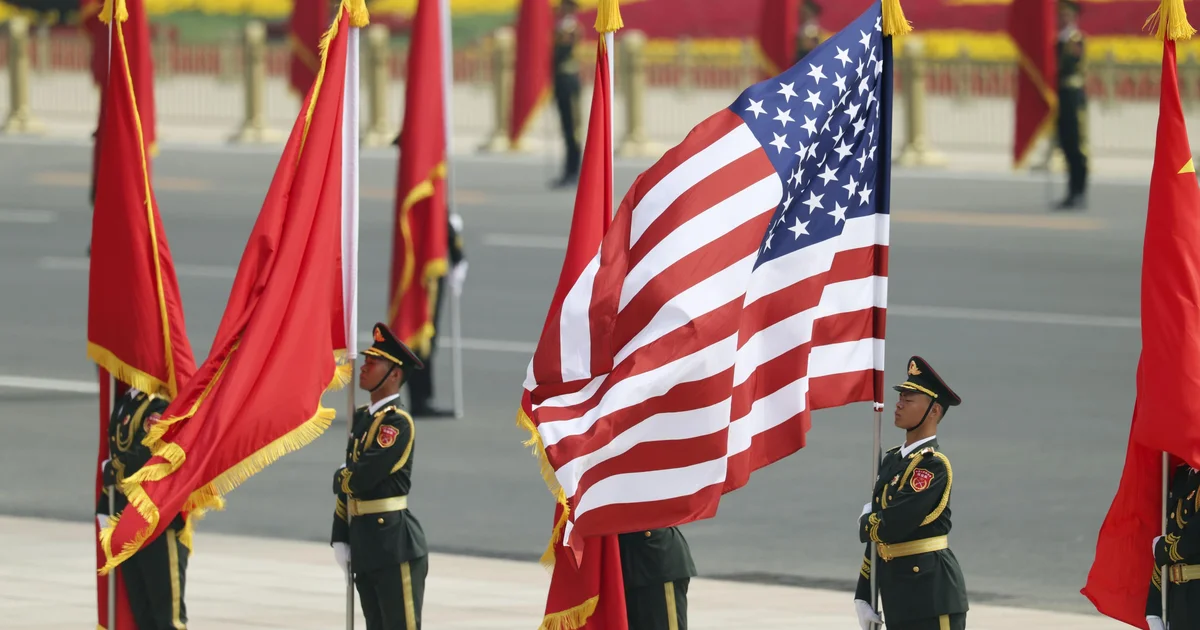
Ironically, the US tariff strategy may be stimulating China’s innovation and accelerating the country’s movement towards technological self-reliance. The US push to decoupling from China has had mixed results – there are often few realistic alternatives to China. And even when there is diversification towards Vietnam or Mexico, it is often a case of Chinese enterprises moving.
China also now generates nearly half of all patents worldwide. It now has its own brands, notably for mobile telephony, such as Huawei, Xiaomi and Oppo. The most successful Chinese companies are now growing globally. BYD anchors electric-vehicle production near customers in Europe and emerging markets. Huawei has built one of the world’s largest international research and development networks. TikTok has scaled through regional hubs and local hiring. Haier has localised its manufacturing ecosystems and empowers local managers.
The authors also dismiss the perception that China is a place of cheap labour. They cite Apple CEO Tim Cook, who reportedly once said that ‘China stopped being the low labor cost country many years ago. Companies come . . . because of the quantity of skill in one location, and the type of skill.’ Indeed, China produces more than 14 million skilled workers annually and five million science, technology and engineering graduates. China has also become the world’s largest end market for robots, installing more than half of all industrial robots globally.
The authors also challenge an old shibboleth: that China is a highly centralised state. In reality, there are thousands of provinces and districts competing with one another, driving dynamism, even if they are guided by directives from Beijing.







Leave a comment