


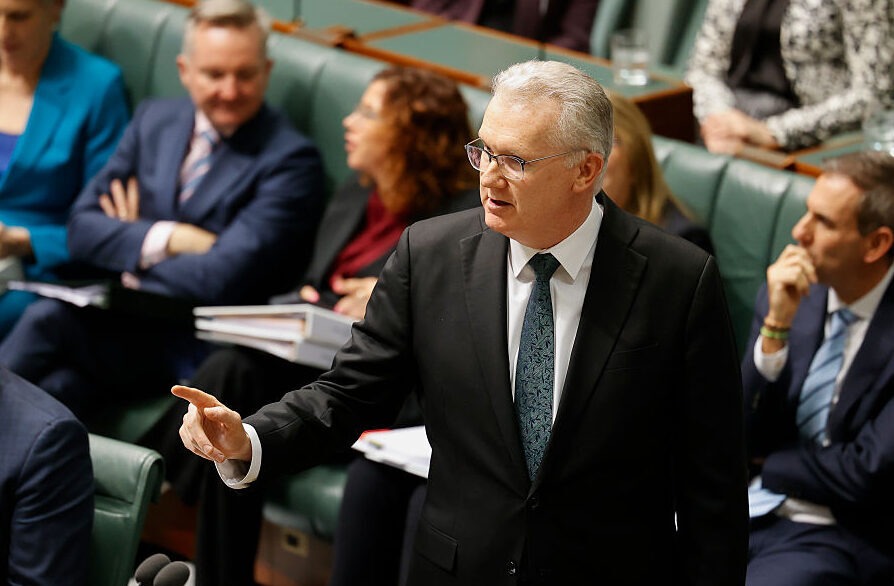
Home Affairs Minister Tony Burke is right to reject the proposed removal of religious motivation from Australia’s terrorism laws. The proposal by the nation’s special envoy to combat Islamophobia, Aftab Malik, rests on a fundamental misunderstanding of what those laws are designed to do.
Malik assumes Australia’s counterterrorism laws regulate extremism. They do not. They regulate the progression from extremist belief to politically motivated violence. Confusing the two would make Australia’s counterterrorism framework weaker, not fairer.
Burke responded to Malik on Monday by saying he was ‘comfortable with the definition that we use.’ We all should be.
Australia does not criminalise extremist beliefs. People are free to hold radical political opinions, controversial religious convictions and offensive ideological views so long as they do not harm others. That is a hallmark of a liberal democracy. The criminal law intervenes against conduct that prepares, facilitates, finances, supports or commits terrorism. Democracies punish violence and its preparation, not ideas.
But that distinction explains why terrorism is treated differently from other serious crimes. Every murder is an act of violence. Not every murder is terrorism. Terrorism seeks something more. It uses or threatens to use violence to intimidate the public or coerce governments in pursuit of political, ideological or religious objectives. Motivation therefore performs an essential legal and operational function. It helps distinguish terrorism from other forms of serious criminal violence.
Malik made his proposal in a submission to an inquiry into overhauling Australia’s counterterrorism framework. He argues Australia should adopt an ideology-agnostic framework that focuses on harm rather than political, ideological or religious motivation. The proposal sounds appealing because it promises neutrality and greater social cohesion. And no one in Australia should be targeted because of their religion, race or ideology. But in fact, the proposal confuses a social cohesion challenge with a counterterrorism challenge.
Removing ideology from legislation and focusing on harm would risk upending the aim of counterterrorism to prevent violence. And it wouldn’t prevent the motivation for the crime being identified and publicised in our transparent democracy. Trying to pretend that motivation isn’t part of the problem would actually just create greater cynicism, distrust and social divide.
Could anyone seriously envisage responding to the Bondi terrorist attack without the courts or public being able to take into account the ideology, whether religious or political? Actually, confronting calmly and openly the fact that some in our society don’t just hold extreme beliefs but are motivated to act violently allows the nation to heal together, no matter one’s race, faith or beliefs.
Governments should continue to combat extremism through civic education, social policies and advocacy for pride in the country. Protecting communities from discrimination should not begin with our intelligence agencies. But protecting individuals and communities from violence does require our intelligence agencies and the courts to factor in, not ignore, relevant information about why terrorists embrace violence. Removing information has never improved intelligence.
Malik’s proposal is also operationally flawed because it assumes motivation is the central question in assessing terrorism risk. It is not.
Thousands of Australians hold extremist beliefs across the political, religious and ideological spectrum. Almost none will commit terrorism. The task of intelligence and law enforcement agencies is not to identify everyone with radical opinions. It is to identify the small minority progressing from belief to politically motivated violence.
That progression leaves observable indicators. Individuals acquire weapons, conduct hostile reconnaissance, seek explosives or bomb-making instructions, communicate with violent networks, raise funds, identify targets and overcome the psychological barriers to killing. Those behaviours, not ideology alone, allow agencies to intervene before violence occurs.
Australia should always be prepared to modernise its counterterrorism framework, but not by deleting motivation from the assessment process. The better approach is to assess four interacting factors: motivation, capability, mobilisation and intent. Our current arrangements do this.
Motivation helps explain why violence is attractive. Capability determines whether an attack is feasible. Mobilisation reveals whether an offender is progressing from belief to operational preparation. Intent demonstrates that violence has become an operational objective rather than rhetoric.
That framework reflects how contemporary terrorism actually develops. It strengthens public safety because it focuses investigative resources on those moving towards politically motivated violence. It also strengthens civil liberties because it reinforces the distinction between lawful belief and criminal conduct.
Burke’s decision has avoided weakening Australia’s terrorism laws in pursuit of a solution they were never designed to provide. Australia should continue to modernise its counterterrorism framework, but it should do so by improving its understanding of how terrorists mobilise towards violence, not by deliberately discarding information that helps explain it. Australia should not prosecute people for ideas. But it shouldn’t ignore the motivations that drive terrorist violence. Effective counterterrorism requires agencies to understand how motivation, capability, mobilisation and intent combine to produce politically motivated violence. That is how a liberal democracy secures its freedoms.













Leave a comment