


Vietnam’s approach has worked for more than two decades. The 2003 revision marked a decisive shift away from an ideological framework towards a more pragmatic, interest-driven calculus. Around the same time, Beijing’s preference (Opens in new window) was to set aside South China Sea disputes in favour of deeper economic engagement.
In 2011, Hanoi and Beijing signed the Agreement on Basic Principles Guiding the Settlement of Sea-Related Issues (Opens in new window), which placed the health of the overall relationship above specific disagreements, including those in the South China Sea. The agreement enshrined a sequencing logic of tackling easier problems first while deferring the most intractable sovereignty disputes to a slower-moving track. This effectively quarantined the thorniest issues and allowed both sides to build robust political and economic ties.
The cooperative dimension of the relationship is most visible in the highest-level exchanges. In April 2025, Chinese Communist Party General Secretary and President Xi Jinping visited Hanoi for the fourth time during his tenure, which coincided with the 75th anniversary of China–Vietnam diplomatic relations. The visit produced 45 agreements (Opens in new window), including on rail links, supply chain resilience, and digital economy initiatives.
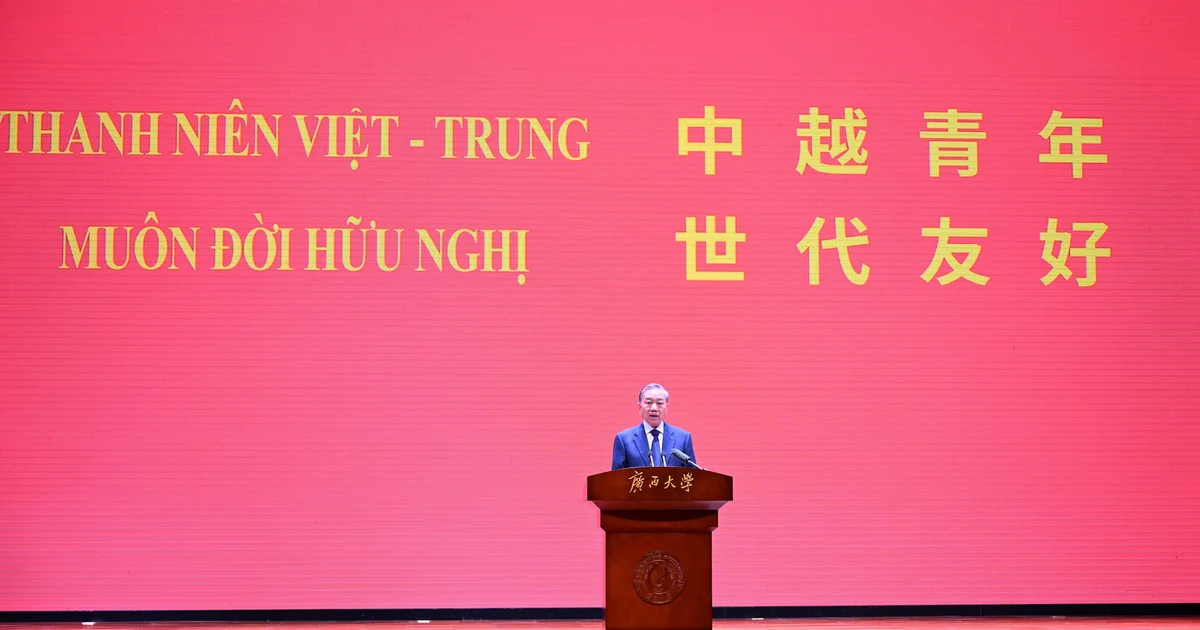
In return, To Lam’s state visit to China in April 2026 was his first since being elected president, with another batch of 32 agreements (Opens in new window). Ministries of Public Security established a ministerial-level hotline. This followed the first ministerial-level “3+3” strategic dialogue (Opens in new window) held in Hanoi, bringing together the foreign affairs, defence, and public security ministers of both countries.
Economic ties reinforce this cooperative architecture. Two-way trade (Opens in new window) reached a record US$256 billion in 2025, and Chinese investment has grown in tandem. By the end of 2024 (Opens in new window), China had 5,111 registered projects in Vietnam worth US$31 billion, making it Vietnam’s sixth-largest source of foreign direct investment. This reflects the structural interdependence now binding the two economies, regardless of maritime frictions.
Beyond the South China Sea, defence cooperation has also reached new heights. In March 2026, the annual Vietnam–China Border Defence Friendship Exchange (Opens in new window) marked its 10th anniversary. That same month, the two navies conducted their 40th joint patrol (Opens in new window) and training mission in the Gulf of Tonkin, which included live-fire elements during anti-piracy drills. In July 2025, the two sides held their first joint army training exercise (Opens in new window). Vietnamese state media have often praised these exchanges as a sign of solidarity and a contribution to building the China–Vietnam community with a shared future.






Leave a comment