


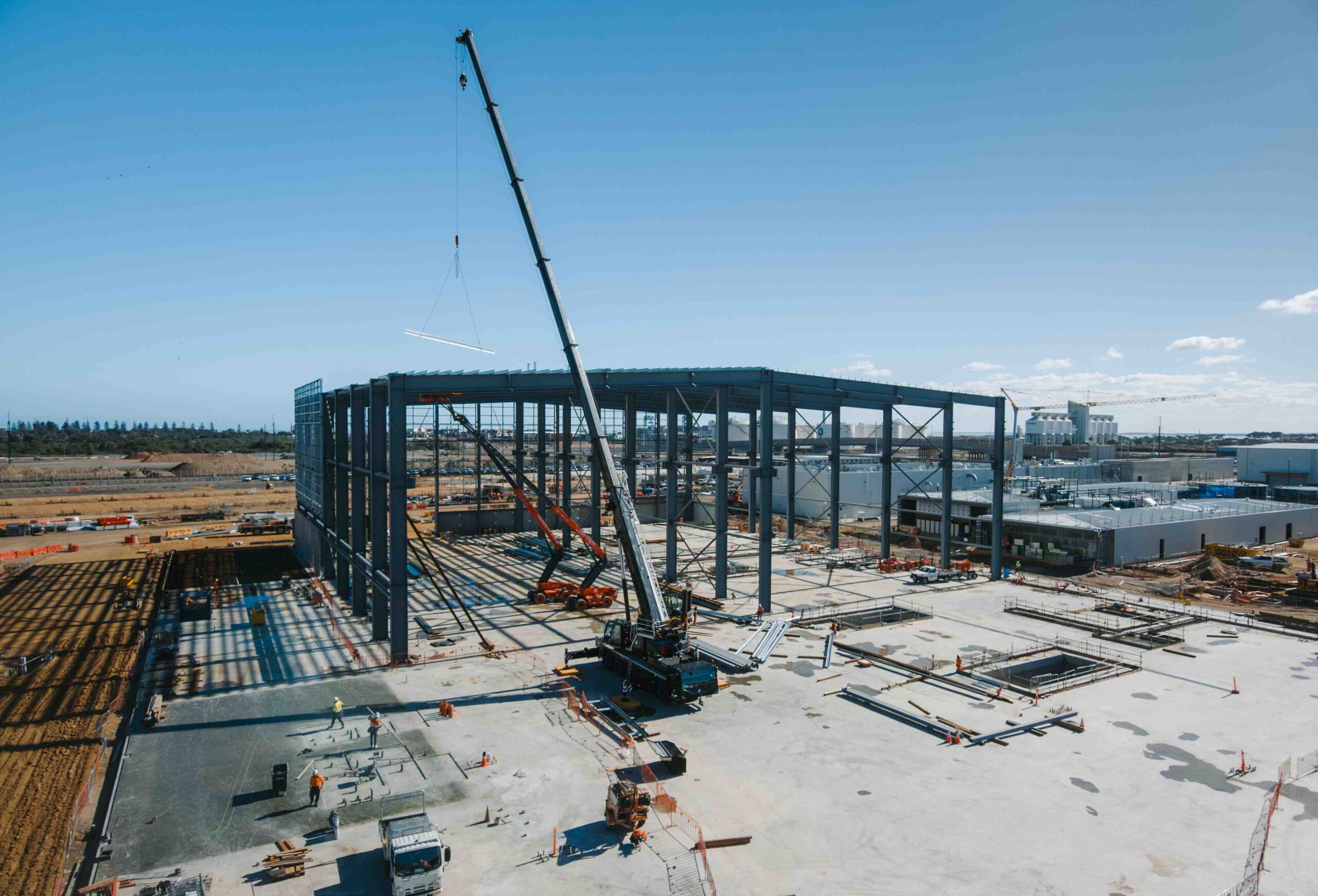
For no good reason that anyone can see, much of the infrastructure spending for building Australian nuclear submarines is bypassing public accountability.
Of the two main sites for AUKUS Pillar One, the one at Henderson, south of Perth, is subject to all the usual and correct processes of open scrutiny as money is spent. For the other, at Osborne in Adelaide, the funds are going into a black box. This includes A$4.6 billion announced last week.
Osborne should be brought into line with the standard process. If it’s good enough for Henderson, it should be good enough for Osborne.
The Henderson Defence Precinct is being delivered largely through traditional federal government capital-spending pathways, in which business case development, investment assurance and parliamentary scrutiny provide visibility over major expenditure decisions.
By contrast, the Osborne Nuclear-Powered Submarine Construction Yard is being delivered through Australian Naval Infrastructure (ANI), which, as a government business enterprise, isn’t subject to any of that scrutiny.
But when a project receives billions of dollars in additional public funding after project approval, the public should have confidence that the reasons for increased costs, changes in scope and delivery risks are subject to appropriate scrutiny – regardless of the delivery model.
Defence Minister Richard Marles’s announcement last week of A$4.6 billion of new spending at Osborne brings total funding there to A$8.5 billion.
ANI is the owner, developer and operator of AUKUS-supporting infrastructure at Osborne, which will be the main construction site for Australia’s nuclear submarines. While the Department of Defence funds the infrastructure, ANI sits within the Finance portfolio and receives the money through equity injections and capital arrangements approved through the budget process. This model separates Defence as capability owner from ANI as infrastructure provider, increasing delivery flexibility but reducing public visibility over infrastructure-specific scope, costs, risks and decisions, which are assessed within a broader capability program subject to national security and commercial sensitivities.
At Henderson, the traditional government investment pathway used for infrastructure to support another part of AUKUS Pillar One, rotational presence of US and British nuclear submarines. The broader Henderson Defence Precinct spans federal, state and privately owned land, with capital works delivered through industry partnerships, but these remain subject to traditional Defence governance, assurance and accountability arrangements.
The Commonwealth Procurement Rules require transparent, accountable procurement that delivers value for money. For major infrastructure investments, these obligations are complemented by oversight by the Parliamentary Standing Committee on Public Works, which examines significant public works from the point of view of public interest. Defence projects above A$75 million are generally referred to the committee, providing visibility of project scope, costs, risks and delivery arrangements before significant expenditure proceeds.
Under the Public Works Committee Act, public works undertaken by or on behalf of federal entities are generally subject to review unless specifically exempted. Projects that Defence itself puts under contract fall within this framework. ANI, however, is excluded under the act, a legacy provision from the predecessor company Australian Submarine Corporation’s exemption under commercial confidentiality reasons. This is why Osborne is not undergoing the same scrutiny as Henderson.
This does not mean Osborne completely lacks oversight. The project has undergone environmental and planning assessments under the Commonwealth’s Environment Protection and Biodiversity Conservation Act 1999 and South Australia’s major project assessment process. These provide regulatory assurance but do not replace parliamentary scrutiny of expenditure, value for money, scope, cost increases and delivery risk.
But this is a long way from the sequence that ordinarily applies to major federal spending on public works: government decision, budget appropriation, procurement processes, project delivery and parliamentary reporting. The resulting asset is recorded on the Defence balance sheet. ANI, by contrast, reports on its spending retrospectively in its annual report and does not break down the value.
The parliamentary committee has recognised the issue of accountability when funds are channelled through government enterprises. It has recommended a review of its act and existing exemptions.
The result of this review should be to make government enterprises accountable through the same process as departments in their public works spending. In doing this, it will be important to minimise loss of the flexibility that the government enterprises bring to investment.
Australia’s submarine industrial base will require decades of investment and sustained public confidence. That confidence will depend in part on showing that major investment decisions are subject to consistent standards of transparency, assurance and accountability.
The question is not whether Osborne warrants additional funding. It is whether major projects delivered through different models provide equivalent visibility over why additional investment is required, how costs and risks are assessed, and how delivery decisions are being tested.













Leave a comment