


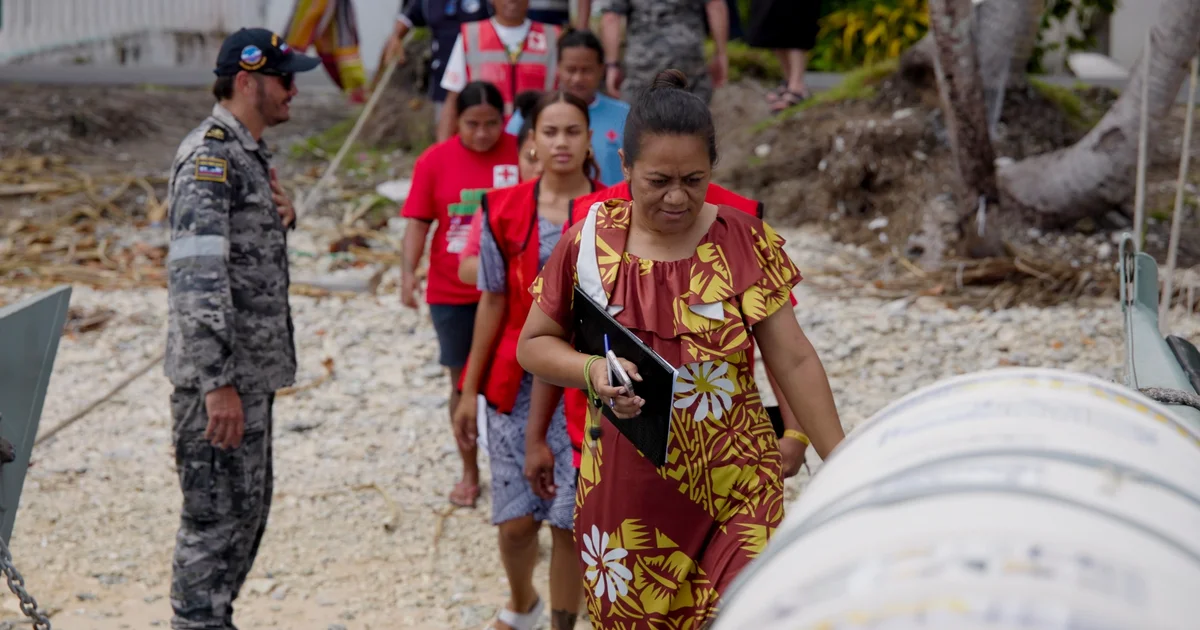
Territory, alongside population, governance and the capacity to enter relations with other states, is considered a foundational element of statehood under the 1933 Montevideo Convention. The Convention offers no ruling (Opens in new window) on the continuity of a state that loses one of these elements – and no court has reflected on the question directly until the 2025 International Court of Justice’s (ICJ) Advisory Opinion (Opens in new window) on the Obligations of States in Relation to Climate Change. The ICJ found that the loss of a constituent element does “not necessarily” mean the loss of statehood. But “not necessarily” is far from a guarantee, and an advisory opinion is not legally binding.
The United Nations Convention on the Law of the Sea (Opens in new window) (UNCLOS) dictates that maritime zones must be calculated from a state’s coastline. States are not obligated to update the geographical coordinates of their established maritime zones, but no precedent yet exists that guarantees maritime territory without associated physical lands will be respected (Opens in new window) by other states. Tuvalu’s 749,800 square kilometres (Opens in new window) of ocean territory generates its primary source of government revenue, through fishing licences, and holds the seabed minerals over which it claims jurisdiction. The absence of legal precedent leaves both exposed.
The consequences of this uncertainty are grave. If the population of Tuvalu was displaced by rising sea-levels tomorrow, they would be at risk of being deemed stateless (Opens in new window). This would see their freedom of movement challenged, the UN status of their country questioned, and their fundamental human rights left unprotected. Tuvalu’s maritime territory would carry the same exposure. If exploited or contested by another state, Tuvalu, and Australia, as its security partner, would have limited legal grounds internationally on which to defend Tuvalu’s ocean jurisdiction.
The same exposure extends to other low-lying nations. Kiribati and the Marshall Islands are both large ocean states with the same average elevation of around two metres. Both face the prospect of losing their habitable land to rising seas. Larger, more mountainous states such as Fiji (Opens in new window) or Papua New Guinea (Opens in new window) will retain their homeland, but even they are already contending with the internal relocation of outer island and coastal communities and could face similar exposure to maritime disputes.
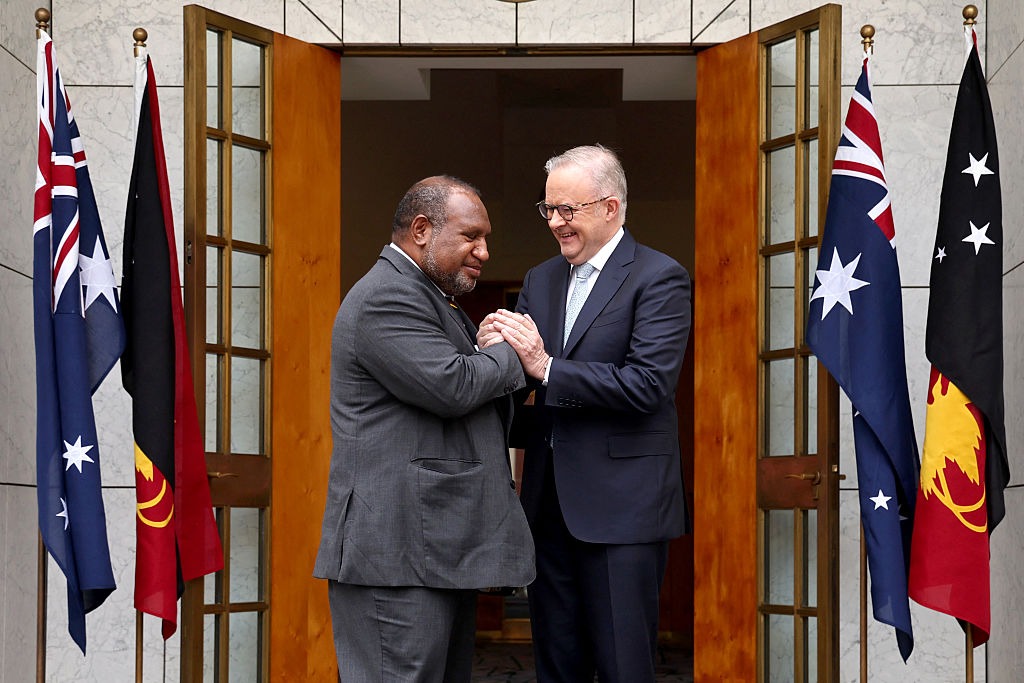
When Australia and Tuvalu signed the Falepili Union Treaty, they set a legal precedent for statehood and sovereignty without territory. That precedent holds between Australia and Tuvalu – but Tuvalu’s continuing statehood cannot rely on a single bilateral relationship to remain secure. The international community must recognise and formally honour it, too.
With Australia presiding over global climate change negotiations at COP31, Tuvalu hosting part of this year’s pre-COP meeting, and Australia co-facilitating the UN Sea-Level Rise Declaration (Opens in new window) negotiations in September, the two partners are well placed to elevate that recognition onto the world stage.













Leave a comment