


American gun rights advocates are fond of saying that the only thing that stops a bad guy with a gun is a good guy with a gun, meaning more guns in the hands of law-abiding citizens will make society safer.
That’s fine if your priority is people’s right to protect themselves using lethal force, but it’s an ideological principle, not an evidence-based harm reduction policy – as gun death statistics show.
Now imagine we gave all 8.3 billion people on Earth access to very big guns in the hope that the good guys would outshoot the bad ones. That’s roughly the case being put by some Silicon Valley figures pushing to reduce AI regulation and liberalise access to advanced or ‘frontier’ models, despite those models’ prowess at cyberattacks and information operations, and the looming risk they pose as bioweapon tools.
These tech leaders are twisting an admirable principle that AI should be open and available to all, rather than concentrated in the hands of a powerful few, into a reckless push to undermine safeguards and circumvent sensible regulation. This should be challenged, including by the world beyond AI superpowers the United States and China, since we will all be endangered if safety and security are disregarded.
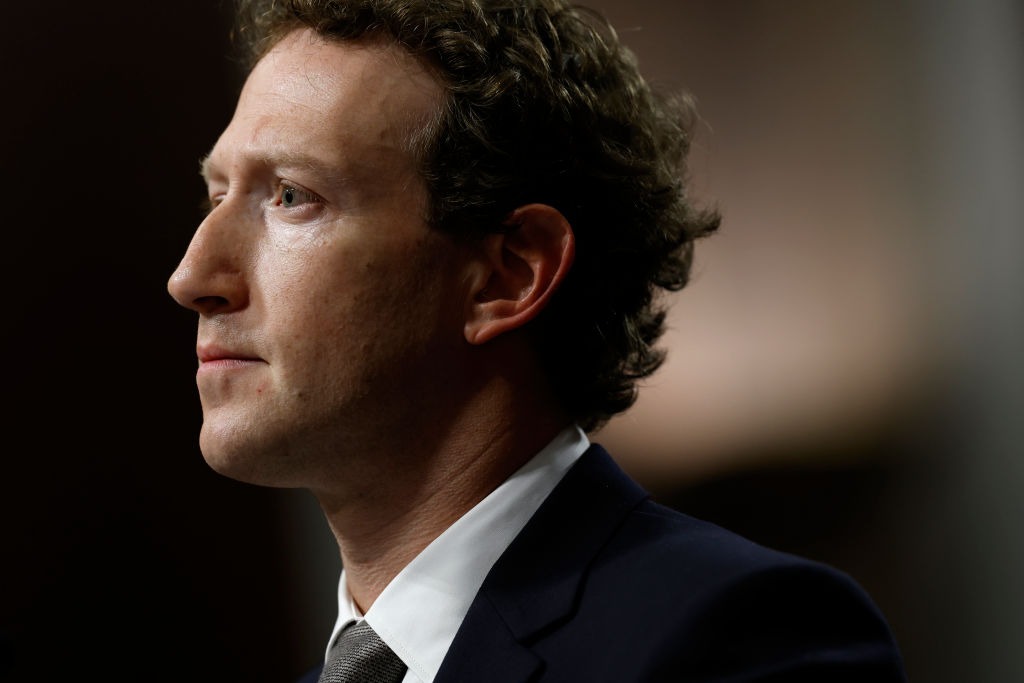
The best example is this week’s media blitz by Meta chief Mark Zuckerberg, which included a Wall Street Journal op-ed championing a ‘balance of power as the foundation of safety’.
The argument carries an obvious flaw and some less obvious sleight-of-hand. The flaw is to assume that the maximum possible distribution of superpower capabilities will easily find a stable equilibrium in which the law-abiding majority can use AI to cancel out the malicious minority made up of criminals, terrorists, sociopaths and geopolitical rivals.
Such an equilibrium is far from assured. Careers were made during the Cold War figuring out a stable nuclear strategy with largely two players, the US and the Soviet Union. Good luck with 8.3 billion players and with industry predictions that we’ll soon achieve ‘superintelligence’, meaning models that are much smarter than the best humans across virtually all useful tasks.
What’s even less certain is that we’d reach that equilibrium without first going through a period of cyber and other security carnage, which could permanently derail the utopia that Zuckerberg and colleagues are forecasting. It’s one thing to want equitable sharing of technologies that empower people; it’s another to be plain reckless about it.
Granted, AI is not just a weapon like a gun or a nuclear bomb; it’s a possible godsend that could help us solve many of the greatest challenges facing humankind. But that’s all the more reason to be careful with the way it is deployed as we reach thresholds such as recursive self-improvement in which models build their own successors without human involvement.
The sleight-of-hand in these people’s argument is that the alternative to laissez-faire access to superintelligence is the sinister concentration of power by a central government and one or two frontier labs. Some people are even equating safeguards with authoritarianism.
A related claim is that open-weight models, which can be downloaded and fine-tuned by users, are inherently safer than proprietary models because millions of users will tinker with and improve them, as has happened with open-source software for decades. But this sidesteps the central concern of security experts, which is deliberate misuse rather than bugs and flaws. Once model weights are downloadable, users can remove safeguards and adapt the model for malicious purposes.
A more accurate analogy to older, non-AI software would be the nonsensical belief that you could share copies of the brains of the last generation’s best hackers and give them loftier intentions to make the world safer.
It’s telling that Zuckerberg exempted biological threats from his balance-of-power strategy. If the most dangerous use needs a carve-out, the strategy can’t be very reliable for more immediate risks such as cyber.
Nobody suggests that access to the most advanced AI should be limitless for governments and choked off for individuals and companies. The opposite of open distribution with minimal or no safeguards is not authoritarian concentration but responsible, judicious regulation by accountable and elected governments.
The world should want equitable distribution, but safely and responsibly, not through a wild gamble that the good guys will overwhelm the bad guys – which smacks of ideology more than rational policy.
The US faces pressure from China, which is encouraging the open-source release of its increasingly powerful frontier models with scant regard for safety, but this is an argument for sitting down with China to address the need for restraint, not racing to beat them despite the risks to the world.
With cautious deployment of intelligence, cyber defenders can keep pace iteratively with attackers, and safety can keep pace with capability. Over time, a safe, stable and equitable form of distribution can be achieved. This is an unprecedented task in which everyone should have a say, not just tech billionaires.













Leave a comment