


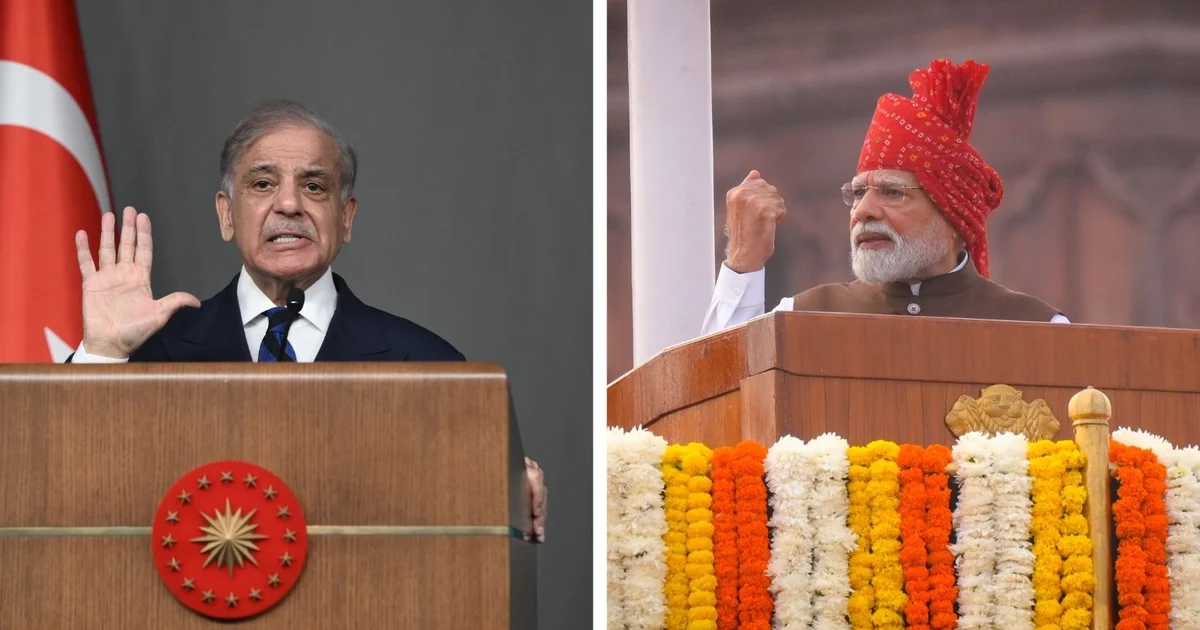
Notably, Pakistan’s official case remains contested (Opens in new window) at home. Islamabad presents (Opens in new window) the pact as alignment with the guardians of Islam’s holy sites, ties to NATO’s second-largest military, and validation of Pakistan’s role as a regional stabiliser. Yet domestic commentary ranges from claims that Pakistan is once again seeking salvation abroad (Opens in new window),to questions (Opens in new window) about what tangible benefits Riyadh can deliver against India with which it maintains close ties. Even supporters have defended the agreement in notably modest terms (Opens in new window): not a bloc, not directed at any state.
India’s debate, meanwhile, has oscillated between pessimistic (Opens in new window) readings of an emerging Sunni alignment (Opens in new window) and dismissive (Opens in new window) claims that the pact is largely Iran-facing. Professional (Opens in new window) assessments have been more restrained, that the agreement creates solidarity : no joint command, no shared assets, and no common rules of engagement. In that reading, Pakistan has gained proximity rather than power, a judgement mirrored by New Delhi’s simply to keep the arrangement under close watch.
The divergence begins not in the facts but in the stories built around them. Indian sceptics conclude the pact matters little, Pakistani sceptics that it delivers little, even though its principal value is likely to be diplomatic rather than military. For India, then perhaps what matters is not what the agreement contains, but what Pakistan’s leadership believes it confers.
The principal lesson of May 2025 (Opens in new window) for India was not simply the employment of force, but its sustainment (Opens in new window): effective intelligence, surveillance, and reconnaissance integration, logistical replenishment during sustained operations, and the ability to manage escalation and bring hostilities to a controlled termination. Against that measure, the pact is militarily symbolic but politically consequential. It deepens Pakistan’s access to Turkish defence technology and training, layered onto a model of Chinese platforms, Pakistani co-production and Gulf financing. It crowds the room with more actors in the termination phase and widens the information battlespace. In this backdrop, Modi’s emphasis on industrial depth, infrastructure protection and civil defence could be seen as a response to the actual lessons of 2025 without elevating a Gulf security arrangement into a doctrinal challenge.
For Indian planners, the more consequential shift is not military but geopolitical. The Gulf is no longer merely an economic stakeholder in India’s security environment; it is becoming an active participant in shaping the regional security order. The Mecca Pact sits alongside broader Saudi efforts (Opens in new window) to institutionalise security cooperation across the Red Sea and western Indian Ocean, reflecting Riyadh’s ambition to emerge as an autonomous security provider rather than a consumer of external guarantees. It enlarges Saudi Arabia’s stake, influence and diplomatic standing in any future India-Pakistan crisis. India cannot disregard Saudi involvement at the cost at which it might disregard Turkish support to Pakistan.
India will be watching out for three specific indicators and developments: a joint command structure, meaningful interoperability, and additional members. Absent all three, the agreement will remain symbolically important, operationally limited. Meanwhile New Delhi will be setting itself up for a lot more legwork (Opens in new window) – working to deepen ties with Cairo, Doha and Kuwait ahead of any expansion, make Saudi neutrality costly to abandon, and invest in maritime domain awareness in the Arabian Sea, the one theatre where this pact’s geography meets India’s.













Leave a comment