


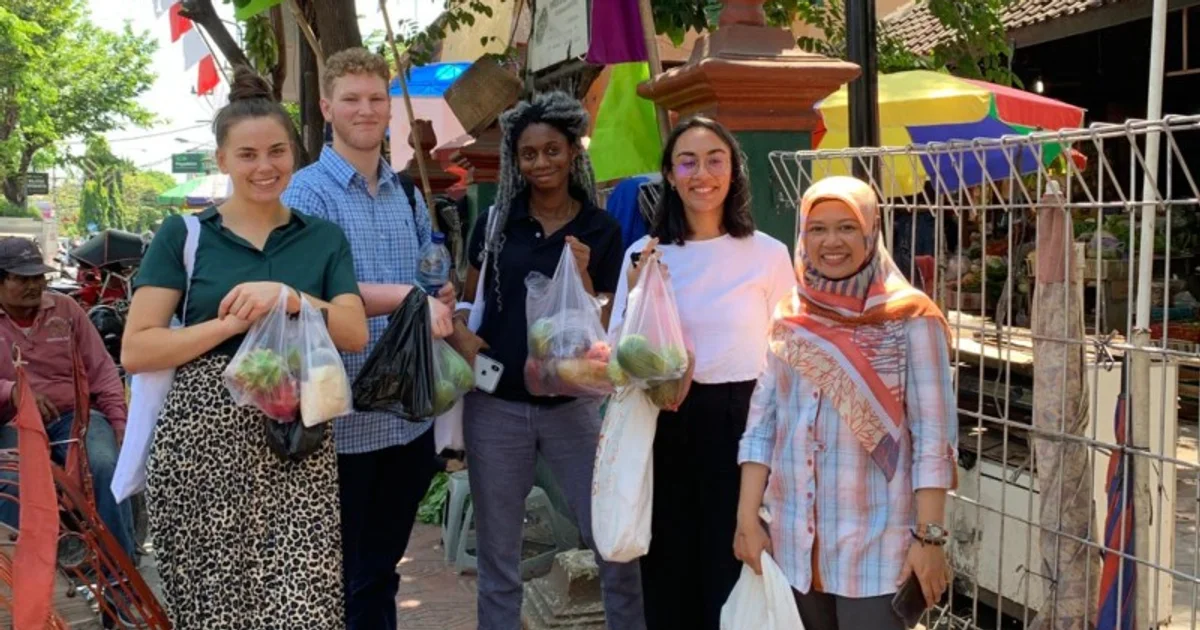
A new book out this month, Experiencing Indonesia: 30 Years of ACICIS (Opens in new window)(ANU Press), tells the story of the Australian Consortium for “In-Country” Indonesian Studies (ACICIS (Opens in new window)), which began in 1994 and has since facilitated study programs for more than 5000 students in Indonesia, the majority since 2014 with NCP support.
ACICIS demonstrates what genuine immersion can achieve. Its model has evolved well beyond traditional language and area studies. Australian students can now undertake programs spanning journalism, business, law, creative arts, tourism, public health, and other disciplines, combining academic study with professional and experiential learning. The result is graduates with authentic experiences who have formed friendships and professional relationships, encountered different perspectives, and had their assumptions challenged.
The ACICIS example highlights the important role in-country study plays, because Asia capability is difficult to acquire from a classroom alone. In-country experiences build through repeated encounters with people and institutions, through language, curiosity, and navigating unfamiliar environments. Experiencing Indonesia explores how in-country experiences can shape individuals, universities, and bilateral relationships. It highlights that the benefits flow both ways: Indonesian partner institutions and host communities are active participants in the exchange, with Indonesian students, lecturers, and volunteers benefitting from reciprocal experiences, deepening professional and academic linkages.
But overseas mobility cannot solve Australia’s Asia capability problem alone. Students need pathways into Asian languages before university and opportunities to continue them afterwards. The recommendations of the parliamentary inquiry provide a blueprint: strengthen language learning across the education system, improve coordination between schools and universities, and develop stronger links between education and the skills Australia needs. The next step is to ensure that students returning from programs such as ACICIS and the NCP can convert their experiences into professional capability through work experience, employment, and continuing engagement with the region.
Australia should also make greater use of its Asia expertise (Opens in new window) at home. Diaspora and migrant communities, including Australia’s substantial international student population, are an underused resource for building connections and understanding. Asia capability should not be conceived solely as something Australians acquire by travelling overseas; instead, it is deeply ingrained in the modern Australian identity.
The opportunity now is to connect these pieces. For Australian students, there is much to be learnt from our region, and from spending time immersed in its communities, campuses, and workplaces. One of the NCP’s greatest strengths has been in “normalising” the idea that an Australian university education can, and should, include serious engagement with the region. Returning to Australia, there is a unique opportunity to connect alumni with diaspora communities and create pathways into professional opportunities that leverage their experiences abroad and meet the needs of Australian workplaces. If done well, Australia is best placed to deliver this kind of Asia capability-building: informed by our strong relationships and deep engagement with our region, and a deeply personal expression of contemporary, multicultural Australia living and breathing Asia capability every day.












Leave a comment