


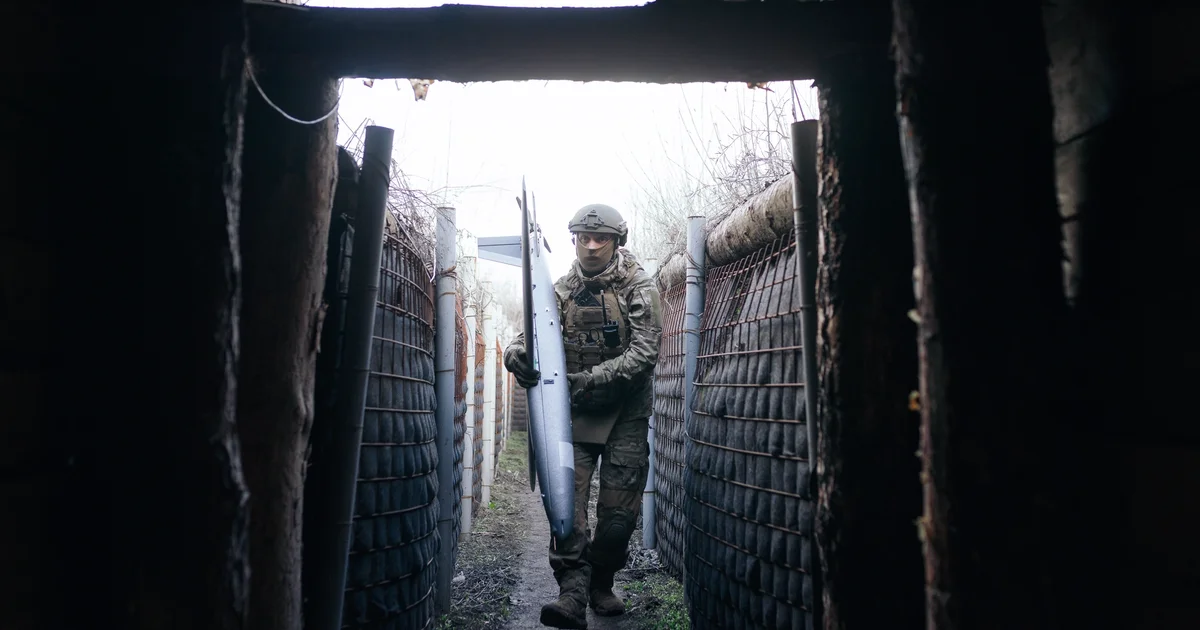
The Army’s vulnerabilities are structural as much as technical. Army training still features very small numbers of drones and counter-drone systems. Counter-drone skills are not yet a foundational discipline on the same level as marksmanship and combat behaviours. There are no dedicated ranges that replicate persistent, layered drone threats. The Army also lacks anything resembling Ukraine’s dedicated Unmanned Systems Forces, let alone drone units in battalions, brigades or the 1st and 2nd Divisions.
Without rapid action on drones and counter-drone equipment, new doctrine and training, and the new drone units that are essential to new ways of war, a future Army deployment into the region is likely to suffer the same fate as the American brigade in Germany.
What is to be done?
First, the Australian Army should make counter-drone and drone employment a core competency, to be trained and assessed to the same standard as weapons handling. Training exercises must be designed and executed around persistent overhead surveillance and attrition.
Second, Defence must undertake organisational reform. The evidence from Ukraine is that combat units need their own drone organisations. Army units urgently need drone platoons (and eventually companies) for defence, attack, reconnaissance, logistics and casualty evacuation. Brigades need their own drone unit for deeper surveillance, interdiction and counter-drone operations. But an army-level drone force is also required. For this, an army reserve brigade should be re-roled into an autonomous warfare brigade. Roles would include force generation, industry liaison, learning and adaptation as well as strategic functions like deep strike.
Third, dispersal, hardening, concealment and signature management (referring to the visual, electronic and heat “signature” that can be detected by an enemy) need to be funded as core Army capabilities. This extends from camouflage discipline down to the hardening and dispersal of the northern bases and logistics nodes that any Pacific operation would rely on.
The exercise in Germany was a training activity, and the American brigade that lost will learn and adapt. The Australian Army has the opportunity to watch and adapt before it has to learn under fire. It has all the knowledge it needs to move rapidly to transform itself now. Army leaders need to take more risks and act more quickly.
Mick Ryan is a consultant to a number of defence and security companies, including drone company Skydio.











Leave a comment