


Australia should pay attention to emerging drone technology in countries to its north and the opportunities they offer for lessons and collaboration. The Northern Territory can serve as a hub for that cooperation through testing, training and integrating autonomous systems with trusted partners. Its doing so would strengthen Australia’s understanding of the technologies developing around it while building interoperability and maritime awareness across its northern approaches.
Recent conflicts in Ukraine, Iran and the Sahel shape thinking about the future of drone warfare, compelling the Australian Defence Force to invest in bespoke and expensive systems of Ghost Shark and Ghost Bat. While these conflicts have reinforced the value of mass, Australia’s geography makes range particularly important.
This makes the developing use of drones around Australia’s northern approaches strategically important. The Northern Territory Defence Strategy 2026 describes the territory as Australia’s frontline and envisages Darwin as a northern sustainment hub supporting ships, landing craft, aircraft and uncrewed systems. It also positions the territory as a proving ground where next-generation equipment can be tested, integrated and rapidly deployed.
But if northern Australia is to become a sustainment hub for autonomous systems, Canberra needs a clearer picture of the capabilities developing just beyond it.
Indonesia should be a priority. It sits across maritime approaches connecting Australia with the rest of Southeast Asia. It has ambitions to develop a domestic drone industry after years of relying on systems from China, Turkey, Austria and the United States. The Indonesian military is building counter-drone capabilities through imported systems and border training with Malaysia, and its state–owned enterprises are pursuing domestic development of surveillance and kamikaze drones.
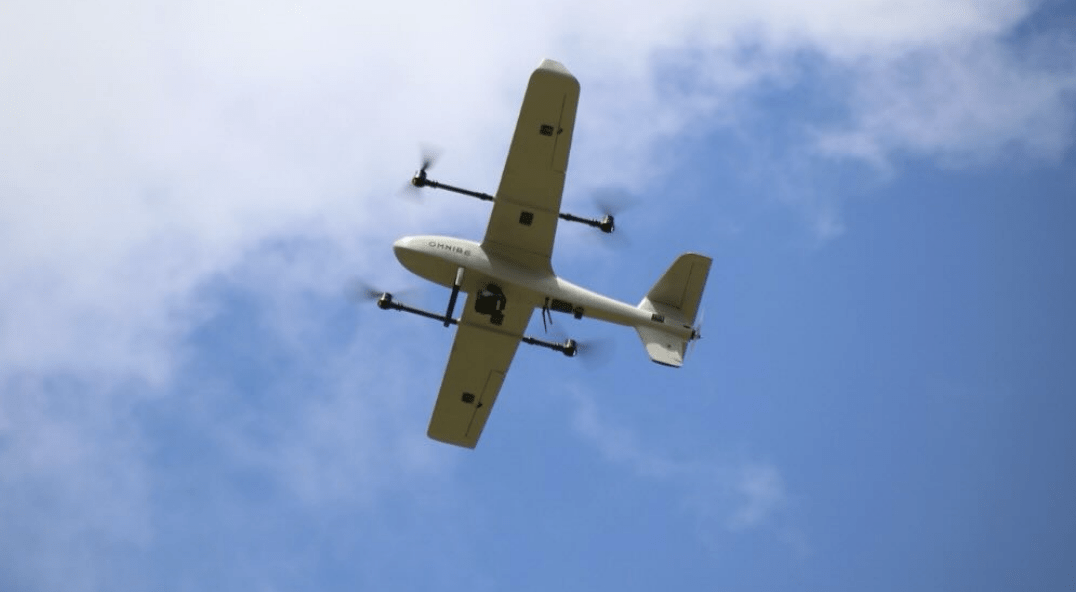
Importantly, Australia’s and Indonesia’s drone industries have experimented together. In 2025, Australian company Drone-Hand and Indonesia’s Beta-UAS tested their Omnibe vertical take-off and landing drone for livestock monitoring and aerial observation in the Northern Territory. Although this was a civilian trial, it provided a foundation for further development cooperation in areas of shared interest. These include maritime surveillance, where Indonesia is seeking to strengthen its uncrewed monitoring capabilities following the discovery of a suspected Chinese device moored in the Lombok Strait earlier this year.
The Northern Territory could provide an environment for testing Australian and Indonesian systems together under the distances and conditions of their shared maritime neighbourhood.
Papua New Guinea and Timor-Leste present different opportunities. Their capabilities in uncrewed systems remain modest, but the locations makes their technology choices relevant to Australia, particularly as China offers increasingly sophisticated systems. PNG lies just across the Torres Strait and has already confronted foreign drones operating in its territory. Australia has previously provided drones to the PNG Defence Force for border security, although some were Chinese-made DJI systems.
Drones have practical applications in Timor-Leste for health service delivery, disaster preparedness and fisheries monitoring. The country’s position next to the Timor Sea and offshore energy infrastructure means even modest drone capabilities could contribute to regional surveillance. Australia has an opportunity here to support trusted systems that local agencies can operate, maintain and govern. Maritime security has already been identified as a common interest under the Australia–Timor-Leste New Partnership for a New Era. Canberra could complement its provision of uncrewed vehicles and training with access to information collected by its Ocius Bluebottle uncrewed boats to strengthen maritime monitoring.
Further afield, Australia should watch countries that are leading in drone integration and experimentation. Singapore is particularly relevant. The Singapore Armed Forces’ largest overseas unilateral exercise, Exercise Wallaby, in Queensland, has featured a coordinated drone swarm of more than 100 autonomous systems flying for 560 hours, as well as an AI-enabled uncrewed aircraft mothership carrying smaller drones. This is one result of Singapore’s Defence Science and Technology Agency’s collaboration with Australian company DefendTex, demonstrating the potential for deeper technological cooperation.
Increasingly contested maritime environments, particularly in the South China Sea, are also encouraging countries such as Malaysia, the Philippines and Vietnam to build indigenous drone technology. Malaysia is improving its technology through foreign partnerships while pursuing domestic surveillance and counter-drone technologies equipped with AI while stopping short of weaponisation of its drones. The Vietnamese Ministry of National Defence is developing its Sustainable Air Defence Dome strategy for countering autonomous warfare, while Vietnamese companies Z113 Factory and Viettel are expanding domestic drone production, including of systems with AI-assisted targeting.
The Philippines brings both operational experience and resistance to grey-zone pressure. Having used Chinese DJI drones during the 2017 battle of Marawi but facing increasing pressure from China in the South China Sea, Manila has diversified its suppliers and pursued joint production with Ukraine. Canberra’s commitment last month to provide drone technology and training to the Philippine Coast Guard creates a further opportunity for Australia to boost regional defence and interoperability with a close partner.
The growth of these drone technologies therefore gives the Northern Territory an opportunity to become more than Australia’s operating base. It could become a regional training, experimentation and sustainment hub for autonomous systems, offering trusted partners access to testing facilities, training, maintenance, counter-drone expertise and secure data integration. Such cooperation would strengthen maritime surveillance across the Timor and Arafura Seas, build interoperability before a crisis and, over time, spread trusted technologies across Australia’s northern approaches.
Drone systems across Australia’s northern approaches
| Country | Main platforms / suppliers | Approximate range | Primary mission | Relevance to Australia | Foreign support | Outlook |
|---|---|---|---|---|---|---|
| Indonesia | Bayraktar TB2 and Akinci, CH-4, Elang Hitam, Medium-Altitude Long-Endurance (MALE) UAVs, indigenous programs | 150-300 km (tactical); 250-1,000+ km (MALE) | Maritime surveillance, Exclusive Economic Zone patrol, strike, border security | Immediate neighbour; Timor and Arafura Seas; maritime approaches to northern Australia | Austria, Turkey, China, the US | Building domestic industry |
| Papua New Guinea | Small commercial UAVs; limited government capability | Border surveillance, disaster response, fisheries | Torres Strait, future maritime surveillance in northern approaches | Australia | Opportunity for providing support | |
| Timor-Leste | Small commercial UAVs | Maritime monitoring, fisheries, search and rescue |
Timor Sea, offshore energy infrastructure, northern approaches | Australia | Opportunity for providing support | |
| Singapore | Heron 1, Hermes 900, Veloce 15 and 60, Orbiter 4, exploring AI-enabled drones | 350–1000 km | Urban operations; counter-drone; AI- swarm experiments; intelligence surveillance and reconnaissance (ISR) | Regional technology leader; partner interoperability | France, Israel | Regional innovation leader |
| Malaysia | Turkish ANKA-S,Scan Eagle, indigenous Ghost interceptor | 100–250 km | Maritime surveillance, border security, counter-drone | South China Sea monitoring; eastern Sabah approaches | China, Poland, Turkey | Rapid expansion, indigenous development |
| Philippines | Hermes 450 and 900, ScanEagle, Turkish UAVs (planned) | 200–1000 km | ISR, South China Sea surveillance | Lessons from Chinese hybrid threats pressure; partner interoperability |
US, Israel, Ukraine | Capability building |
| Vietnam | Viettel VU-R70, VU-C2, Bayraktar TB2, other domestic UAVs | 150–1000 km | Mekong delta development, border surveillance | South China Sea balance; defence industry | China | Indigenous development |











Leave a comment