


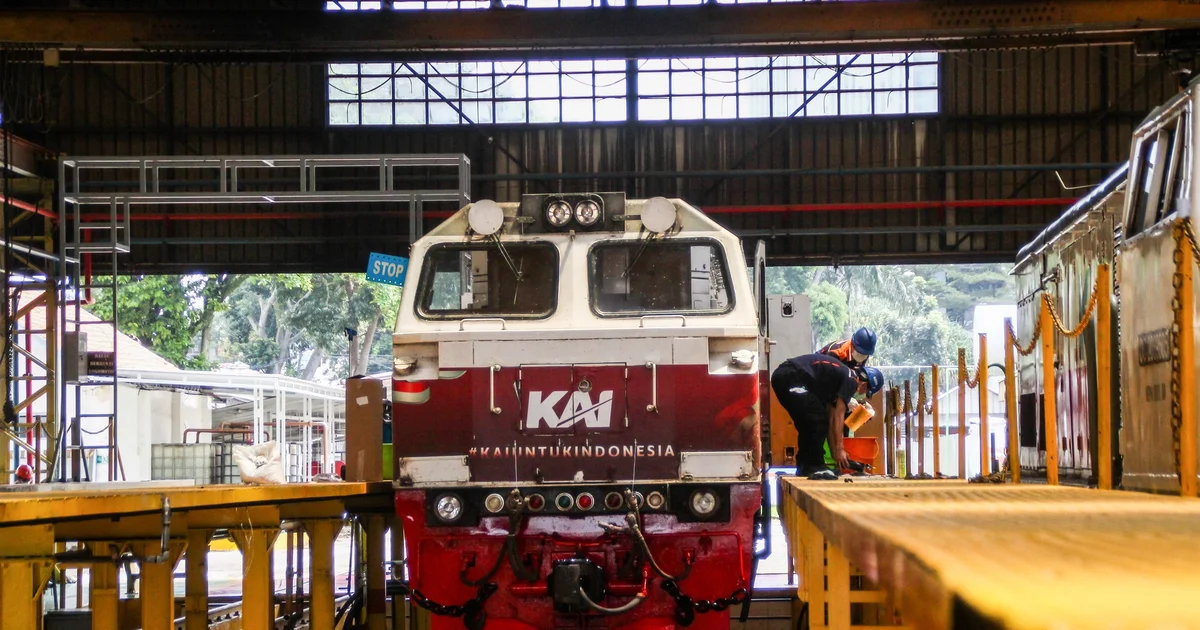
An earlier plan shows a realistic starting size: 203 kilometres on Indonesia’s list of national priority infrastructure projects (Opens in new window), linking resource-rich areas to Balikpapan, Kalimantan’s main port on the Makassar Strait, priced at roughly US$3 billion. It stalled and was finally abandoned in 2022 after its original investor, Russian Railways, pulled out (Opens in new window). No official cost exists yet for the full 2,772-kilometre version. Scaling that smaller project’s price across the whole route, as a rough calculation rather than a forecast, lands near US$40 billion, a figure meant only to show the scale involved.
Given numbers that size, Jakarta should stage the work, starting with corridors where freight demand is already strong. Indonesia often builds large infrastructure without binding contracts from the companies that would use it, trusting demand will follow, a heavy gamble at this size. Locking in long-term freight agreements before construction starts would give any lender real security.
The financing structure deserves as much scrutiny as the schedule. If a bank lends to the project, KAI guarantees the loan, and an Indonesian state fund guarantees KAI in turn, the ultimate risk still sits with Jakarta, whatever the paperwork calls it. Spreading that risk more widely, among Indonesian banks, state firms, and the mining and plantation companies that would benefit directly, would leave Indonesia less exposed than it was with Whoosh.
Beijing has faced a contest like this before. In 2015, it beat a Japanese bid for the Whoosh contract (Opens in new window) partly by offering to skip the guarantee Tokyo wanted (Opens in new window), a concession that later left more risk with Indonesia. This time Russia, not Japan, is the rival, and Jakarta should use that competition to negotiate the best terms it can.
China’s other Indonesian projects offer a workable model for sharing construction and operations. The Makassar-Parepare railway in South Sulawesi (Opens in new window) was built through a public-private partnership including a Chinese construction firm alongside Indonesian companies, with the consortium handling operation and maintenance for years afterward while Indonesian staff took on a growing share of the work.
Kalimantan is also where Nusantara, Indonesia’s new capital, is taking shape, adding to Jakarta’s reasons to get this right. The sequence that matters most is Indonesia’s to set: cargo commitments first, binding contracts second, financing third, construction last. Get that order right, and Kalimantan could gain a railway built to last. Get it wrong, and Indonesia, not any single foreign partner, will be the one paying for it.












Leave a comment