


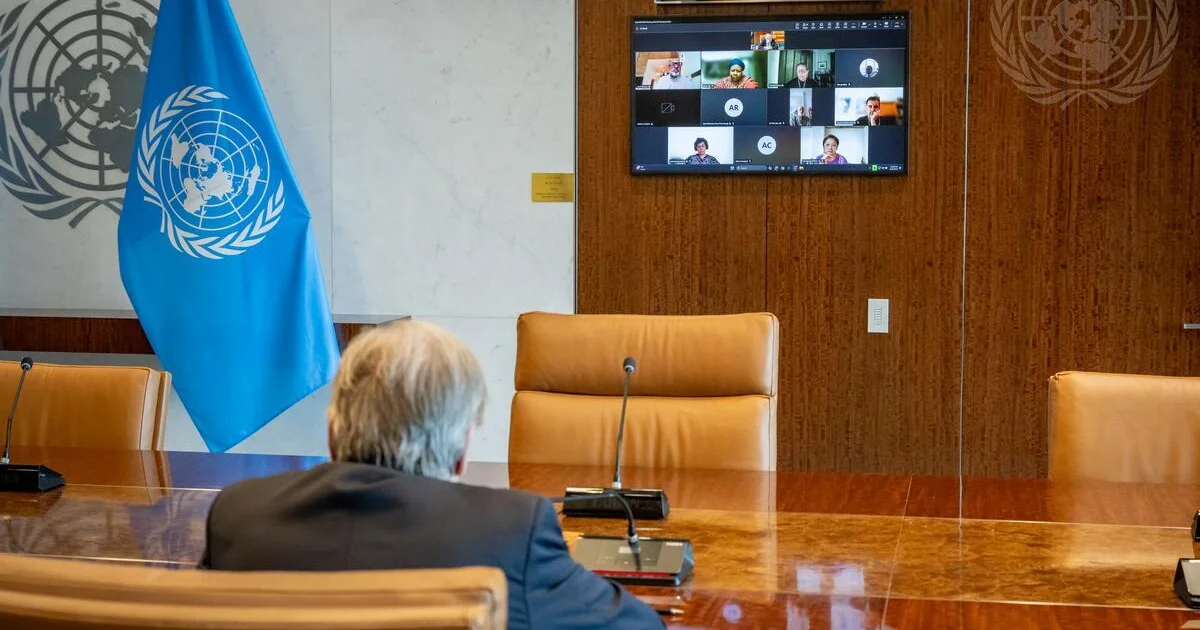
Carney’s approach is reasonable. But he did not explain how these coalitions should work. In fact, there is no need to reinvent the wheel. Australia has already built such coalitions within the UN: for example, in Bougainville between 1998 and 2003, when it led a small regional coalition, working in tandem with a UN political office (Opens in new window) to end the civil war. Working through the UN provides many benefits, including legitimacy and reach. It is also inexpensive in comparison to defence spending. Recent attempts to bypass the UN, such as the Trump administration’s Board of Peace, have shown the limits of those approaches.
But can the UN fulfill such a role again?
When an institution is in crisis, it matters even more who leads it. Since the UN Charter gives the Secretary-General little formal power, the office depends almost entirely on the political acumen and the strength of the incumbent’s personality. A Secretary-General who builds trust with all member states, keeps communication open in a crisis, and speaks with charisma and authority can get things done. History shows this matters even more when the Security Council is deadlocked (Opens in new window), as Hammarskjöld’s mission to Beijing demonstrated.
To renew the organisation, the next Secretary-General will have to build coalitions in its support, to engage personally in restoring its diplomatic role, and to illustrate to the public its worth. That person will probably hail from Latin America and will have catching-up to do on Asia, where most of humanity, the global economy, and security players are. Unlike Guterres, who did not visit Australia (Opens in new window), the new Secretary-General will have to travel early and widely (Opens in new window), to build standing and relationships. The next Secretary-General will need Australia’s backing.
It helps that Australia has a non-partisan tradition of working with the organisation. The Coalition under Prime Minister John Howard and his Foreign Minister Alexander Downer worked closely with Secretary-General Kofi Annan during the 1999 East Timor crisis (Opens in new window). In 2013–14, when Australia held a seat on the Security Council (Opens in new window), Foreign Minister Julie Bishop led the push for the resolution demanding accountability after flight MH17 was shot down in 2014, killing 38 Australians (Opens in new window). Both Downer and Bishop went on to serve as the Secretary-General’s own envoys, to Cyprus (Opens in new window) and Myanmar (Opens in new window) respectively. Even Tony Abbott, no enthusiast for international institutions, told the UN General Assembly in 2014 (Opens in new window) that the UN is “better than might-is-right.”
The current Australian government has been supporting the UN: Australia joined the UN Peacebuilding Commission in 2025 (Opens in new window), lifted its annual contribution to the Peacebuilding Fund to $15 million (Opens in new window), and remained one of the few member states that pays its dues in full and on time (Opens in new window).
Australia can build on this record right now. Albanese’s presence in New York next week is a chance to lobby the Security Council to ensure the race for the job culminates successfully. Afterwards, Australia can draw on coalitions like MIKTA (Opens in new window) – a grouping of five middle powers comprising Mexico, Indonesia, South Korea, Türkiye, and Australia – to bolster the new Secretary-General’s efforts to revitalise the organisation. A Council seat (Opens in new window) for the 2029–30 term, which Australia is campaigning for, would be an opportunity to do even more.
In 1949, Australia’s H.V. Evatt, serving as President of the UN General Assembly, called the UN “the corner-stone of effective international action to maintain peace and security and promote higher standards of welfare throughout the whole world.” Australia helped build the UN’s foundations. It has every reason to defend it now.







Leave a comment