


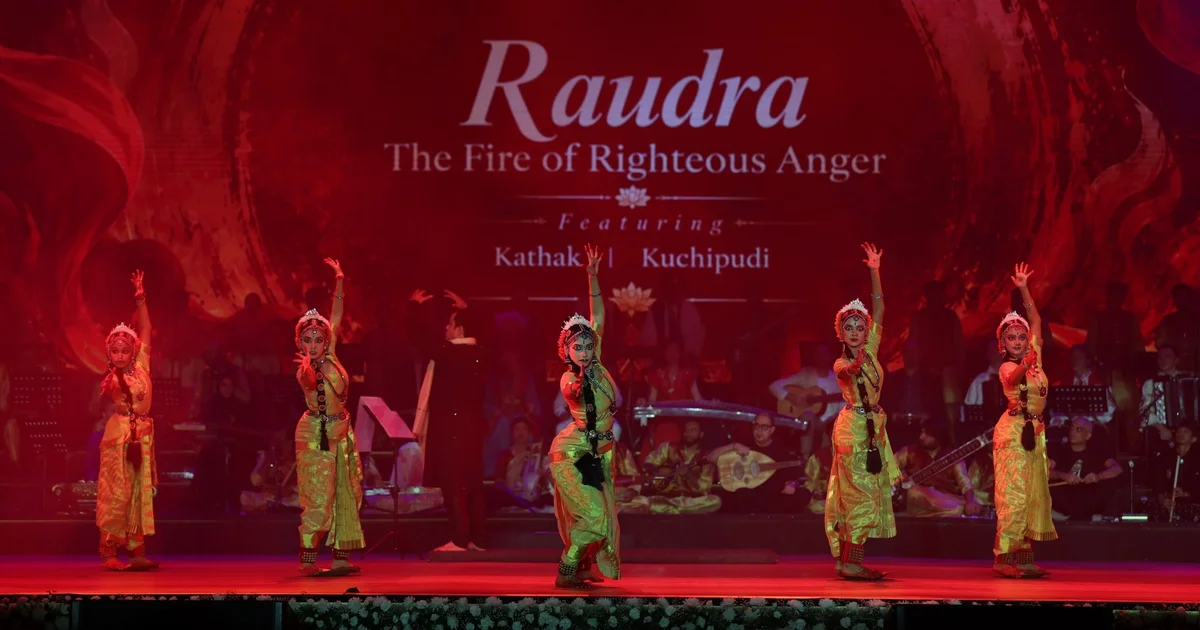
BRICS faces a more complex challenge. It is not a nation, and it cannot draw on a shared history or cultural tradition. The expanded community comprises states with very different political systems and strategic interests. The Interpreter has previously explored the competing visions within BRICS (Opens in new window), including India’s preference for a multipolar order and its concerns about the grouping acquiring an explicitly anti-Western character. Nevertheless, BRICS presents itself as part of a shift towards a more multipolar international order.
How can a symbol of unity be created without pretending that these differences do not exist? An orchestra offers an extraordinarily effective answer. Its symbolism is based on difference. A violin does not need to turn into a flute for the ensemble to function. At the concert in Delhi, the Russian balalaika did not need to become a Chinese erhu. Each instrument could remain recognisable, at the same time contributing to the greater whole.
This makes the orchestra an effective embodiment of the international order that BRICS seeks to project. Its members remain independent, yet coordination is still possible.
There is, however, an intriguing historical irony: the modern orchestra is, in itself, largely a product of European musical culture. I don’t think this contradiction makes the BRICS Symphony any less effective as cultural diplomacy. If anything, it reveals how cultural power actually works. Political orders rarely create their symbols from nothing; old forms can acquire completely different meanings in new hands.
The orchestra’s development was closely linked to royal courts and theatres, and later to public concert life. The employment of musicians was not merely a form of entertainment. Like majestic architecture or solemn ceremonies, music could demonstrate wealth and power. But cultural symbols do not necessarily remain the property of the societies that created them.
This process is central to my own research (Opens in new window) into 19th-century Russian musical culture. At the beginning of the century, Russia did not yet possess the permanent public musical infrastructure or established national classical canon that would take shape later. Musical life depended to a large extent on the imperial theatres and aristocratic patronage. Foreign musicians, particularly from Italy, France and Germany, played an important role as performers and teachers.
In the decades that followed, these borrowed traditions became firmly established in Russian cultural life. By the 1830s, composers had begun to develop a repertoire that would subsequently come to be perceived as distinctly Russian. Glinka’s opera A Life for the Tsar, which premiered in 1836, became a particularly striking example of how music acquired a distinctly national significance.
The infrastructure developed more gradually. The Russian Musical Society was founded in 1859. The St Petersburg Conservatoire followed in 1862, the Moscow Conservatoire four years later. Russia took the musical traditions and institutions that had taken shape in other countries and made them part of its own cultural identity.
By the end of the 19th century, Russian music had itself become an important cultural export. In this way, the orchestra could become something of a flag: an inherited form imbued with new national meaning.
This is why I find the BRICS Symphony (Opens in new window) so interesting. The orchestra may have European roots, but its political meaning is not permanently European. Russia itself demonstrated in the 19th century how effectively European musical institutions could be absorbed into a different national culture. BRICS is now doing something comparable on an international scale.














Leave a comment