



Seeking to secure mineral supplies in a volatile market, nations are focused on reaching agreed pricing methodologies. The Office of the United States Trade Representative is negotiating (Opens in new window) mineral-specific price floors to address Chinese market distortion, enforced through adjustable tariffs at the border. Action Plans have been signed with Japan (Opens in new window), Mexico (Opens in new window) and the European Union (Opens in new window) as the path to an Agreement on Trade in Critical Minerals (Opens in new window), establishing a preferential trade zone. In August (Opens in new window), S&P Global published draft structural cost benchmarks for several minerals, including rare earths, which will serve as inputs (Opens in new window) into those negotiations.
Australia holds a critical minerals framework (Opens in new window) with the United States, committing both to develop a future global framework for pricing, but no Action Plan linked to the Agreement. Canada’s critical mineral cooperation (Opens in new window) with the US is in jeopardy, as their trade war escalates. Brazil is absent entirely. That means price negotiations are proceeding without clear input from any major producer.
The term “cost methodology” sounds objective, reached through impartial calculation. In reality, prices shift depending on key decisions throughout the process. Many minerals do not come out of the ground one at a time, but alongside each other or as by-products of other metals. Costs are shared and deciding how much belongs to a specific mineral is a judgement call.
A mineral also has one price as raw concentrate, another once it is separated into individual oxides, another again as a magnet. A price floor must attach at one point, which decides who in the supply chain it protects. Set at concentrate, it guarantees a price for extraction and does little to incentivise processing – the opposite of producers’ objectives.
A benchmark is already emerging deal by deal. In July 2025, the US Department of Defence set a US$110 per kilogram floor for neodymium-praseodymium from MP Materials (Opens in new window), rare earths critical for permanent magnets. In March 2026, Lynas Rare Earths agreed the same US$110 floor with Japan (Opens in new window), then signed a Letter of Intent with the same price for the US (Opens in new window). On 3 September, (Opens in new window) USA Rare Earth completed its acquisition of Brazil’s Serra Verde, with a 15-year offtake carrying the same US Government backed US$110 floor (Opens in new window).
If Australia cooperates with Brazil, it helps influence these pricing benchmarks in two ways. First, Brasília’s weight in negotiations would promote producers’ interests and balance a room full of buyers. The US wants Brazil as a partner and may be receptive to Brasília’s input, having sent an unanswered framework for cooperation in February (Opens in new window). Canberra could persuade Brasília to engage by framing cooperation as protecting producers’ interests, without binding Brazil to any trade bloc. This aligns with Lula’s (Opens in new window) insistence that Brazil set the terms for its resources, which he emphasised when enacting the critical minerals policy.
Second, Australia is building its own floor. The Critical Minerals Strategic Reserve (Opens in new window) will underwrite offtake for rare earths, antimony and gallium, with Resources Minister Madeleine King saying (Opens in new window) the aim is a pricing mechanism reflecting production costs. However, a price floor set by Australia, without factoring in Brazil’s cost structures, would need revision once Brazil’s supply arrives.
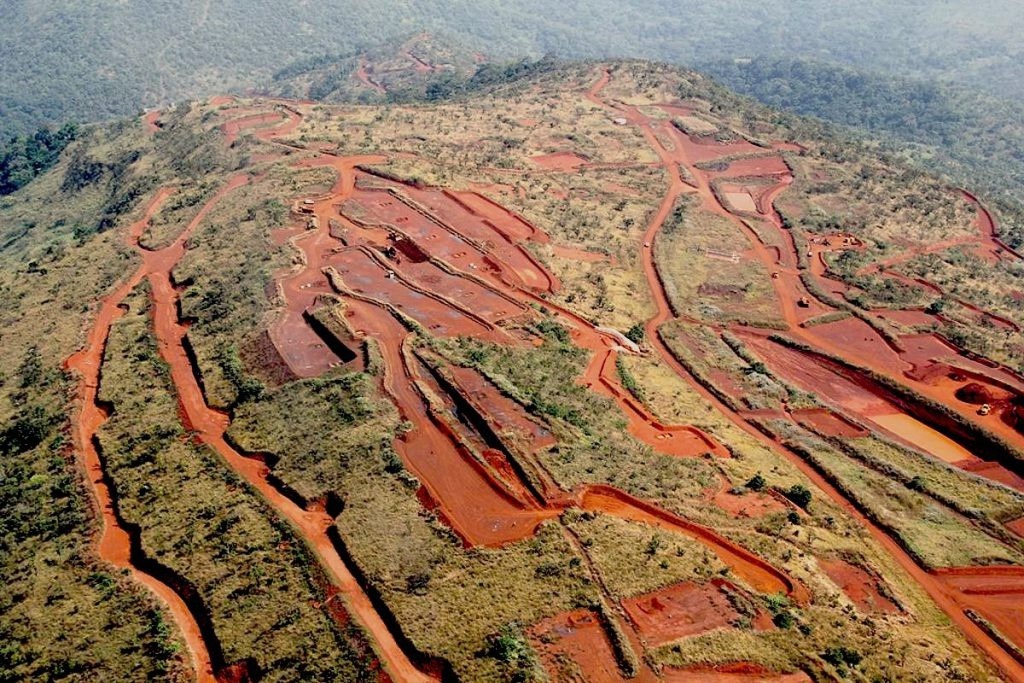
Canberra should not expect to like everything Brasília says. Serra Verde’s mine is an ionic clay (Opens in new window) deposit, while Lynas’ operation in Australia is hard rock (Opens in new window). The cost structures differ (Opens in new window) materially. However, cooperating on numbers now – before significant investment – is better than revising them later.
Any agreement to a price floor would need to wait for Brazil’s elections in October. But opening discussions now could align the two countries and enable early engagement with the US-led negotiations after the inauguration. If Lula wins, the work continues uninterrupted. Were Flávio Bolsonaro (Opens in new window) – who signalled openness to US minerals access – to take office, a US-Brazil framework could be signed quickly. Prior discussions would shape how Brazil approaches pricing before its terms are set.
Either way, Australia has an unclear path into a room full of buyers, while building a price floor without knowing whether the other major seller agrees with its calculations. An Australian and Brazilian partnership can fix that while the benchmarks are drafts.











Leave a comment