


The international order established at the end of World War II provided a framework for the management of global affairs that worked for nearly 80 years. However, the past few years have marked a turning point. There is now wide agreement that the old order is dead or dying and a new order has yet to take shape. The world has shifted rapidly from complacency to insecurity with a growing risk of war.
In Ten Steps to Prevent World War Three, Tobias Ellwood provides a comprehensive agenda for world leaders to reduce the risk of an all-encompassing conflict. Ellwood is a British politician and former army officer. He served as a member of parliament for two decades, including in junior ministerial roles at the Foreign and Commonwealth Office and the Ministry of Defence. He also chaired the Defence Select Committee from 2020 to 2023.
As Ellwood sees it, conflict is rapidly returning and the world is not prepared. The next world war is likely to comprise multiple conflicts in different domains, from conventional warfare to cyber-attacks, satellite warfare, proxy wars and disinformation. With China and the United States competing to shape the future, and Russia’s war on Ukraine in its fifth year, elements of the next major conflict are already upon us. To reduce the risk of a large-scale war, not only is urgent action required, but the West needs to do things differently.
Ellwood starts from the basics: know what you stand for, know thy enemy and learn from history. Recent conflicts in Ukraine and the Middle East provide a timely reminder that the lessons from history are often forgotten or ignored. Strategic memory is our most neglected asset.
Spotting the new battlefields and preparing for the wars of the future is a challenge in all domains, from conventional and grey-zone to nuclear and space. Tactical nuclear weapons have returned to the fore as a potential threat, while the extensive deployment of drones by Russia and Ukraine has forever changed the face of conventional warfare.
Grey-zone warfare is also moving fast, and conflict by keyboard has dramatically shifted the military’s technological and staffing needs. Russia has proved particularly adept at using fake news, trolls, AI bots and synthetic media to create an information space where nothing feels reliable.
Ellwood provides a wealth of examples of good and bad decisions during the evolution of warfare. In 2021, British prime minister Boris Johnson reduced the army’s number of tanks to just 148. When questioned by parliamentarians on the wisdom of the move, he tersely replied that ‘the old concepts of fighting big tank battles on the European land mass are over’. Three months later the Russian invasion started, with more than 1,000 tanks rolling across Ukraine’s border – though soon the drone revolution severely limited their use.
Timelines have also changed. At peak production during WWII, Britain’s factories produced more than 100 Spitfire fighters in a week and could assemble a Lancaster bomber in less than a month. Pilots were trained in 200 hours. Nowadays, an F-35 or Typhoon can take two years to build and training the front-line pilots can take several years.
On the other hand, many drones can be assembled in a matter of days or hours. And with digital technology, satellites and AI, the kill chain – finding, identifying, targeting and engaging the enemy – has been reduced to minutes or even seconds.
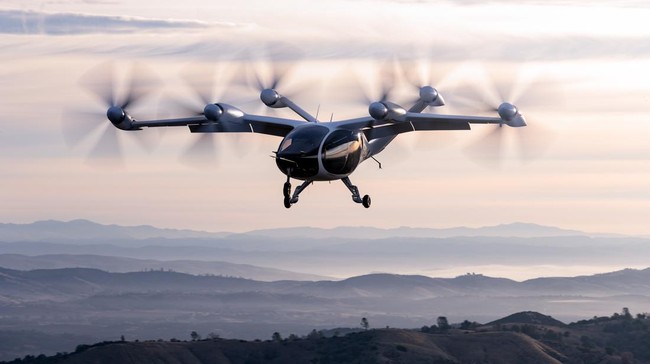
Ellwood is at his best when discussing the implications of drone warfare. Autonomous boats, drones and uncrewed aircraft have upended the economics of warfare. Remotely controlled weapons made in basement workshops and costing a few thousand dollars now pose a viable threat to tanks costing tens of millions and ships costing much more. The new reality challenges conventional military budgeting and procurement and raises questions about recent large-scale spending decisions.
Drones have also changed the geometry of warfare. For much of the past century, Ellwood reminds us, the danger zone extended perhaps 20 km from the enemy: headquarters and logistics beyond that enjoyed relative safety. However, Ukrainian strike drones are now able to penetrate up to 2,500 km into Russian territory, playing havoc with military, logistical and oil facilities.
Drones have also shifted the balance from controlling territory to denying it. In the early days of the war, Russian forces advanced quickly and took control of Ukrainian territory. With both sides’ drones now inescapable in Ukrainian airspace, rapid advances on the ground are no longer possible.
Ellwood concludes by mapping out a scenario for how a modern war could start, with power, communications and water outages paralysing the economy and making daily life impossible. His answer? Western societies need to step up their economic, energy and military resilience to bring them as close as possible to a war footing. As a model, he points to the whole-of-society approach adopted by several NATO countries, particularly Finland and Sweden.
Ten Steps to Prevent World War Three is a wake-up call and important reading for both strategic leaders and generalists.











Leave a comment