


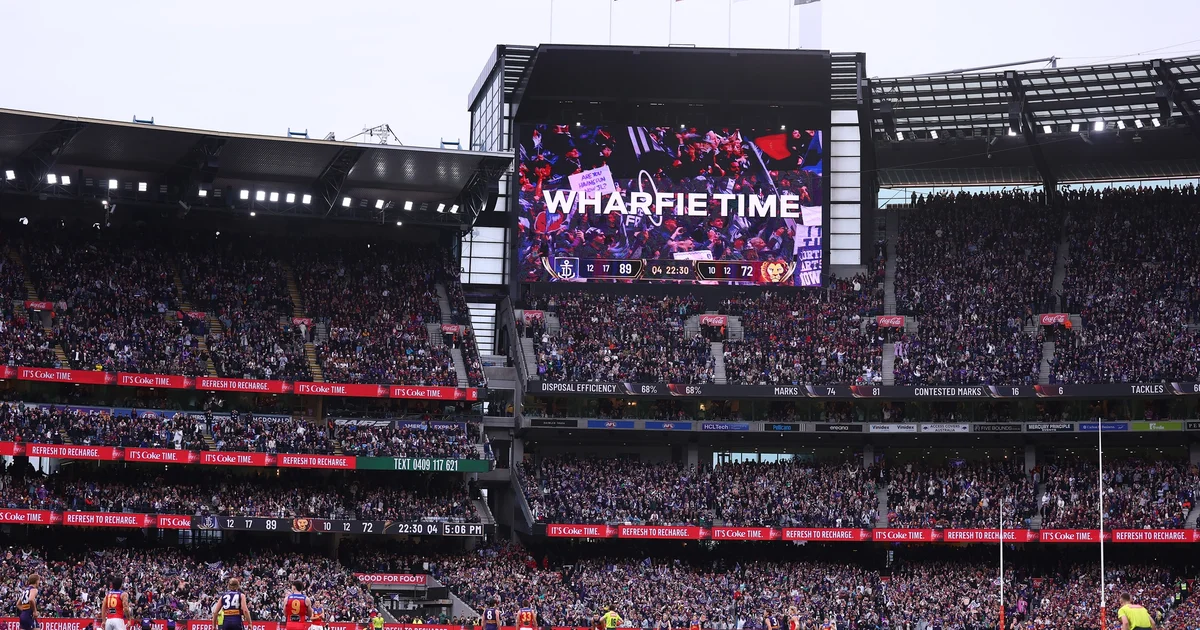
Back at the weekend’s game, the pangs of my anxiety at the MCG had, however, started earlier. Fremantle’s ever-reliable captain and full-back Alex Pearce had ruptured his Achilles in the third quarter. Until then he had been an assured presence behind the ball. Brisbane forward Logan Morris had been held to only four disposals and no score deep into the third term (Opens in new window).
Fremantle adjusted and, for a while, little changed. But Morris had not stopped being dangerous. He had simply been contained. In the final two minutes, he kicked the goals that put Brisbane ahead and the result beyond Fremantle. He finished the day with three goals.
Deterrence can present the same picture as Pearce’s afternoon. The absence of adversary action does not mean capability or intent has disappeared. Presence, surveillance, denial or response may be keeping it in abeyance.
It meant that when Wharfie Time came, the coaching staff were managing a changed game.
Fremantle has never made clear (Opens in new window) who decides when the button for Wharfie Time is pressed. Following the Grand Final that remains no clearer. That may reduce public pressure beforehand. Conversely, it also reduces accountability afterwards. Pearce was gone. Brisbane was still coming and had prepared for Fremantle’s intended effect.
Some military effects require authority above the tactical level because their consequences extend further. But separating employment decisions from those with the best appreciation of the situation can reduce utility.
Wharfie Time did not cost Fremantle the premiership, nor did Pearce’s injury decide it. Brisbane were too good and too prepared for an explanation that simple.
But both events offer a strategic reminder. A contained threat has not necessarily gone away and what has worked before might not again.
Pearce had held a threat in abeyance well before Morris appeared on the scoreboard. Brisbane had decided what Wharfie Time meant before Fremantle pressed the button.
The same applies across the Indo-Pacific. Presence, signalling, deterrence and coercion are rarely judged only when visible. Their effect is shaped earlier by preparation, positioning, adaptation and assumptions about the other side.
For long-suffering Fremantle supporters, the immediate consequence is rather less strategic. Those of us from the beginning have waited for more than 30 years for a first premiership with no easy handouts or shortcuts. We had lived false dawns, near misses and seasons when September seemed distant. The anxiety starts again, along with the wait for the next season.










Leave a comment