


With China posing a threat to Indonesia’s interests in the South China Sea, Indonesia needs a clear maritime cooperation strategy. It should itself set the cooperation agenda with China, insist that joint activity complies with domestic and international law, and work with other partners to avoid overdependence on China.
Previous maritime engagement with China – from a controversial 2024 joint statement that recognised overlapping claim in the North Natuna Sea to a 2026 joint naval passage exercise near Taiwan – suggests that Indonesia lacks such a strategy under President Prabowo Subianto. This leaves it vulnerable to Beijing’s strategic agenda.
Under Prabowo, China has become even more important as an international partner than before. This economic opportunity from China is dominating policy. However, China’s aggressive behaviour in the South China Sea remains one of Indonesia’s largest foreign security concerns. With its illegal nine-dash line claim overlapping with Indonesia’s exclusive economic zone, Chinese research vessels and its coast guard have reportedly operated in a southern part of the South China Sea that Indonesia calls the North Natuna Sea. China also often protests against Indonesia’s oil and gas exploration in the Tuna Block – an offshore natural gas development – and intrudes into its area. China also threatens local Indonesian fishermen around the nearby Natuna Islands. This threatens Indonesia’s right to explore and exploit its maritime resources.
So how could Jakarta benefit from maritime cooperation with China while at the same time ensuring its security interests? The answer is simple: Jakarta should have a clear strategy and set its limits before negotiating any commitment with China.
There are at least three steps that Indonesia should adopt to avoid another miscalculation when it comes to balancing maritime cooperation with China.
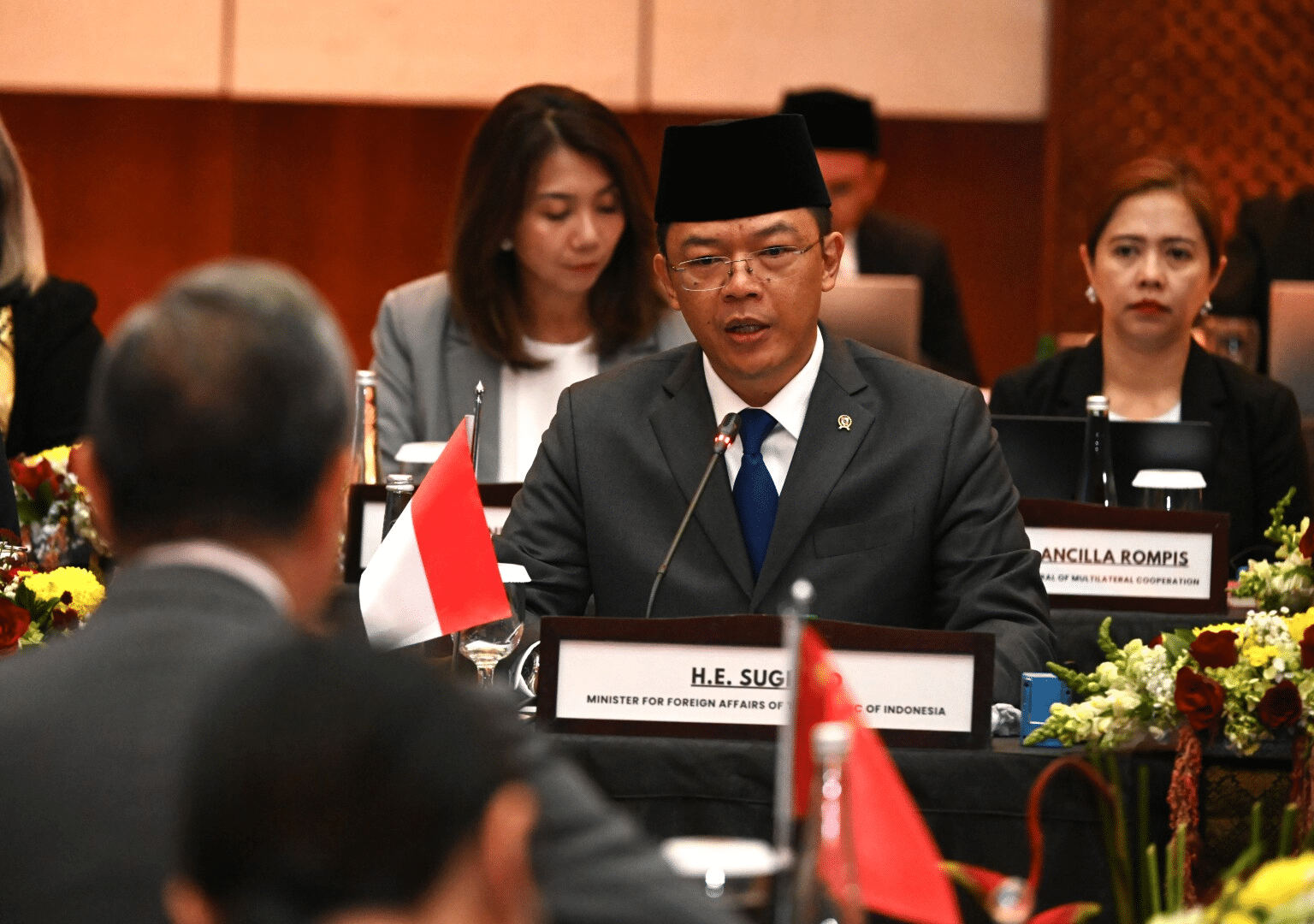
First, it should design its own proposal and agenda for maritime cooperation. This should include the exact location and the legal framework to be used for each specific area of cooperation. For instance, in the recent meeting between Indonesian Foreign Minister Sugiono and his Chinese counterpart Wang Yi in Jakarta in August, both sides agreed to strengthen collaboration in marine scientific research. Indonesia should determine the specific research subject and the exact location and ensure that the maritime cooperation agenda is of shared interest to the two countries.
This is important to avoid unilateral Chinese maritime scientific research in Indonesian waters. For example the Chinese research vessel Haiyang Dizhi 10, claiming to be conducting marine scientific research, has operated in Indonesia’s exclusive economic zone near the Natuna Islands without Indonesian consent. Moreover, unauthorised Chinese uncrewed underwater craft, bearing markings that label them as research vessels, are also increasingly found in Indonesian archipelagic waters. Under the United Nations Convention on the Law of Sea, coastal states must consent to marine scientific research in their exclusive economic zone. Therefore, maritime scientific research must be based on mutual consent and not China’s unilateral decision.
Second, Indonesia should set clear limits on any cooperation. All should be based on the convention and domestic law, and Indonesia should not agree to any proposal that contradicts either. This applies whether a maritime zone falls under Indonesia’s full sovereignty or its sovereign rights over marine resources.
This means that a joint development proposal, whether for fisheries or for oil and gas in the North Natuna Sea, should be conducted under Indonesian investment law and should not be treated as an overlapping claim between two countries. This is because China has no legitimate claim under the UN convention in the North Natuna Sea. The position under international law is clear. Indonesia’s stance on any proposal should be, too.
Thirdly, Indonesia should not cooperate with China only. Whether in oil and gas exploration or in other areas, Jakarta should diversify its partners. It should particularly strengthen cooperation with other middle-power strategic partners, such as Japan, India, Australia and some other ASEAN states. Examples of existing cooperation are working with Australia on maritime technology and conducting joint naval exercises with India.
This diversity of cooperation matters because, if tensions with China ever escalate, Indonesia will still have partners to support its maritime interests, be they oil and gas exploration, marine scientific research, fisheries cooperation or joint military exercises.
These three steps should always bound any commitment to maritime cooperation between Indonesia and China.














Leave a comment