


Delivering Defence’s naval shipbuilding and sustainment requirements in Western Australia will depend on more than new investment and infrastructure. The state’s established resources sector has built a substantial industrial base, with heavy-industry facilities, engineering expertise and technical capabilities supporting the extraction, processing and export of iron ore, critical minerals and other resources. The challenge is to connect this existing strength with defence requirements, new technologies, skilled workers and sustained demand to create an integrated industrial system capable of delivering at the scale and pace Australia’s strategic environment demands.
The depth of this industrial base, spanning maritime sustainment, heavy engineering, advanced manufacturing and autonomous systems, were apparent during an industry tour conducted this month by the state’s sector-support agency, Defence West, during the Land Forces 2026 International Land Defence Exposition. Developments planned for the Henderson Defence Precinct in the south of Perth and the proposed Western Defence Forge industrial zone will expand this capacity, but their value will depend on whether they translate into operational capability.
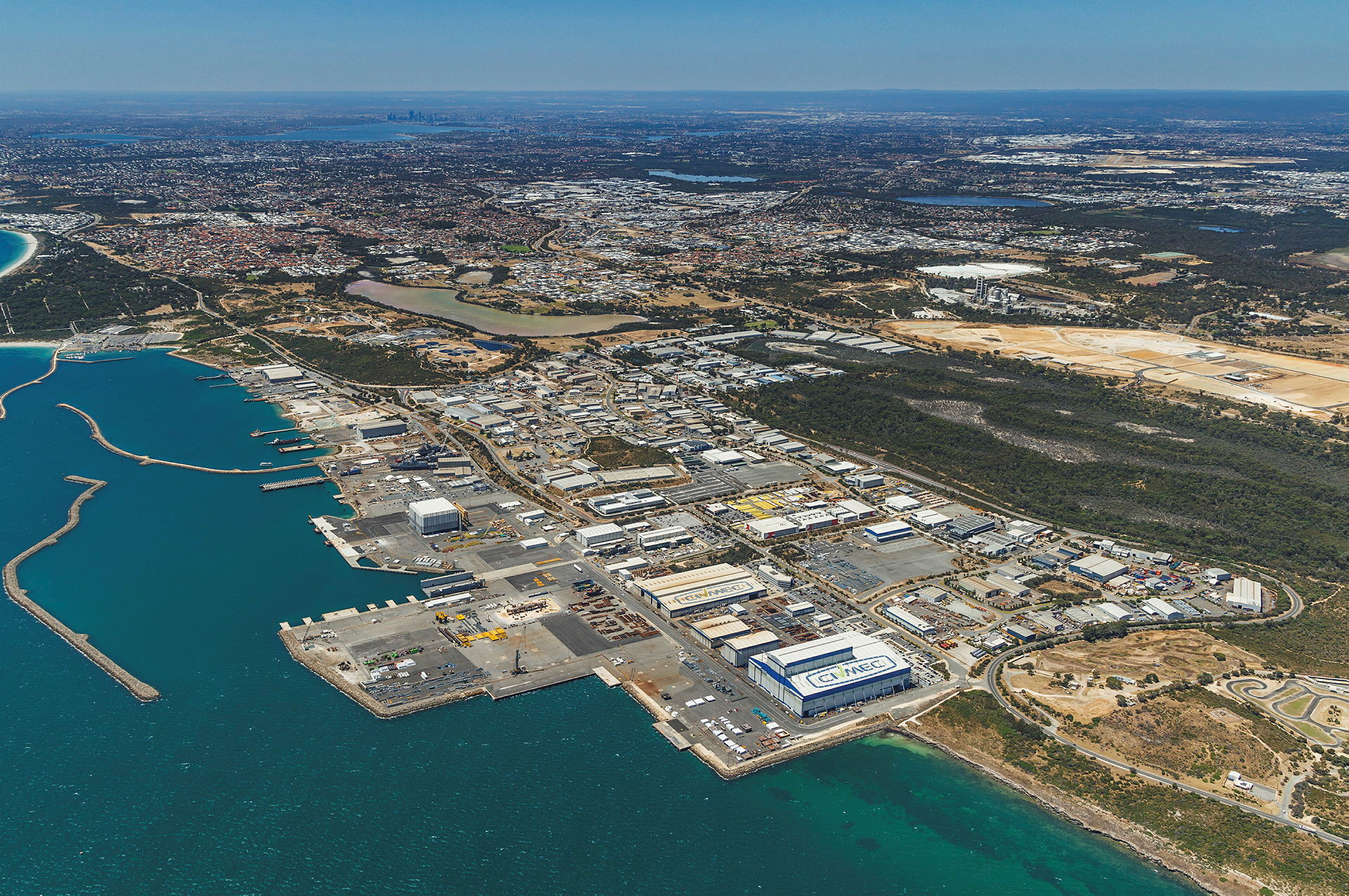
The Australian Marine Complex, part of the Henderson Defence Precinct, demonstrates the scale and versatility of Western Australia’s industrial infrastructure. Its common user facility provides heavy engineering, fabrication and assembly infrastructure, vessel berths, workshops, ship hardstands and a floating dock and ship-transfer system. The multi-user model allows each defence, marine, energy and resources customer to use specialised infrastructure as needed, with none having alone to justify the full cost of it. This helps sustain capability across sectors.
Defence’s shipbuilding and sustainment programs also rely on specialist suppliers, engineering expertise and heavy-lift services. The dismantling of the former HMAS Anzac at Henderson in 2024 illustrated this less visible side of domestic capability. Recovery of components from the retired frigate required specialist engineering, transport and coordination among local providers. Taking parts from a decommissioned ship can help sustain those still in service, demonstrating that domestic capability extends beyond building vessels.
Civmec’s fabrication and hardstand facilities further demonstrate Western Australia’s capacity for large-scale engineering and naval construction with the future HMAS Pilbara, the third Arafura-class offshore patrol vessel , launched in October 2025. The achievement demonstrates local industry’s ability to deliver complex vessels and other equipment. The challenge is to sustain and scale up that capability to meet longer-term Defence requirements.
The Henderson Defence Precinct offers a major opportunity to expand this industrial base. Planned to support continuous naval shipbuilding and sustainment, as well as maintenance of nuclear-powered submarines, the precinct has received A$12 billion in initial funding for early works and infrastructure, with total costs estimated at around A$25 billion.
Infrastructure alone, however, will not deliver these ambitions. New facilities must be supported by skilled workers, qualified suppliers, secure supply chains, utilities and a reliable pipeline of work. The objective should be to connect new investment with existing businesses and capabilities, strengthening the wider industrial ecosystem rather than treating projects in isolation.
The Western Australian government’s Western Defence Forge, announced at Land Forces, signals further ambition to expand advanced manufacturing. Five preferred proponents have been identified as prospective anchor tenants, spanning aerospace, autonomous systems, guided weapons, communications and defence infrastructure. The proposal is expected to broaden local manufacturing and supply-chain participation, but its strategic value will depend on progressing to investment, operational facilities and sustained production aligned with Defence requirements.
The wars in Ukraine and the Middle East have reinforced the idea that technological advantage must be matched by the capacity to manufacture at scale, secure component supply and adapt designs as operational requirements evolve. These challenges framed the final stop on the Defence West industry tour near Fremantle, where participants received a briefing on Innovaero’s One Way Loitering (OWL) family of autonomous munitions, designed for long-range strike and counter-drone missions.
One participant in the tour itinerary captured it: ‘It’s not a capability unless you can manufacture it at scale.’
Developing a promising system is only the first step. Dependable production requires investment, components, testing, certification and the ability to increase output when needed. Defence must provide clear requirements, predictable procurement schedules and sustained demand so industry can invest confidently in production capacity, skilled workers and supply chains. Without this alignment, promising technologies may struggle to become dependable capability at scale.
The Defence West industry tour demonstrated that many of the building blocks for a stronger domestic defence industry exist. The task for Defence, government and industry is to connect and expand them into an integrated, enduring industrial system that can manufacture, maintain, repair and replenish capability at the scale and pace required.













Leave a comment