



Newsletters
Subscribe to The Informer for monthly expert analysis, and to Events for advance notice of visiting world leaders and distinguished guests.
You may unsubscribe from Lowy Institute newsletters at any time. For information on our privacy practices and how to unsubscribe, see our Privacy Policy.
Subscribe to

The most-pressing world events explained by Lowy Institute experts and global contributors, in your inbox, every Thursday.
You may unsubscribe from The Interpreter at any time. For information on our privacy practices and how to unsubscribe, see our Privacy Policy.

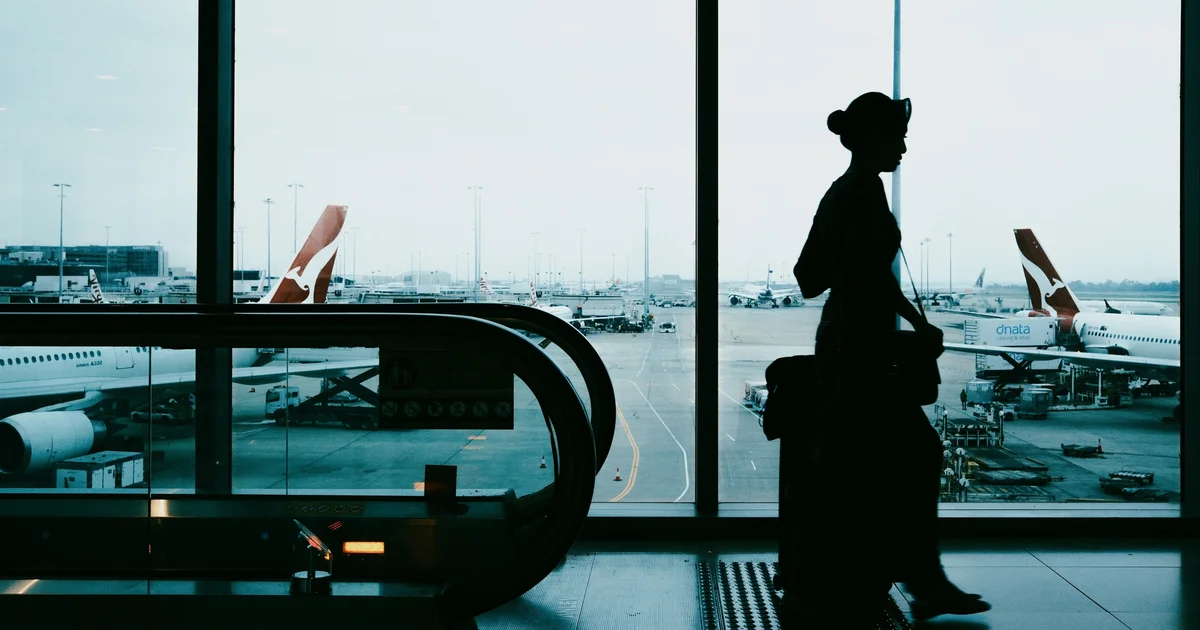
Australia is flirting with a retreat from its region (Nguyen Minh/Unsplash)
A shrinking economy and less weight will leave the country lower in the global pecking order.
22 October 20264 min read
Cutting migration risks Australia’s middle-power cloutCutting migration risks Australia’s middle-power clout
When Australia’s Opposition leader Angus Taylor launched (Opens in new window) the Liberal-Nationals Coalition’s immigration policy on 5 October, he was closely following similar announcements by the Labor Party and One Nation. Quite unexpectedly and suddenly, Australia finds itself in a position where its three most popular political entities all favour lower immigration. In the case of the Coalition and One Nation, the proposed migration cuts are .
This is worrying news for Australia. As I said in my keynote 2026 ABC Boyer Lecture (Opens in new window), Australia’s politicians are proposing to take the country to the precipice. Severe cuts to migration will erode Australia’s national power just as the region is becoming more volatile and the alliance with the United States more uncertain.
Australia is flirting with a retreat from its region by closing the door to the Asians who make up a majority of its migrant intake (Opens in new window), thus restricting economic and people-to-people ties with the region. Cuts to migration also threaten Australia’s economic scale, which matters for national strength. Even if you argue (Opens in new window) that migration has had little effect on Australia’s per capita wealth, it unquestionably influences aggregate wealth. If there were only 10 million Australians today rather than 28 million, the economy would clearly be much smaller, and so would its influence on the world stage.
Without sufficient national strength to resist the will of great powers, Australia will have to defer more often to their wishes and demands.
It’s not that scale can be directly associated with strength – as Iran and Ukraine are demonstrating, smaller countries are capable of resisting the will and military might of far larger powers. But suppose Iran and Ukraine had gone into their wars against the US and Russia with, say, a 20% higher GDP. That would surely have been nice to have. In fact, Iranian and Ukrainian leaders might even argue that such additional wealth could have deterred the great powers from attacking them in the first place.
That’s partly because national wealth can be turned into military capability but also because scale will determine a country’s place in the global pecking order. We can divide the world’s 193 UN member states roughly into three categories: major powers, middle powers and small powers. One working definition of those three categories might go as follows:
- Great powers make and enforce the rules.
- Small powers obey the rules.
- Middle powers have too little strength to make the rules but enough strength to resist having the rules imposed upon them.
Australia is typically bracketed as a middle power, which means that while it can’t have a decisive influence on world affairs, it also can’t be easily bullied or pushed around. Great powers cannot impose their will upon Australia.
A contemporary example might be the Turnbull government’s 2018 decision to exclude the Chinese company Huawei from the contest to build Australia’s future mobile telecoms infrastructure. A middle power can make that kind of decision safe in the knowledge that it can absorb any blowback. A small power cannot.

Australia is typically bracketed as a middle power (Marcus Reubenstein/Unsplash)
It’s possible for countries to fall into and out of these three brackets – China has risen to great power status while France and Britain have fallen into the middle power category. One way to think about Australian security is in terms of whether it can maintain its middle-power status while so much changes around it.
In the Boyer Lecture, I referred to the rise of one empire (China), the decline of another (America) and the emergence of a neighbour (Indonesia) that will soon have greater national power than Australia. For Australia’s future security, migration policy should be seen as a decisive factor in whether, in those circumstances, the country can maintain its middle-power status or become a small power.
Australia once thought about immigration as a matter of “population or perish”, but that was right after the Second World War when the nation truly had been at existential threat from a foreign military power. Invasion and conquest are no longer likely, so it’s too strong to say that Australia is at risk of perishing without sufficient human capital. But Australia is at risk of becoming a small power rather than a middle power, and that will come with a certain loss of freedom. Without sufficient national strength to resist the will of great powers, Australia will have to defer more often to their wishes and demands.
That sounds frightening because it suggests that Australia will be subject to threats and coercion and be unable to resist. But such a future might not feel particularly different for Australians because the consequences of being weaker won’t necessarily be overt. The government would become so acculturated to the nation’s lower status that it would pre-emptively accede to the wishes and demands of the great power rather than being forced to do so.
To avoid such a future, the starting point is to realise the central place of immigration in determining Australia’s national strength.













Leave a comment