


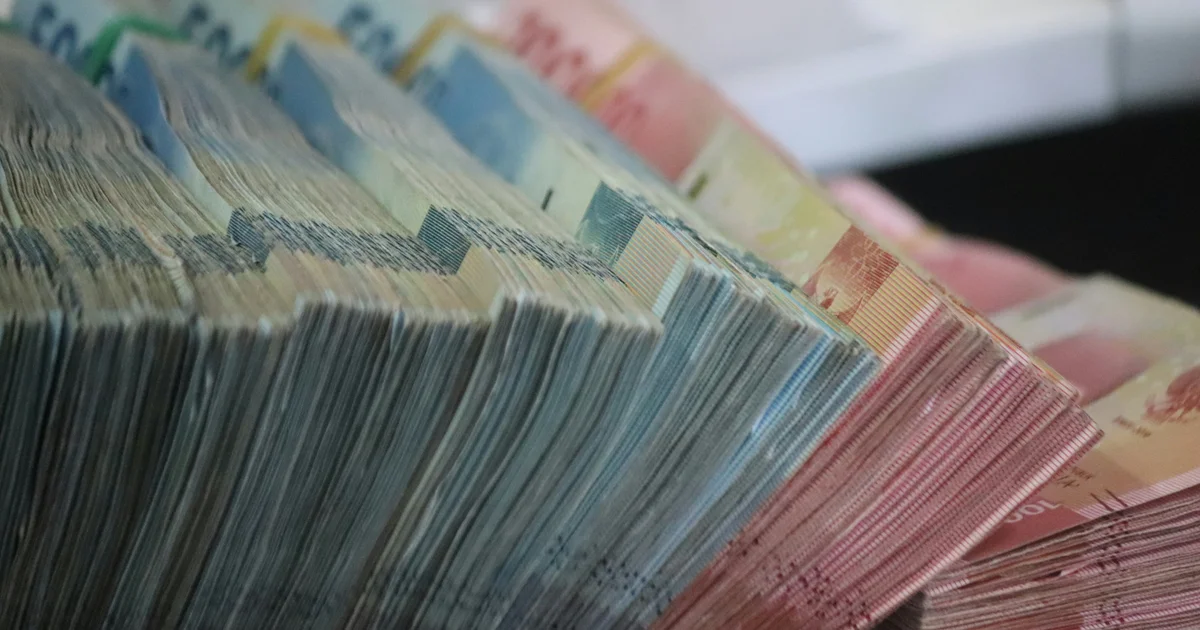
Indonesia’s dollar obligations remain substantial, with provisional figures (Opens in new window) of US$164.3 billion in July 2026 representing 84.5% of total private external debt. Renminbi borrowing offers another way to reduce dollar dependence, with private debt in that currency rising from the equivalent of US$2.3 billion at end-2019 to US$16.2 billion in July. Whether that growth reduces currency risk depends on borrowers’ revenues, which these aggregate debt figures do not identify.
Nor do these gross totals show how many dollars borrowers must still obtain for repayments after allowing for available dollar funds and expected receipts, including those secured through hedging. Bank Indonesia could build on the quarterly reports (Opens in new window) that non-bank firms already submit to estimate and publish their remaining dollar needs over the next six months.
A clearer picture of corporate dollar needs would also help assess how far Bank Indonesia might have to draw on its gross reserves, which stood at US$146.3 billion (Opens in new window) at end-September. The IMF (Opens in new window)’s January 2026 report described the financial system as broadly resilient, while AMRO (Opens in new window) judged reserves above conventional adequacy benchmarks in August. Reserves had nevertheless fallen by more than US$11 billion between end-2025 (Opens in new window) and May 2026 (Opens in new window), amid government debt repayments and support for the rupiah.
Sustained outflows can erode even large reserves, especially when domestic residents also seek foreign currency, as China’s experience illustrates. Its foreign exchange reserves fell by roughly US$1 trillion between mid-2014 and January 2017 (Opens in new window), reflecting intervention amid large capital outflows, as well as valuation losses (Opens in new window).
Bank Indonesia can also turn to international arrangements for emergency dollars, including the Federal Reserve’s repo facility for foreign central banks, which it joined in April 2020 (Opens in new window). The facility, made permanent in 2021 (Opens in new window), lets approved central banks borrow dollars temporarily against US Treasury holdings at the New York Fed instead of selling them outright. Regional support through the Chiang Mai Initiative Multilateralisation (Opens in new window) offers another backstop, although it has undergone exercises (Opens in new window) without ever being activated in a crisis.
Beyond reserve adequacy and these liquidity arrangements, a central bank’s ability to use its own reserves depends on where they are held, as Russia discovered when sanctions immobilised around €260 billion (Opens in new window) of its reserves after the 2022 invasion of Ukraine. Despite diversifying into renminbi and domestically held gold (Opens in new window), Russia had retained euro and other assets within sanctioning jurisdictions, leaving those holdings exposed.
While Indonesia does not face comparable sanctions, in the current geoeconomic climate its reserve managers, like their regional counterparts, cannot afford complacency about their ability to use reserves held abroad. Preparing for renewed pressure on the rupiah requires a clearer account of borrowers’ net dollar needs and of the funds that can be mobilised to meet them. The more Indonesia trades without dollars, the easier it becomes to overlook how much of its private foreign debt is still owed in them.














Leave a comment