


China’s Ministry of Emergency Management (MEM) compares disaster response to ‘fighting a war’ and, since 2022, has used a digital common operating picture to orchestrate operations. This data-driven approach integrates AI into command-and-control, advancing China’s ambition to ‘intelligentise’ whole-of-nation defence. With its aggressive deployment of AI tools, MEM could prove a trailblazer for the armed forces, People’s Liberation Army (PLA), which also aims to intelligentise its command-and-control operations.
In 2018, China established MEM to consolidate emergency response for industrial accidents, natural disasters and wartime scenarios. By 2022, it was processing 800 million data points daily from a nationwide network of smart sensors. In coal mining alone, MEM integrates 600,000 sensors that feed automated alert tools like toxic gas monitors, landslide predictors and more. In 2024, it used AI to process real-time camera footage from mine entrances and deny entry to miners who weren’t carrying active locator beacons. This function was apparently not fully rolled out at the time of a 2026 explosion and tunnel collapse that killed 82 miners.
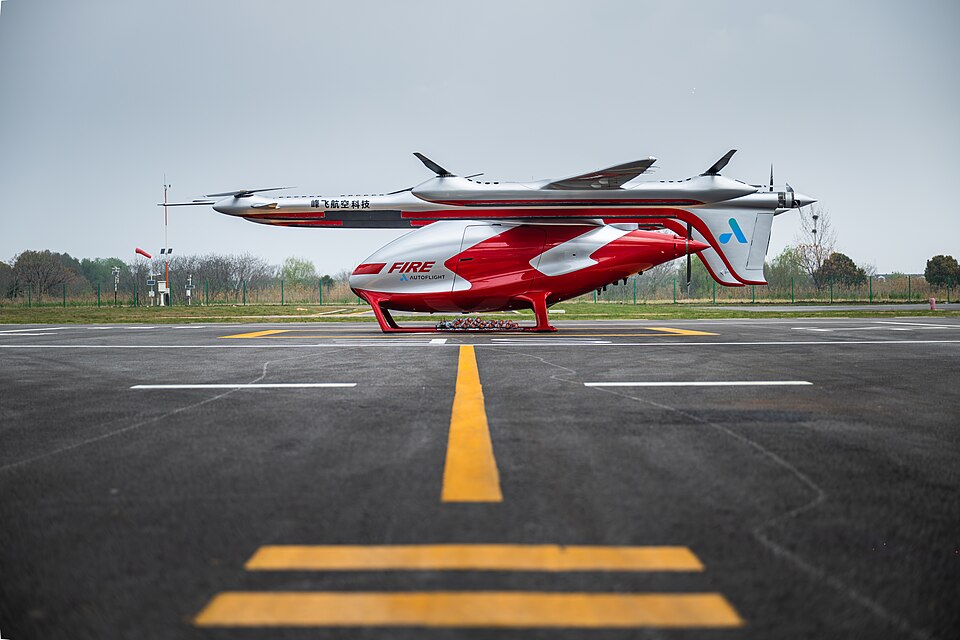
In 2025, China’s national disaster exercise showcased MEM’s AI capabilities. A fuel storage tank explodes; bright orange flames tickle dense black smoke; firetrucks rush in while drones fly overhead. Robot vehicles carry hoses into the inferno and help firefighters extinguish the blaze. At the command centre, operators relied on MEM’s common operating picture, a digital map that fused live feeds from drones, cameras, satellites and other sensors. Overlays showed damage assessments, risk forecasts and stockpiles.
During a 2024 drill, an AI agent convened a meeting of 3,000 emergency units dispersed across three provinces in under 30 seconds; this was a command-and-control task that would ordinarily take five minutes. Operators use other applications to conversationally query databases, receive AI-recommended actions and approve AI-generated dispatches for response units.
MEM’s common operating picture, known as the Digital Battlefield, is a cloud-based situational awareness tool, part of an architecture called AI + Emergency Management. The architecture is AI-enabled and connects more than 40 software systems used by the ministry. At its core, the architecture deploys Jiu An, an AI model tuned for emergency management. In 2024, MEM built Jiu An in a four-month sprint. In 2025 the ministry released Jiu An 2.0, which was trained on millions of documents and supercharged by Chinese AI models like DeepSeek’s R1.
MEM may be outpacing China’s military and paramilitary forces at integrating AI into command-and-control. In 2024, the People’s Armed Police, China’s paramilitary force, prototyped Ai Wu, an AI model that closely mirrored Jiu An but relied on AI technology a generation older than what MEM already deployed. Elsewhere, PLA requests to private technology companies read like a wish list for AI tools, several of which are analogous to tools MEM has already deployed. For example, the PLA sought an AI capability that assesses battle damage to buildings via drone video, like the AI + Emergency Management architecture tool that assesses damage to roads from drone feeds. MEM’s Digital Battlefield, running since 2022, analyses and displays media feeds like the PLA’s 2024 requirements for an AI-enabled dashboard that integrates real-time news feeds with geospatial data.
The PLA’s slower adoption may stem from doubts about AI alignment – whether AI models act as intended – and the reliability of its training data. MEM officials meanwhile appear less anxious, perhaps because they are not responsible for combat operations and nuclear escalation. Still, MEM’s AI efforts carry risk, chiefly silent failure: AI agents appear to complete tasks without flagging errors, but outputs prove to be wrong, incomplete or unsafe. For example, an AI agent might fuse flood-gauge readings, drone feeds, satellite imagery and forecasting models, then confidently recommend a route for a rescue convoy. Only later do first responders discover that floodwaters washed away the only bridge hours earlier.
In 2025, Xi Jinping directed senior Chinese Communist Party officials to accelerate AI development and produce systems that would enable monitoring, early warning and emergency response. MEM built the AI + Emergency Management architecture and its smart sensor network to achieve China’s intelligentisation objectives. The ministry annually responds to dozens of natural and man-made disasters and will likely use such events to validate AI capabilities, possibly enticing the PLA to follow suit. Thus, watching developments in China’s emergency management offers a rare window into the military’s potential future.
The views expressed in this article are those of the authors and do not necessarily reflect the official policy or position of the Department of War or the US government.









Leave a comment