


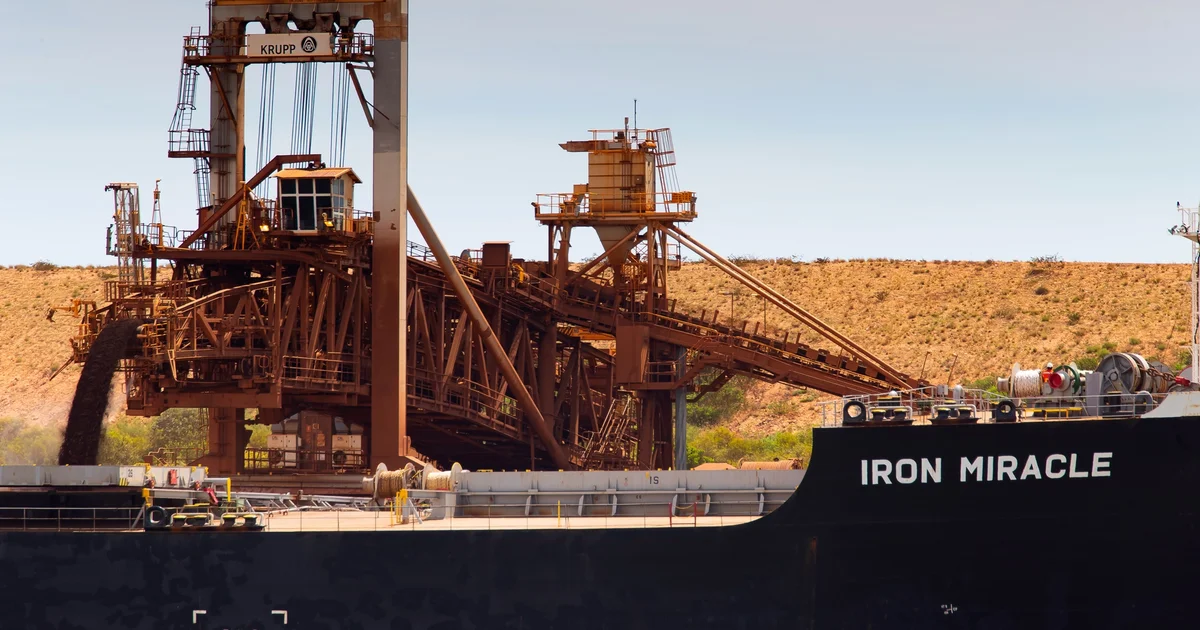
Australia has strong fundamentals to be a key player in future green iron trade, with abundant renewable energy resources, extensive iron ore reserves, and long-established trading relationships with the major steel-producing economies in East Asia. These advantages could support substantial green iron exports (Opens in new window). Capitalising on this opportunity, however, will require understanding the importer side of the equation.
An Australia-East Asia trade corridor is at the centre of discussions about the future of green iron. China, the world’s largest iron ore importer and Australia’s biggest customer, also has sizeable domestic iron ore resources, a growing supply of steel scrap, and vast renewable energy capacity. Therefore, how the transition to green iron reshapes its trading relationship with Australia is a complex question (Opens in new window). South Korea and Japan, meanwhile, have globally competitive steel industries but face constraints. It is much harder for them to produce renewable energy and green hydrogen at the scale and cost required to domestically produce green iron. These countries will therefore likely have to import a share of green iron needs.
For potential importing countries, the question is not simply where to buy low-emission iron. It is how to decarbonise one of their most important industries while preserving industrial competitiveness. This question is particularly consequential for South Korea, where the steel industry is deeply integrated with its major industries (Opens in new window) such as automotive manufacturing, construction, and shipbuilding. Shifting the upstream ironmaking process overseas would have consequences far beyond the steel industry itself, affecting supply chain resilience and industrial capabilities. Part of the equation lies in economic implications tied to jobs in key Korean manufacturing hubs. Another concern is geopolitical. Echoing recent energy supply shocks following the Strait of Hormuz crisis, offshoring a certain part of production brings reliance on foreign trade partners and exposes these supply chains to disruptions, which can impact key downstream sectors. To make the supply chain security and jobs sacrifice worthwhile requires a convincing trade-off.
Imported green iron could nevertheless play a significant role, particularly if Australia can turn its abundant renewable resources into a cost advantage. The high cost of renewable hydrogen and the investment required for new facilities make this difficult. Yet there is no guarantee that Australia’s potential advantage will last. Policy support and investment in importing countries could make domestic green iron production more competitive, narrowing Australia’s advantage.
South Korea has already begun laying some of these foundations. The government is aiming to reduce the production cost of hydrogen to KRW 3,500 (less than USD 3) per kilogram by 2030 and KRW 2,500 (less than USD 2) by 2050 (Opens in new window) while expanding installed renewable energy capacity to 100 GW by 2030. (Opens in new window) If South Korea succeeds in lowering the cost of green hydrogen and expanding renewable energy supply, domestic production could become increasingly competitive.
Speed and cost will be critical to capitalising on Australia’s window of opportunity. It must establish a credible, cheaper supply of green iron before importing countries develop stronger alternatives at home that reduce the incentive for offshoring. However, another factor is even more critical for long-term competitiveness – whether the supply Australia brings to market will be genuinely green.
Australia’s prospective advantage lies in combining abundant renewable energy with extensive iron ore reserves to produce low-emission iron. Yet this fundamental rationale is becoming increasingly blurred by projects that plan to begin with natural gas-based direct reduced iron (DRI) (Opens in new window) and switch to green hydrogen at some later stage.







Leave a comment