


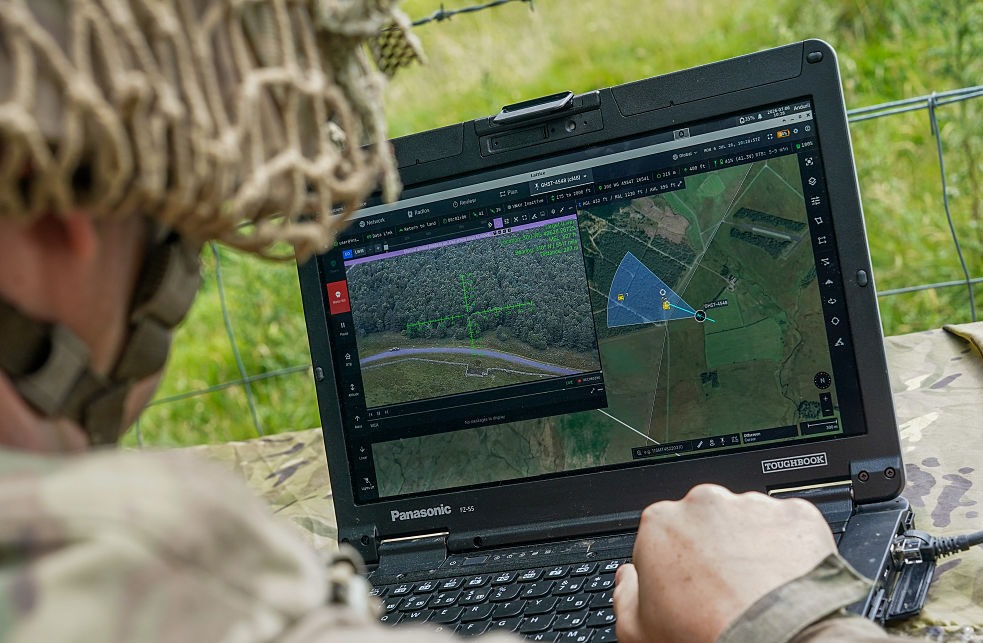
Australia is spending heavily on military AI and, separately, on building the capabilities and interoperability of its Indo-Pacific partners; yet we are paying too little attention to what happens as those two agendas converge. The problem is not simply technical but also legal: do Indo-Pacific partners understand the legal and operational limits of AI-enabled warfare in sufficiently similar ways to make decisions together?
Australian universities may be part of the solution. They can offer the range of skills needed to help resolve the military, computing and legal issues that arise.
As AI becomes embedded throughout military decision-making, differences in legal and operational limits risk causing friction precisely when coalition forces need smoother decision making. Expert initiatives, such as the West Point Manual on International Law Applicable to Artificial Intelligence in Warfare, are beginning to clarify the law, but publishing guidance is not the same thing as building regional capacity to apply it.
Australia should therefore treat AI and international humanitarian law education as a defence-engagement priority, building a sustained Indo-Pacific program that turns emerging legal principles into a shared operational language among partner forces.
Australia’s incorporation of AI into military capability extends from intelligence analysis and decision-support systems to targeting and autonomous systems. Meanwhile, the longstanding effort to strengthen the capability and interoperability of Indo-Pacific partners, as well as the wider Pacific Step-up strategy to build closer ties with Pacific countries, is intended to ensure partner forces can operate effectively alongside the Australian Defence Force and one another. This is done through infrastructure development, equipment donations, regional exercises and defence cooperation.
Consider a future coalition targeting operation. An AI-enabled system identifies a potential target, combines information from several sources and recommends engagement – as occurred earlier this year by US forces. One partner is prepared to rely on that recommendation because its legal and operational framework considers the available human oversight sufficient. Another requires additional human verification of the underlying intelligence before authorising force. A third requires an AI system to explain how it reached its conclusion.
The militaries may have compatible communications, platforms and data or even be using the same AI-enabled system, yet they are not interoperable. Although AI is intended to accelerate decision-making, incompatible approaches to law and human judgment can slow a coalition down or, worse, produce disagreement only after a decision has been made.
These legal interoperability problems are not new for coalition operations – the problem however will grow as AI becomes more embedded. International humanitarian law (IHL) was not written with AI in mind, but its existing rules still govern their use. Militaries must therefore work through IHL requirements even though information has been created or prioritised by AI – such as what level of human judgment is required or how autonomous functions should be reviewed and controlled. Partner militaries do not need identical legal systems or policies, but each must establish a common understanding to anticipate how their partners will approach these questions.
The Manual on International Law Applicable to Artificial Intelligence in Warfare produced by West Point – the US Military Academy – provides an opportunity. The project brings together international experts (including me) to solve the friction AI brings to the battlespace before it is too late. But a manual on a bookshelf does not itself create interoperability. That requires exercises involving common scenarios, competing interpretations and difficult targeting decisions in which participants have to explain not merely what answer they reached, but why.
Australia is unusually well placed to support that work. The Department of Defence already invests substantially in regional engagement and partner capacity (such as through the Indo-Pacific Centre for Military Law). Universities can complement that effort, because the challenge crosses disciplines that rarely sit together inside a single military organisation. Lawyers can explain the IHL, computer scientists can explain what AI systems can’t do and military and strategic studies specialists can turn those issues into realistic operational problems.
Universities also provide a comparatively neutral environment where officers and officials from different Indo-Pacific states can test interpretations and disagree without those discussions immediately becoming statements of national policy. The practical model need not be complicated. Australia could support a standing program of short, practitioner-focused courses delivered with priority Indo-Pacific partners. Rather than generic lectures about ‘responsible AI’, participants could work through IHL–AI friction points in relevant operational scenarios. The aim would not be to export Australian legal interpretations but to develop a shared vocabulary, identify genuine differences and build habits for resolving them.
Australia has spent decades helping regional partners learn to operate together. AI means interoperability can no longer be measured only by whether our machines can talk to one another. We also need the people using them to understand how their partners will make the legal and operational decisions that follow. Training together now is a relatively inexpensive way of finding those differences before they matter at machine speed.











Leave a comment