


“Ban ASIC for Ten Years and Make It Pay Investors $10 Billion”: Jamie McIntyre Demands Accountability
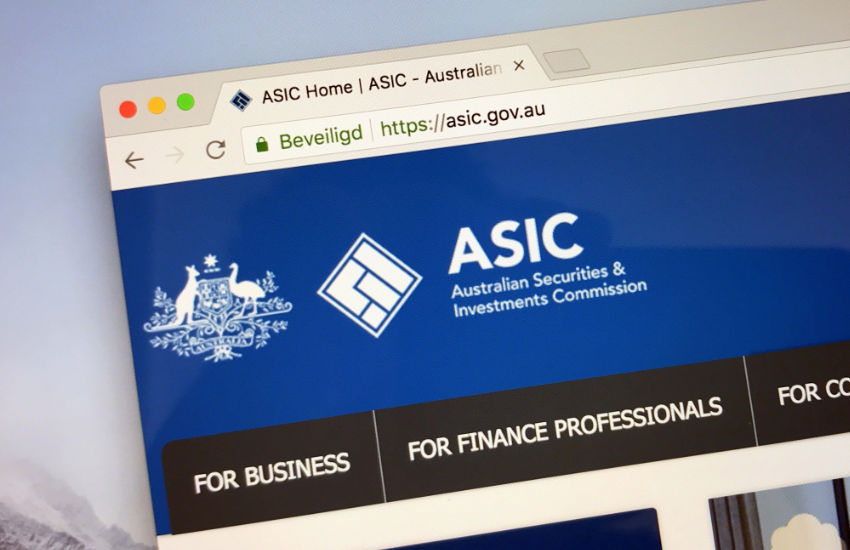
Jamie McIntyre is calling for the Australian Securities and Investments Commission to face a ten-year ban and pay investors $10 billion in compensation for losses he alleges the regulator caused. He is also demanding a separate $250 million in personal compensation.
As the ten-year anniversary of his banning orders approaches, McIntyre is challenging what he considers a fundamental contradiction: an organisation established to protect investors should face consequences when its own actions destroy their investments.
His central allegation is unequivocal: the winding-up orders sought by ASIC were the sole cause of losses in his property projects.
McIntyre maintains that the projects would otherwise have proceeded, preserving investors’ capital and generating substantial profits as land values increased.
“Shouldn’t ASIC face a ten-year ban—or longer—and pay for the losses it caused?” he asks.
The Intervention at the Centre of the Dispute
The public record confirms that ASIC commenced proceedings against companies associated with McIntyre and that the Federal Court subsequently ordered five unregistered managed investment schemes wound up. In October 2016, the Court also imposed ten-year restrictions on Jamie and Dennis McIntyre managing corporations and carrying on financial services. ASIC’s announcement records that both agreed to the banning orders. (asic.gov.au)
McIntyre identifies the ASIC-initiated winding up as the decisive action that destroyed investors’ opportunity to benefit from the projects.
He describes the intervention as deliberate, provocative and unnecessary. His argument is that terminating the projects crystallised losses and eliminated investors’ opportunity to participate in subsequent land appreciation.
McIntyre points to what he describes as substantial increases in land values in the relevant Australian locations over the past 12 years. He maintains that historical and current valuations can demonstrate the windfall profits investors were denied.
In his account, investors lost money because the projects were forcibly wound up, rather than because the underlying land suffered a market collapse.
The proceedings and winding-up orders are documented. His assertion that they were the sole cause of losses, and that substantial profits would otherwise have followed, remains his position; supporting project valuations and financial accounts have not been supplied for this article.
A Demand for $10 Billion in Investor Compensation
McIntyre’s demand extends beyond his own dispute. He alleges that ASIC has caused more than $10 billion in direct investor losses across its interventions and wants the regulator made to compensate those investors.
That broader figure is distinct from the losses associated with his own property projects. It has not been independently verified in the material available for this article.
McIntyre argues that ASIC should be judged by the financial consequences of its actions, including whether enforcement preserved investor value or destroyed opportunities for recovery.
He says investors should not be left to absorb losses caused by an institution acting in the name of their protection.
Alongside the $10 billion investor compensation demand, he seeks $250 million personally. These are demands he is making, rather than compensation amounts awarded by a court.
“I Protected Investors—Yet I Was the One Banned”
McIntyre says people following his financial predictions have collectively generated more than $10 billion in wealth.
He cites his claimed recommendations to buy Australian property over the past 25 years, purchase US property around the market bottom in 2010, acquire Bitcoin below US$100 and sell around US$110,000, and buy gold at approximately US$300 an ounce.
His claim concerns wealth accumulated by people following his recommendations, rather than a statement that his personal net worth exceeds $10 billion. An independently audited calculation supporting the aggregate figure has not been provided.
For McIntyre, the contrast underpins his challenge: he says he helped investors build wealth yet received a ten-year ban, while the regulator faces insufficient consequences for the losses he attributes to its conduct.
He wants accountability to include compensation for lost capital and, where demonstrated, gains prevented by regulatory intervention.
Andrew Forrest and Regulatory Accountability
McIntyre points to ASIC’s unsuccessful case against Andrew Forrest and Fortescue Metals Group as an example of why regulatory allegations must be rigorously tested.
In October 2012, the High Court unanimously upheld their appeals. It found that the public statements at issue were neither misleading nor deceptive and reinstated the trial judge’s dismissal of ASIC’s claims. (hcourt.gov.au)
McIntyre argues that regulators should respond to defeats by improving their investigations and evidence, rather than seeking greater powers.
He also characterises enforcement against prominent figures, including Clive Palmer, as political targeting. That is his interpretation; the material reviewed for this article does not establish political motivation.
His broader allegation is that regulatory interventions can cause losses that are subsequently presented to courts as evidence against the people operating the investments.
He alleges that this can obscure the regulator’s contribution to the outcome and mislead judges and the public. The Forrest judgment does not establish that allegation or prove that ASIC manufactured losses in his proceedings.
A Call for Independent Examination
McIntyre wants his allegations examined independently, including the evidence presented to Justice Bromwich, who made the 2016 orders.
He calls for scrutiny of what he alleges were misleading aspects of ASIC’s presentation. No finding establishing that alleged deception has been identified in the sources reviewed.
The examination he seeks would compare the projects’ financial position before intervention with their liquidation outcomes and subsequent land values. He maintains that this would demonstrate that the winding up deprived investors of substantial wealth.
His demand is explicit: a ten-year ban for ASIC, $10 billion in compensation for investors, and a separate $250 million payment to him.
McIntyre argues that investor protection must include accountability for the institution exercising that power—and compensation where its conduct is proven to have caused wrongful losses.












Leave a comment