


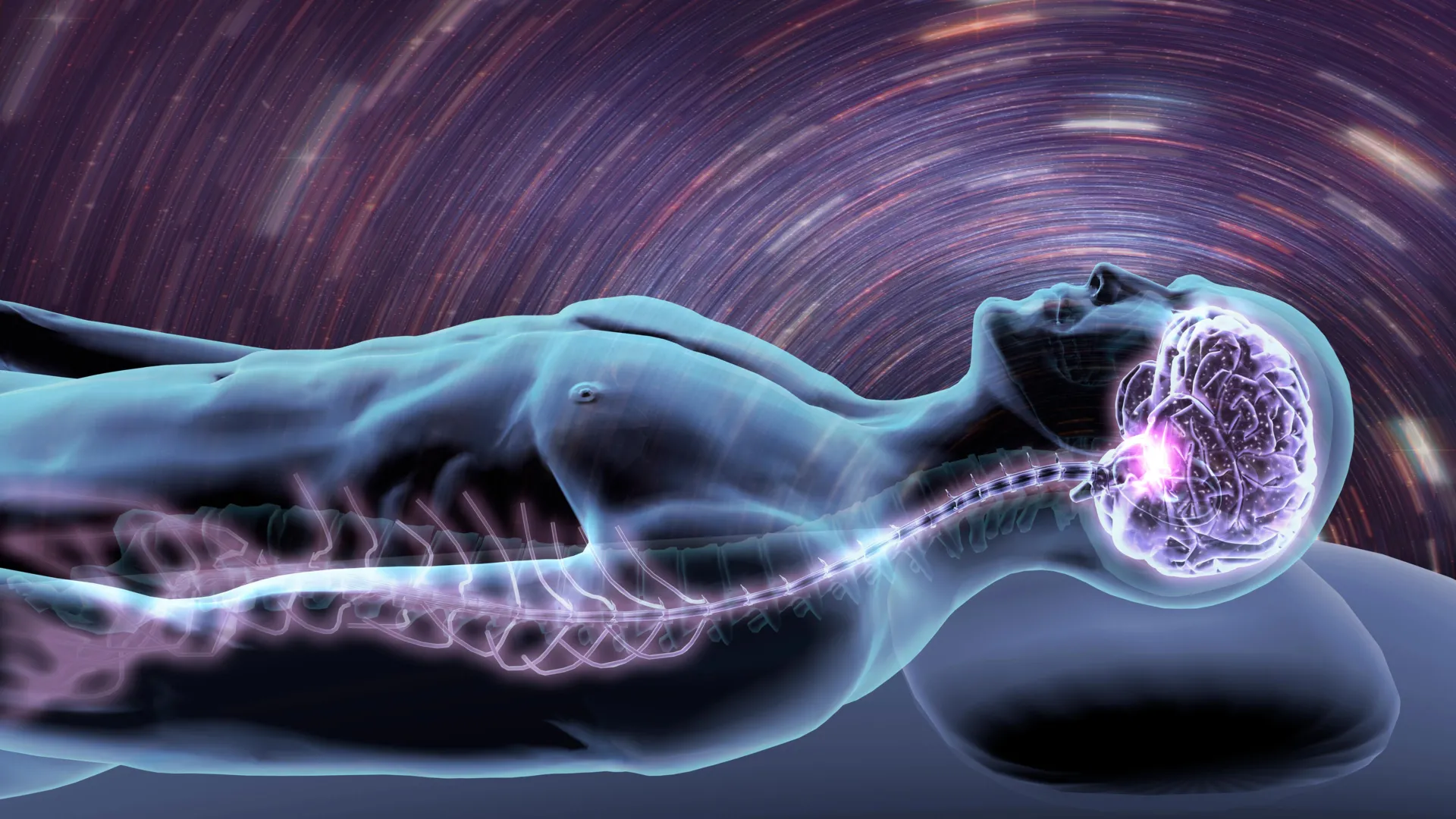
For years, people have debated whether drinking coffee in the evening interferes with sleep. Some people can have caffeine late in the day and fall asleep easily, while others may remain awake for hours. But researchers are increasingly finding that simply asking whether coffee delays sleep may miss a more important issue: what caffeine does to the brain after sleep begins.
To investigate those effects, scientists are using EEG, or electroencephalography — a method used to record the brain’s electrical activity. EEG measurements can reveal much more than how long someone sleeps or how often they wake up. They can also provide clues about the biological quality and depth of that sleep.
“EEG allows us to see not only whether a person is sleeping, but also how the brain is sleeping. Classical sleep assessment assesses sleep duration and its stages, whereas quantitative EEG analysis reveals more subtle changes, such as reduced slow-wave activity, which is an important marker of sleep depth and its restorative character,” explains Prof. Donata Kurpas from the Department of Nursing, Wroclaw Medical University.
Slow waves are a major feature of deep sleep — the stage associated with physical recovery, replenishing energy reserves, and maintaining healthy brain function.
Caffeine May Make Sleep Less Restorative
Caffeine does not always affect sleep in obvious ways. A person may still fall asleep at a normal time and remain asleep for what appears to be a full night, yet the quality of that rest may still be altered.
“Caffeine may shorten sleep or make it more difficult to fall asleep; however, even when sleep duration appears normal, it may reduce slow-wave activity and shift the EEG pattern toward a more ‘wakeful’ brain,” says Prof. Kurpas.
In practical terms, someone might spend eight hours in bed without getting the same level of neurological recovery they would normally expect. Because the disruption may not cause obvious awakenings, it can easily go unnoticed.
“The subjective feeling of having slept well does not always correspond to what we observe in neurophysiological recordings. A person may fall asleep without major difficulty and not remember awakenings, while the brain may display fewer features of deep sleep,” the expert adds.
Why Caffeine Affects People Differently
Another major finding from caffeine research is that responses vary considerably from person to person. Genetics, metabolism, age, stress, and chronic fatigue can all influence how strongly caffeine affects sleep.
For some people, even coffee consumed early in the day may still have an impact by nighttime.
“It is not only about coffee consumed just before bedtime. For some people, the total amount of caffeine consumed during the day and whether the body has enough time to metabolize it before nightfall may also be important,” Prof. Kurpas emphasizes.
That possibility may be especially relevant for people who rely on caffeine to improve focus, stamina, or performance, including athletes, people doing mentally demanding work, and anyone who regularly uses coffee or other caffeinated products to stay alert.
Caffeine Can Create a Fatigue Cycle
Caffeine can temporarily increase alertness and make fatigue feel less noticeable. However, experts caution that the boost may sometimes come at the expense of the body’s ability to recover fully during sleep.
In that sense, caffeine can resemble “borrowing energy” from the body. If nighttime recovery becomes less effective, the person may feel more tired the following day and turn to even more caffeine for help.
“If caffeine helps a person function during the day while simultaneously worsening the quality of nighttime recovery, a vicious circle may develop: greater fatigue, greater need for stimulation, and poorer sleep,” says Prof. Kurpas.
These findings are one reason sleep researchers are paying less attention to sleep duration alone. Increasingly, the focus is shifting toward what the brain is actually doing during the night and whether that sleep is biologically restorative.
“Caffeine is neither ‘good’ nor ‘bad’. It is a biologically active substance whose effects depend on dose, time of day, age, lifestyle, sleep quality, stress burden, and individual sensitivity,” the expert concludes.













Leave a comment