


China appears to be taking advantage of its temporary trade truce with the United States to squeeze Taiwan harder and in more ways.
Since the two countries in May agreed to build a ‘constructive relationship of strategic stability’, China has stepped up efforts to isolate Taipei diplomatically, has increased China Coast Guard patrols near Taiwan’s outlying islands, and, for the first time, has conducted maritime patrols east of Taiwan.
When Taiwanese President Lai Ching-te sought to fly to Eswatini, overflight clearances were reportedly rescinded by three African countries that the aircraft was supposed to fly over. Lai said that the clearances were withdrawn at China’s request. Although the visit still took place at a later point, it marks an escalation from previous practice.
While China and Taiwan have long competed over Taiwan’s remaining diplomatic partners, there was still international space for Taiwanese civil society participation in international conferences. China now seems to be targeting that as well.
In early May, the Zambian government cancelled RightsCon, a major annual human rights conference, at the last minute, allegedly under Chinese pressure due to the participation of Taiwanese researchers and human rights advocates. In late June, Taiwanese civil society actors were detained at the border when entering Kenya to participate in an international ocean protection conference. Taiwanese had previously participated in both conferences for many years.
Similar expert participation in UN forums and other intergovernmental institutions has long been blocked by China, but these were the first instances in which China appeared to lean on states to block Taiwanese civil participation in non-government forums.
Importantly, China faced no significant repercussions over its escalations. While the US and several European countries expressed concern, no action was taken. This confirms for China that grey-zone coercion against Taiwan can be expanded without triggering costs serious enough to threaten the broader US–China relationship.
Since the meeting between presidents Xi Jinping and Donald Trump in South Korea in November, both sides, with trade on their minds, have been eager to avoid escalation. The May US–China summit in Beijing produced no major outcomes but did codify the truce reached between the two countries within the framework of constructive strategic stability.

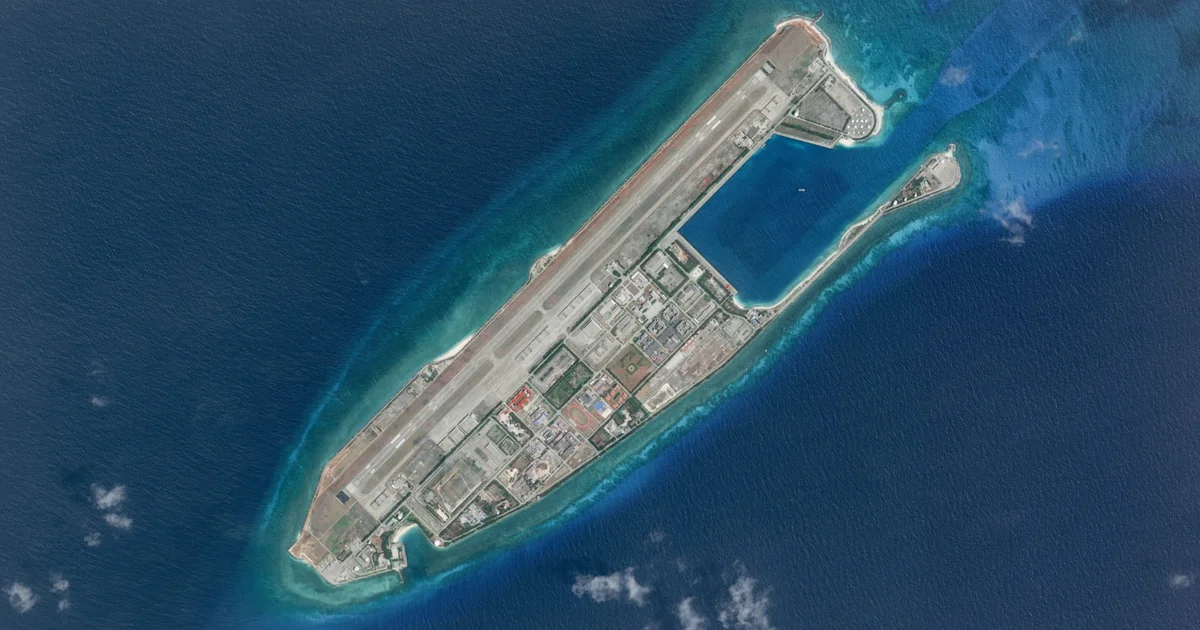
More recently, China has been increasing its use of the coast guard to test Taiwan’s response. On 24 May, a China Coast Guard ship entered restricted waters near Pratas island and stayed there for 33 hours, ordering the Taiwanese Coast Guard ship that intercepted them to leave. On 11 June, a similar event happened near Itu Aba, when two Chinese coast guard ships entered the restricted waters around the island for the first time. They left within 15 minutes, but their manoeuvres endangered the Taiwanese Coast Guard ships, using tactics the China Coast Guard has often applied to Philippine vessels.
Taiwan controls Pratas and Itu Aba, both in the South China Sea, but they’re hard to defend because of their distances from Taiwan’s main island, 420 km and 1,450 km from Taiwan’s main island, respectively.
Meanwhile, new Chinese civil-government patrols east of Taiwan have begun. These are exactly the kind of incremental salami-slicing that military planners have long warned could normalise coercive activity around the island and allow China to rehearse and normalise a de facto quarantine or blockade under the cover of routine law-enforcement activity, as recounted in The Strategist by Jane Rickards.
Yet Washington’s response has remained limited to expressing concern from its representative office in Taipei, which may lead Beijing to conclude that it can keep pushing without endangering its relationship of constructive strategic stability with the United States.
The so-called special coast guard operation to the east of Taiwan, conducted from 6 to 10 June, included hailing international maritime traffic, asking vessels for their ports of origin and destinations, asserting that they were in Chinese national waters, and deploying research vessels to survey the ocean floor, which would aid underwater warfare in a conflict around Taiwan. One oceanographic research vessel, the Xiang Yang Hong 22, briefly entered restricted waters east of the Taiwanese cities Hualien and Yilan. At the start of the operation, four Chinese ships, including two coast guard ships, briefly cut across Taiwanese restricted waters south of the island.
The exercises were nominally in response to Japan–Philippines talks aimed at demarcating the two countries’ exclusive economic zones east of Taiwan, but they sit within China’s broader maritime coercion of Taiwan.
During the May summit, Xi told Trump that mishandling differences over Taiwan could push US–China relations to a ‘dangerous place’. He now seems to be testing the limits on how far he can push on Taiwan, likely betting that the US cares more about maintaining the fragile truce.









Leave a comment