


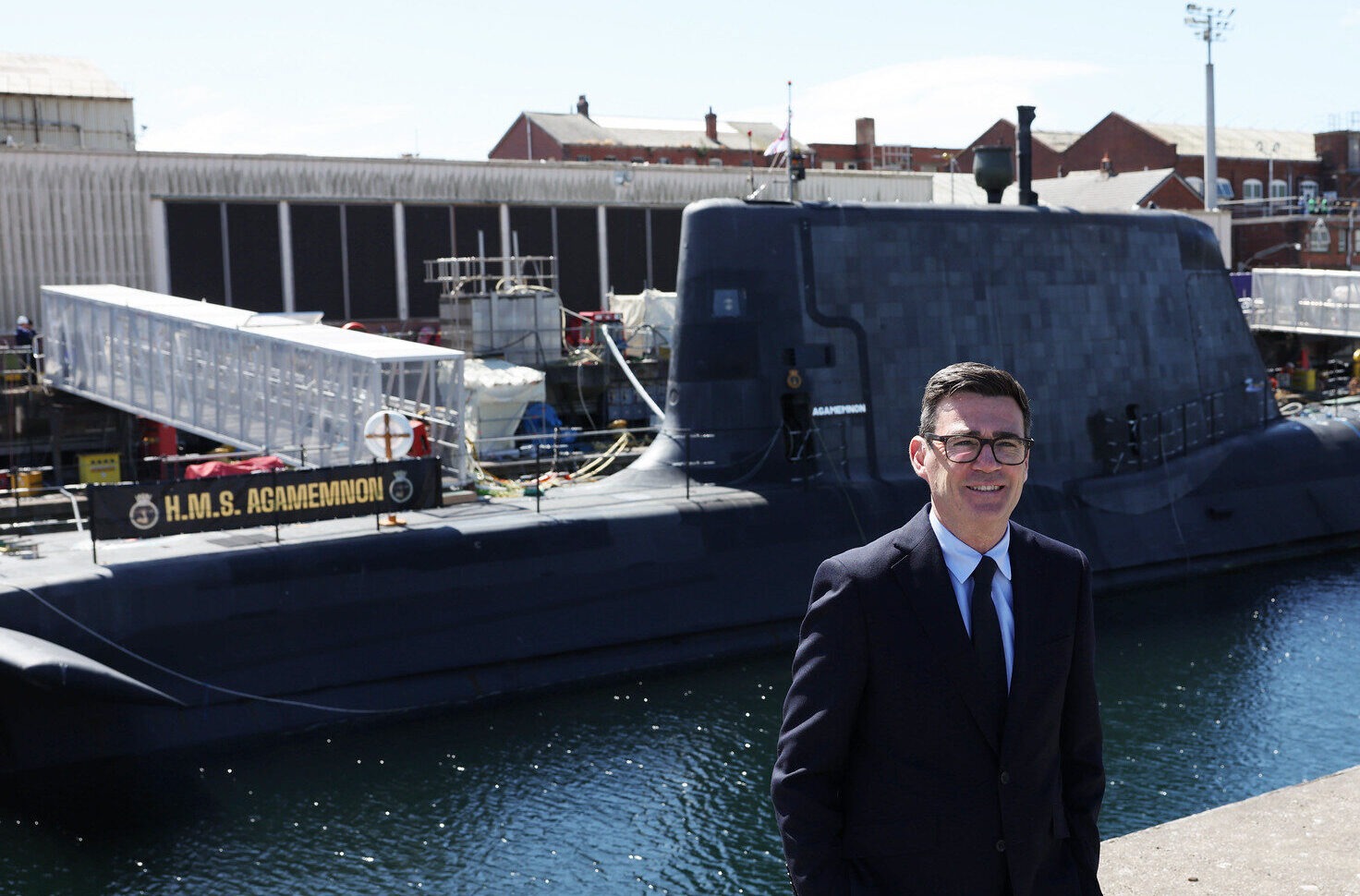
Australia, so dependent on Britain for AUKUS, needn’t worry about new Prime Minister Andy Burnham’s commitment to defence or about opportunities for cooperation. If the new prime minister’s perceived focus on British domestic issues have sparked worries, they are misplaced.
Burnham will remain committed to international priorities. His new defence and foreign secretaries have experience in working with Australia, and for the position of chancellor, Britain’s equivalent of a treasurer, he has appointed a former defence secretary who resigned two months ago over inadequate defence spending. Add to the mix the PM’s focus on creating jobs and keeping people in them, especially in the north of England, where much of AUKUS will be doing just that.
With any change in leadership, it’s natural to question whether cooperation and collaboration will continue, or whether priorities will shift. Three weeks ago, as Burnham became the seventh British prime minister in a decade, commentators murmured about whether his relentless concentration on domestic issues would take his attention away from foreign affairs. He was clearly focused on cost-of-living issues and had a record of grassroots domestic politics.
But this is a misread, for three reasons.
First, the claim that Burnham will be too focused on domestic policy to be interested in diplomacy, defence and international partnerships doesn’t stand up to scrutiny. As many, not least his predecessor, have noted, it is almost impossible to separate the two theatres. What happens overseas directly impacts domestic issues, particularly inflation.
This will be obvious to both Burnham and his team. With high-profile examples such as petrol prices frequently in the news, it is naive to think that international affairs won’t be a significant part of his daily focus. Burnham has already signalled continued commitment to NATO and Ukraine. He hosted President Volodymyr Zelensky as his first international visitor. Burnham said this was ‘no accident’, and he pledged unflinching British support.
Second, AUKUS is front and centre. The trilateral partnership has thrived under the two main parties in each of the three countries and under five British prime ministers. With the strategic case as compelling as ever, there is every reason to believe that it will go from strength to strength.
With Burnham, other reasons bolster that argument. The drive to decentralise power and influence away from London and the south of England aligns with the huge pool of AUKUS-related jobs away from the capital in places such as Derby (English Midlands), Barrow (north of England) and Faslane (Scotland).
Third, we should look at the records of key players around Burnham in relation to the Australia partnership and defence. New Foreign Secretary Ed Miliband has engaged extensively with Australia in previous roles. His work with Australia as energy secretary, including support for an (ultimately unsuccessful) bid to hold a major climate conference, should be encouraging to Canberra. Indeed, Miliband is one of a growing band in Westminster who have travelled to Australia to exchange ideas across a variety of portfolios.
Similar could be said for the new defence secretary, Wes Streeting, who, like Miliband, has looked to Australian practices to inform British policy via visits Down Under. This bodes well for Canberra as he takes up a portfolio that is even more outward looking and even more intrinsically linked to Australia. Furthermore, while Miliband and Streeting will be new faces at the next Australia–UK Ministerial Consultations, a recent attendee, John Healey, will still hold a vital role. Described only three weeks ago by Australian Defence Industry Minister Pat Conroy as ‘a good friend of Australia and integral to AUKUS’, the man who resigned as Defence Secretary over funding commitments now holds Britain’s purse strings.
All of this points positively for Australia, only 24 days into the new British government. In such turbulent times, that is extra good news.











Leave a comment