


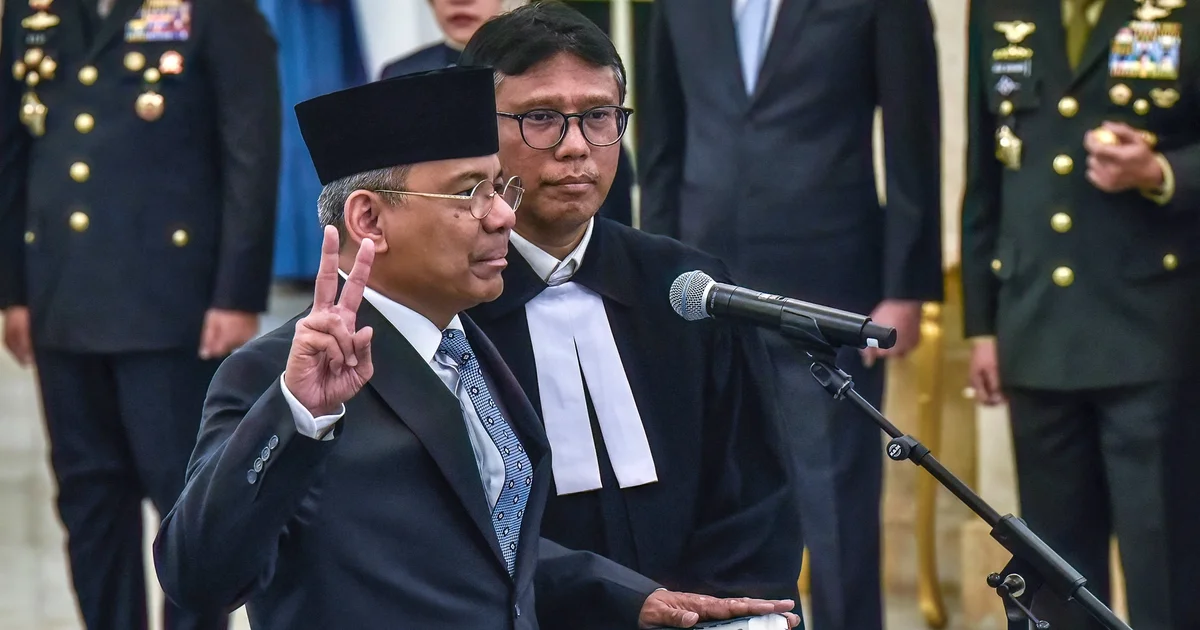
Suahasil has described his appointment as a continuation of the economic agenda (Opens in new window). “In my view, this is not a change, but simply a continuation,” he said after taking office. “I have been part of the Finance Ministry all this time, so we will continue working.” For a technocrat, that continuity carries an expectation that he can strengthen the Finance Ministry’s performance, reinforce confidence in Indonesia’s economic management and turn policy ambitions into effective delivery.
That expectation is consistent with how Suahasil views fiscal policy (Opens in new window). “Fiscal policy is always an anchor for a country, an anchor for stability,” he said. For him, the state budget must allocate resources, cushion the economy against shocks and redistribute resources across regions. The challenge is to use the budget to support economic growth and stability (Opens in new window), household welfare and human capital while maintaining confidence in public finances.
Suahasil’s background (Opens in new window) makes this emphasis on effective spending particularly relevant. An economist by training, he became a professor at the University of Indonesia and headed its Demographic Institute. He later worked at the National Team for the Acceleration of Poverty Reduction (TNP2K) under the Vice-President’s Office and served on the National Economic Committee. At the Finance Ministry, he headed the Fiscal Policy Agency – the ministry’s policy think tank – before becoming vice finance minister and now finance minister.
I came to know Pak Sua through our work at TNP2K. What struck me was his approach to policy reform. He was prudent and rigorous about evidence, but equally focused on implementation: who should benefit, how support would reach those who need it, how it should be monitored, what impact it would have on households and the local economy, and what would happen when the system got it wrong.
He did not see economic growth, poverty reduction and human capital as separate agendas – the priority was to make them reinforce one another.
That approach will now be tested by Prabowo’s priority programs. Their objectives are sound in principle but the problem has been the execution. Suahasil’s advantage is his understanding of how policy design translates into delivery. His test is whether he can use the Finance Ministry’s levers – funding, targeting, incentives, monitoring and fiscal discipline – to make Prabowo’s programs work.
The free nutritious meals (MBG) (Opens in new window)program is perhaps the clearest example, designed to improve child development while supporting local economies through food supply chains. Yet it has faced repeated food-poisoning incidents (Opens in new window)alongside the arrest of the former head of the National Nutrition Agency and senior officials in a corruption investigation (Opens in new window).
Suahasil is not responsible for MBG’s delivery but the Finance Ministry controls the program’s budget and maintains oversight of how it is used. The question is whether Suahasil can use those levers to ensure MBG delivers its intended benefits.













Leave a comment