


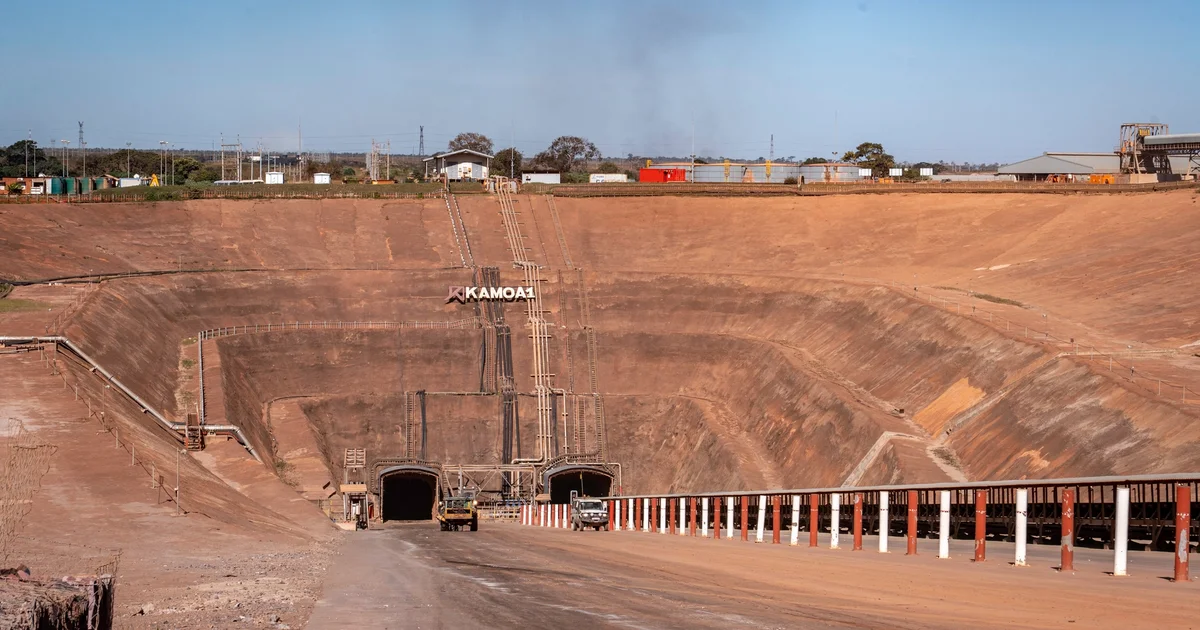
The timing is right. The energy (Opens in new window)transition (Opens in new window)has (Opens in new window)intensified (Opens in new window)demand (Opens in new window) for lithium, cobalt, copper, nickel, graphite, manganese and rare earths. Africa holds a major share of the world’s (Opens in new window)mineral (Opens in new window)reserves (Opens in new window) and will be central to the batteries, grids, electric vehicles and renewable infrastructure that decarbonisation requires. African governments know this. They are also aware a green transition built on raw mineral exports, weak processing capacity and external control of technology could reproduce the same structural inequalities that shaped earlier commodity cycles.
Resource equity could become the core of Australia’s pitch. African states are demanding more than investment: beneficiation, refining, skills transfer, infrastructure, local procurement, transparent contracts, environmental protection and a fairer share of the value created from their own resources. The African (Opens in new window)Union’s (Opens in new window)focus (Opens in new window)on (Opens in new window)industrialisation (Opens in new window)and (Opens in new window)value (Opens in new window)addition (Opens in new window) reflects a broader political shift. Resource-rich states want to move from being suppliers of inputs to owners of strategic supply chains.
Australia is well placed to support this shift and should avoid appearing as another external rule-maker. China brings capital, infrastructure, market access and scale. Gulf investors bring liquidity and speed. Western partners bring finance and standards. Australia’s distinctive offer is different. It combines mining (Opens in new window)expertise (Opens in new window), listed-company discipline, environmental (Opens in new window)regulation (Opens in new window), mine safety practice, geological (Opens in new window)knowledge (Opens in new window), experience in infrastructure and transport (Opens in new window), mining technology and experience with land rights and community consent. These are practical tools African governments can use to negotiate better projects and retain more value.
The diplomatic proposition should be concrete. Australia could work with African partners to champion a post-2030 (Opens in new window)resource (Opens in new window)equity (Opens in new window)compact (Opens in new window)within (Opens in new window)the (Opens in new window)UN (Opens in new window)system (Opens in new window). Such a compact would not tell African states how to manage their minerals, but affirm that clean-energy supply chains support domestic (Opens in new window)processing (Opens in new window), local employment, transparent revenue management, community rights and environmental safeguards. It should recognise that climate ambition cannot be separated from economic sovereignty in producer countries.
This would give Australian diplomats stronger language than generic partnership references. A practical package could include co-sponsored UN initiatives, regulator exchanges, mining-governance scholarships, geological survey support (Opens in new window), cooperation on local content, traceability and rehabilitation, and dialogue with the African Union and African Development Bank. African governments could be engaged not as recipients of Australian expertise, but as co-authors of the rules shaping the global mineral economy.
A small Australia-Africa mineral diplomacy platform could give this agenda institutional form. It could bring together government, industry, universities, regulators and African partners to identify pilots, share technical knowledge and align engagement with African development priorities.
The security argument remains important. Traditionalists may insist that a United Nations Security Council campaign should focus on peacekeeping, counterterrorism and conflict mediation. These issues are inseparable from African resource governance (Opens in new window). Competition (Opens in new window)over (Opens in new window)land, (Opens in new window)minerals, (Opens in new window)illicit (Opens in new window)trade, (Opens in new window)armed-group (Opens in new window)finance (Opens in new window)and (Opens in new window)unequal (Opens in new window)revenue (Opens in new window)distribution (Opens in new window) has intensified conflict in many theatres. Any country seeking a Security Council seat must be able to explain how economic (Opens in new window)structures (Opens in new window)feed (Opens in new window)insecurity (Opens in new window) and how better governance can transform conflict.
Mineral diplomacy does not provide Australia with a shortcut to African votes. It could give substance to the sustained (Opens in new window)relationships (Opens in new window) a credible Security Council campaign requires and give Canberra a reason to engage the individuals and institutions Australian mining equipment, technology and services (METS) providers need to identify across the continent. Cooperation must stand on its own value to African partners rather than appear as assistance attached to an electoral request.
Australia need not overstate its influence in Africa. Canberra should be precise. Its advantage lies in linking mining expertise to Africa’s demand for value addition, standards-setting and fairer resource governance. Helping African partners secure a stronger place in the critical-minerals order (Opens in new window) could make mineral diplomacy more than a campaign theme. It could contribute to the post-2030 settlement, deepen African relationships and strengthen the credibility of its Security Council bid.













Leave a comment