


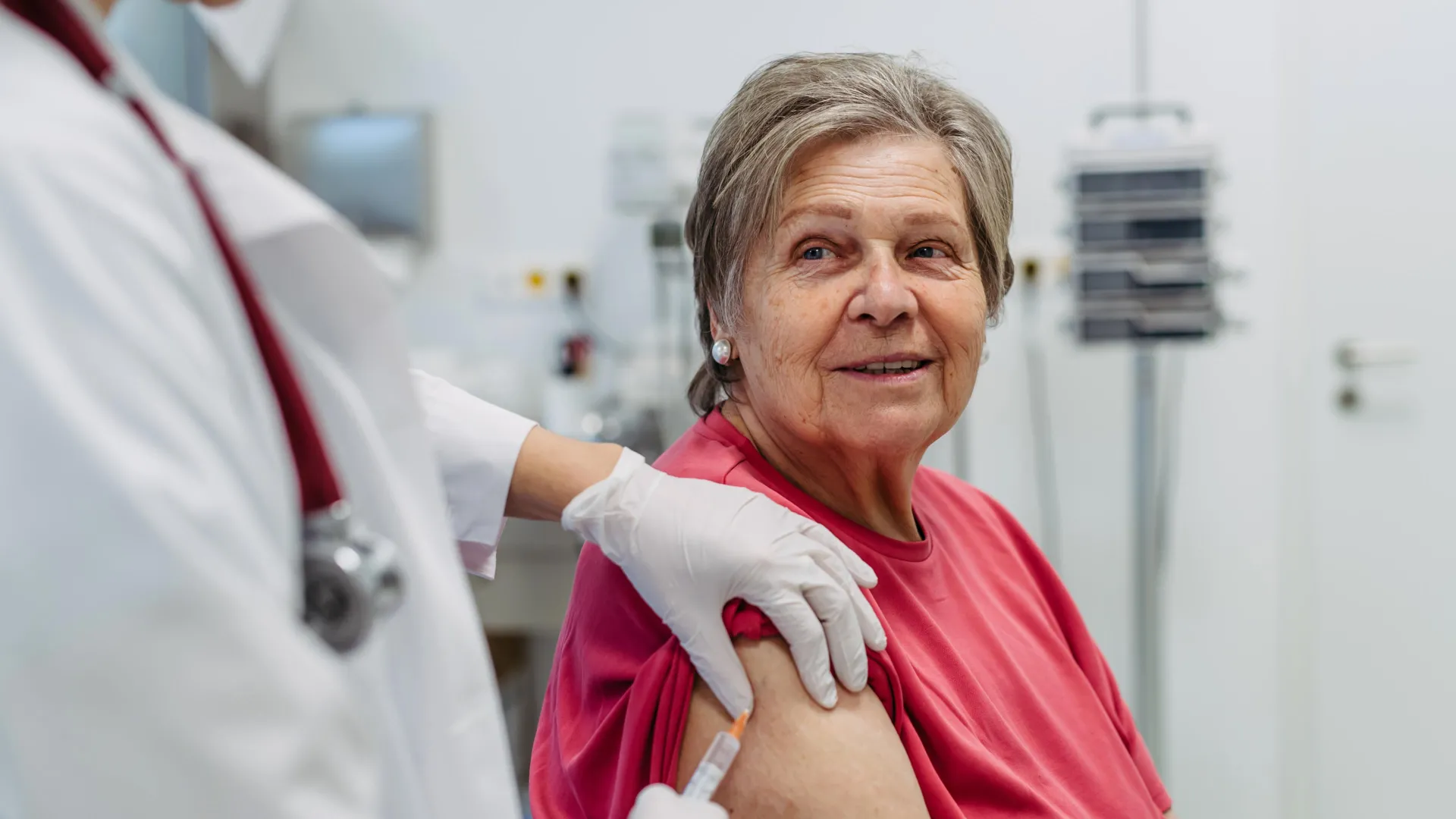
Older adults who received a shingles vaccine after entering a skilled nursing facility were less likely to be diagnosed with dementia over the following four years, according to a new study. Researchers found that vaccinated adults had a 24% lower risk of dementia compared with those who did not receive the vaccine.
The analysis drew on Medicare data and health records from more than 500,000 adults age 66 and older who were admitted to skilled nursing facilities for either short-term or long-term care. Researchers compared patients who received at least one dose of the recombinant shingles vaccine, known as RZV or Shingrix, with patients who remained unvaccinated. Shingrix was introduced in 2017 and is currently the only shingles vaccine available on the market.
Studying the Newest Shingles Vaccine
“A lot of previous studies with similar results focused on an older vaccine,” said study author Kaley Hayes, an assistant professor at Brown University’s School of Public Health. “This study looks at the newest vaccine only in an older, vulnerable adult population who were not up to date with shingles vaccination and are at a very clear clinical point in care: entering a skilled nursing facility.”
The results are consistent with several earlier studies involving a previous shingles vaccine that also found an association between shingles vaccination and a reduced risk of dementia.
“It fits into this large puzzle that’s just starting to come together that the vaccines are effective at preventing shingles and also appear to have neuroprotective benefits as well,” said Hayes, who is also the associate director of pharmacoepidemiology for Brown’s Center for Gerontology and Healthcare Research.
Hayes led the study, published in Annals of Internal Medicine, with researchers from Brown, the University of Delaware, the Providence Veterans Affairs Medical Center and other institutions.
More Than 500,000 Older Adults Analyzed
The researchers used a technique called target trial emulation to analyze the data. This approach attempts to recreate some of the conditions of a randomized clinical trial in situations where conducting such a trial is not practical.
The study included Medicare claims and electronic health records from patients admitted to more than 5,500 skilled nursing facilities nationwide between 2017 and 2022. Of the 509,926 people included in the analysis, just 8,843 received the shingles vaccine.
Participants had to be eligible for shingles vaccination and could not have previously been diagnosed with dementia.
After four years of follow-up, adults who had received at least one of the two Shingrix doses were substantially less likely to receive a dementia diagnosis. Dementia developed in 18.8% of vaccinated participants, compared with 24.6% of those who were not vaccinated.
“This translates to about one in 17 dementia cases potentially being prevented,” Hayes said.
The Study Cannot Prove Cause and Effect
One important limitation is that the researchers cannot determine with certainty whether Shingrix itself was responsible for the lower rate of dementia diagnoses.
People who received the vaccine tended to be slightly younger and healthier than those who remained unvaccinated, differences that could also contribute to a lower dementia risk. The researchers adjusted their analysis to account for these factors and found that they did not fully explain the association.
Additional research, including clinical trials, will be needed to establish whether shingles vaccination directly reduces the risk of developing dementia.
The researchers say the findings suggest that an already widely accessible preventive measure could potentially benefit both physical and cognitive health.
“Our cognition is so tied to our overall health and what happens to us physically,” Hayes said. “It’s really amazing to see that something that’s supposed to prevent a physical ailment can also help keep our brain healthy, too.”
The authors reported receiving funding from GlaxoSmithKline, the manufacturer of Shingrix. They noted that the company had no control over the study design, the analysis, or the decision to publish the findings.













Leave a comment