


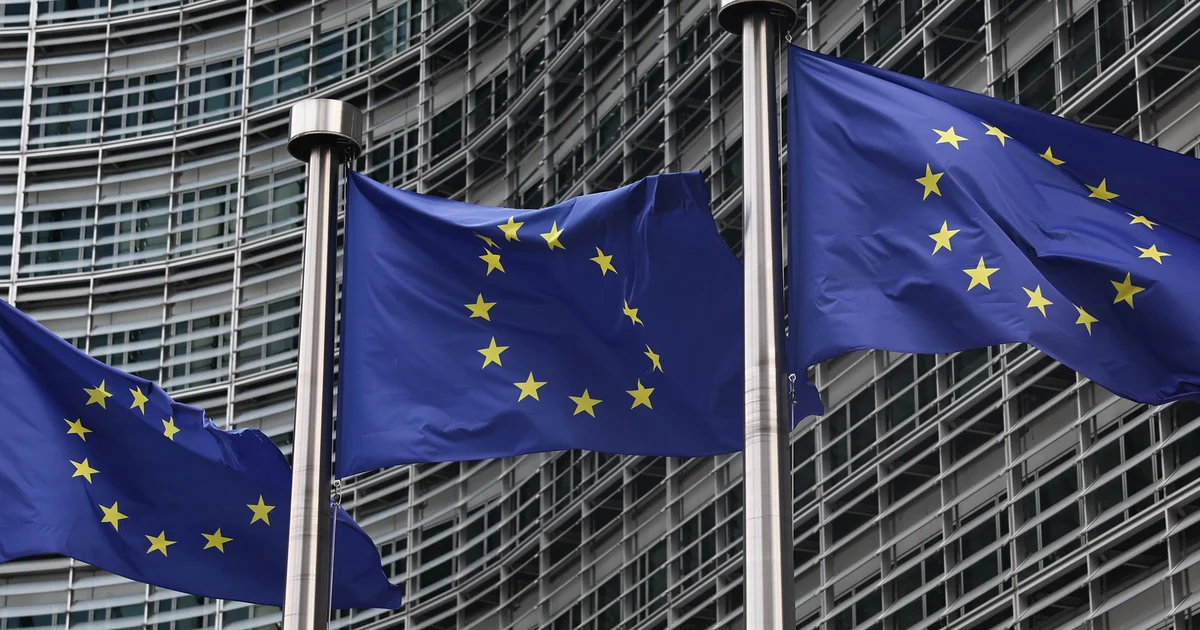
The EU accounts for 15.8% (Opens in new window) of global trade, making it the world’s largest trader when goods and services are combined. This makes the EU one of the world’s most important export destinations, absorbing 14.8% (Opens in new window) of total China exports, around 20% (Opens in new window) of US exports, and serving as a key market for ASEAN. At the same time, China remains the EU’s largest import partner, accounting for 21.3% (Opens in new window) of extra-EU imports.
This market power enables the EU to reshape global sourcing networks. Unlike the classic Brussels Effect, which exports EU regulations by requiring foreign firms to comply with EU standards, the diversification law operates from within. It shapes how European companies organise their supply chains: where firms buy, how much they source, which standards and benchmarking they follow, what they pay for resilience, and, importantly, how they operate. This is on top of the existing rules, such as the EU’s Corporate Sustainability Reporting Directive (CSRD (Opens in new window)) and Corporate Sustainability Due Diligence Directive (CSDDD (Opens in new window)).
The ripple effects would be substantial, reshaping how firms compete on cost alone.
At its core, resilience becomes central to EU firms’ production decisions. Brussels may treat supply chains like investment portfolios, reducing exposure to idiosyncratic geopolitical risks. Rather than concentrate production in the lowest-cost location, EU firms will spread sourcing across multiple countries within prescribed concentration limits. Demand would shift from the most efficient suppliers to second-best ones that offer greater security, proximity, and geopolitical reliability.
This could redraw the map of global manufacturing, creating more dispersed production hubs. Emerging powers stand to benefit, particularly those maintaining strategic autonomy. The IMF argues (Opens in new window) non-aligned “connector” countries are capturing trade and investment spillovers from geoeconomic fragmentation due to wars and decoupling. Their strategic flexibility lowers geopolitical concentration risks, making them obvious candidates for Brussels’ diversification.
Brussels has bet on those partners. Over the past two years, the EU accelerated trade negotiations (Opens in new window) with middle powers, illustrated by the EU–Indonesia CEPA (Opens in new window), the EU–India FTA (Opens in new window), the EU–Australia FTA (Opens in new window), and . The objective is to build a broader network of reliable partners. If the diversification instruments work, these agreements would give the EU greater scope to reconfigure its supply chains. For the developing countries, however, this is more than a test of trust. Capturing these opportunities requires competitive manufacturing, skilled labour, and institutions capable of meeting the EU’s regulatory standards. The EU should do so without becoming a regulatory hegemon.
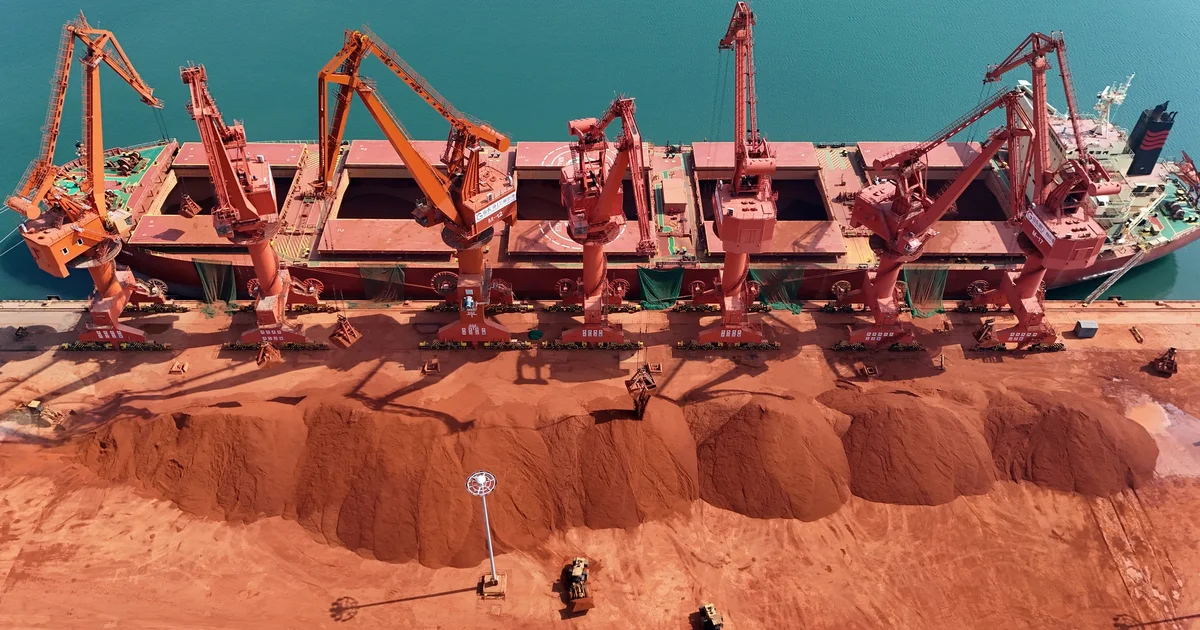
While the logic behind the law is compelling, diversification has limits. Some dependencies cannot be unwound quickly, and critical minerals are the clearest example. The EU sources roughly 96% (Opens in new window) of its magnesium imports from China, which also produces around 90% (Opens in new window) of global supply. China is, in effect, a near-monopoly supplier. Diversification is not just costly but structurally difficult, requiring years of investment and industrial upgrading. Closing that gap in critical industries, including manufacturing and technology, will require US$23.6 trillion (Opens in new window) in additional investment over the next 25 years.
Even where substitute suppliers exist, the cost difference across firms and countries could impose substantial adjustment costs for EU firms, eroding their competitiveness. Firms could absorb these through lower profit margins, although this may be unsustainable. Otherwise, governments could offset the costs through industrial policy and subsidies. The question then: do European governments have the capacity to do so?
That seems difficult. On average, EU member states ran budget deficits of 3.1% of GDP (Opens in new window), exceeding the bloc’s fiscal rules. Meanwhile, the IMF projects three-fourths of European sovereigns (Opens in new window) face heightened debt sustainability risks. With fiscal space shrinking, governments will struggle to bankroll an ambitious diversification agenda. Unless Brussels can prove that resilience justifies the cost, its strategy may prove politically difficult to sustain.
If the Brussels Effect reshaped global rules for privacy and later for carbon, Brussels is now betting it can do for resilience as well – but that depends on governments agreeing to pay for it.













Leave a comment