


Photo from setneg.id
President Prabowo Subianto marked his two years in office on 20 October 2026 amid growing public discontent over not only how his administration handles the forest fires in Kalimantan and Sumatra, which have choked millions in Indonesia and beyond, but also the state of the nation’s economy and the direction it is heading.
A recent survey by the Center for Economic and Law Studies (CELIOS) has found that 75 per cent of Indonesians are feeling ‘stressed’ over the government’s policies, mainly on the economic front (53 per cent).
The warning signs are just impossible to ignore. The rupiah has now breached the Rp18,000 mark against the greenback, a historic low, while the Indonesian stock market has suffered its steepest fall since the 1997 Asian Financial Crisis. Significantly, this happened even as the economy grew by more than 5 per cent.
What has gone wrong?
‘Lies, damn lies, and statistics’
Prabowo’s ambition to achieve 8 per cent GDP growth is dangerously unrealistic.
Growth targets, once presented as benchmarks for economic performance, now risk becoming political slogans detached from ordinary Indonesians’ everyday experiences.
Data released by Statistics Indonesia (also known as Badan Pusat Statistik, BPS) may no longer reflect actual economic conditions. In Q2 2025, for example, manufacturing sectors grew by 5.68%, but the PMI (Purchasing Managers’ Index) contracted, with 150,000 layoffs recorded.
The discrepancy likely stems from imported defence equipment being classified as manufacturing output. The government also double-counted industrial park data to inflate investment numbers.
While this is happening, ordinary households are struggling with rising living costs. CELIOS asked respondents about their top three main concerns after two years of Prabowo’s administration. High staple food prices are the most urgent problem for 78% of respondents, followed by jobs and worker protection at 58%, and law enforcement and beurocratic reform at 35%.
Prabowo’s Free Nutritious Meal (Makan Bergizi Gratis, MBG) program has triggered price hikes on basic needs. This is a vicious cycle along the supply chain of free meals. The budget allocated for free meals creates competition in the traditional market and among end consumers. Households are facing price increases in essentials such as rice, poultry, eggs, and even vegetables.
Coercive fiscal policies
To finance populist programs such as the MBG and the Red and White Village Cooperatives (Koperasi Desa Merah Putih, KDMP), the government has no choice but to increase tax revenue. This is easier said than done.
Around 82% of the public believe that taxes and levies are already too high. Changes to income tax rules for small and medium-sized enterprises (SMEs) have added pressure on small business owners.
Meanwhile, tax enforcement appears to be selective, if not discriminatory. Some established conglomerates have faced scrutiny, including Djarum CEO Victor Hartono, while others are seen as benefiting from government protection or contributing through instruments such as Patriot Bonds.
This raises concerns that taxation could become a tool to weaken competitors or political opposition rather than ensure fair and consistent enforcement.
Prabowo has also imposed austerity, describing it as a move to improve budget efficiency and cut corruption, and his government is reducing financial support to regional administrations. Transfers to Regions (TKD) are projected to fall from 24.49% of national spending in the 2025 outlook to 17.17% in the 2026 budget.
These policies have proven to strain regional governments financially. Civil servants have protested the policy in several regions, while public resistance to higher local taxes as a result of that policy has grown.
Swinging budget cuts have also reached village administrations. Village development risks being undermined as Village Funds are used to repay loans Merah Putih Cooperatives (KDMP) took from state-owned banks. The cooperative program has faced criticism over its implementation, including the absence of pilot projects and the military’s involvement in construction and staff recruitment.
By financing cooperatives through bank loans backed by village funds, the government may be shifting financial risks from the public budget to the banking system. If cooperatives fail to service their debts, the resulting losses could threaten financial stability.
These concerns are now widely shared, with 66% of the public and 91% of experts reportedly rejecting the village cooperative program.
A looming economic disaster?
As Prabowo enters his third year in office, Indonesia is literally and figuratively on fire.
In the last two years, Indonesia has been hit by a series of disasters, from earthquakes and volcanic eruptions to massive flooding and devastating wildfires. Disasters are costly. The recent wildfires alone have reportedly cost Indonesia an estimated USD 6.5 billion in economic and health impacts, the worst in 11 years.
Hotspots have spread from West Kalimantan to South Papua, generating transboundary haze and worsening respiratory problems. The resulting health burden falls on both households forced to pay prolonged medical expenses and the National Health Insurance System (Badan Pengelola Jaminan Sosial Kesehatan, BPJS Kesehatan), which already faces concerns about its financial sustainability.
The country is now facing a looming economic disaster.
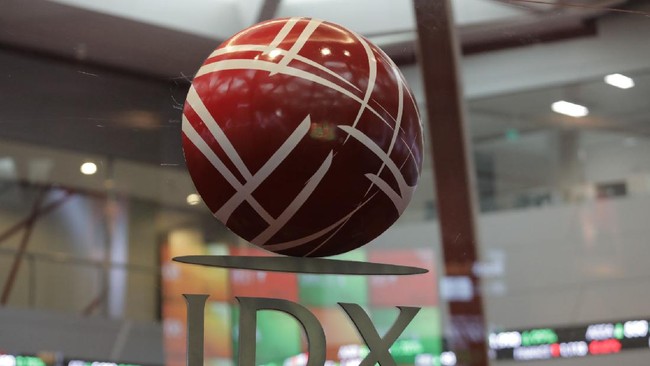
Global index provider MSCI last week announced it was considering downgrading Indonesia’s stock exchange from an ‘emerging market’ to a ‘standalone market’ status, signalling growing distrust in the Indonesian market.
The announcement followed a high-profile takeover of Bayan Resources, one of Indonesia’s largest coal companies, by coal tycoon Syamsuddin Arsyad, also known as Haji Isam, a deal analysts say is plagued by irregularities.
Haji Isam is one of the largest donors to Prabowo’s presidential campaign and is now regarded as one of the newer but most influential oligarchs in Indonesian politics.
Goldman Sachs estimates that Indonesia could lose USD 5.6 billion if MSCI downgrades the country to standalone market status. The impact could be felt by not only domestic investors but also various industries—IPOs cancelled, production costs soaring as the rupiah weakens, and interest rates rising.
MSCI’s announcement may have also been triggered by reports that Danantara, Indonesia’s state-backed investment agency, is planning to acquire shares in the Indonesia Stock Exchange (IDX). This raises concerns about the exchange’s future independence and whether state involvement through Danantara, the main vehicle of Prabowo’s state capitalism, could influence its operations and decision-making.
After two years of Prabowo’s presidency, the economic costs of his policies have sparked growing concerns. With 92% of experts expressing confusion about the direction of government policy, how long can Indonesia afford to continue on this path?
Can the country continue to bear the pain until the 2029 presidential election?








Leave a comment