


Indo-Pacific democracies have spent years living inside this contradiction that Canada hoped to avoid. The question for countries like Australia, Japan, and the Philippines has been how they can use their connections with the American military and economy without becoming solely dependent on it for future security.
Pacific nations have not wholesale abandoned American alliance amid the destabilisation of the Trump era, but they have begun developing an instinct for redundancy.
Recent months have seen a marked uptick in relationships between Pacific nations that no longer run back-and-forth to Washington but directly between Pacific capitals. New regional institutions and capacities allow for cooperation that continue even when Washington is absent.
Adversaries have taken note of this new approach to alliance in the region. Vladimir Putin spoke alongside (Opens in new window) his Pacific Fleet commander in the Kuril Islands in recent weeks, warning about a newly strengthened bloc in the region – one that he assumes is controlled entirely by the United States.
The Pacific matters less as a destination for Canada to extend economic or even diplomatic power but rather as a model for how a middle power lives alongside America.
Strategic planning in the Pacific in this decade begins from the proposition that alliances and autonomy are not opposites. Australia can want the American alliance to remain extraordinarily strong while also wanting relationships with other countries that do not require Washington to be at the table constantly.
Japan can deepen its American alliance while building its own regional relationships.
The objective is to keep Washington present without allowing it to become irreplaceable.
Canada has already begun to move in this direction. The Carney government has set targets to double its non-US exports in the coming decade. It is strategic redundancy to keep Washington from being a single point of failure that it presently represents.
Even if Carney and Trump reach an agreement, the strategic problem does not disappear. Trump in the future, or another president even more pugnacious than the current one, could threaten sectors built on the expectation that near-total integration with the United States was a safe bet.
The lesson for Ottawa cannot be that Canada needs a better relationship with the next American president, because no one can predict if such a president will be more or less friendly.
Instead, it is that no American president should possess this much unilateral leverage over Canadian choices.
This is not a decoupling from the United States. It remains, and will remain, the largest democratic economy and military for quite some time. But it, like Pacific nations, should accept that some dependence is inevitable while it must resist unnecessary concentration of dependence.
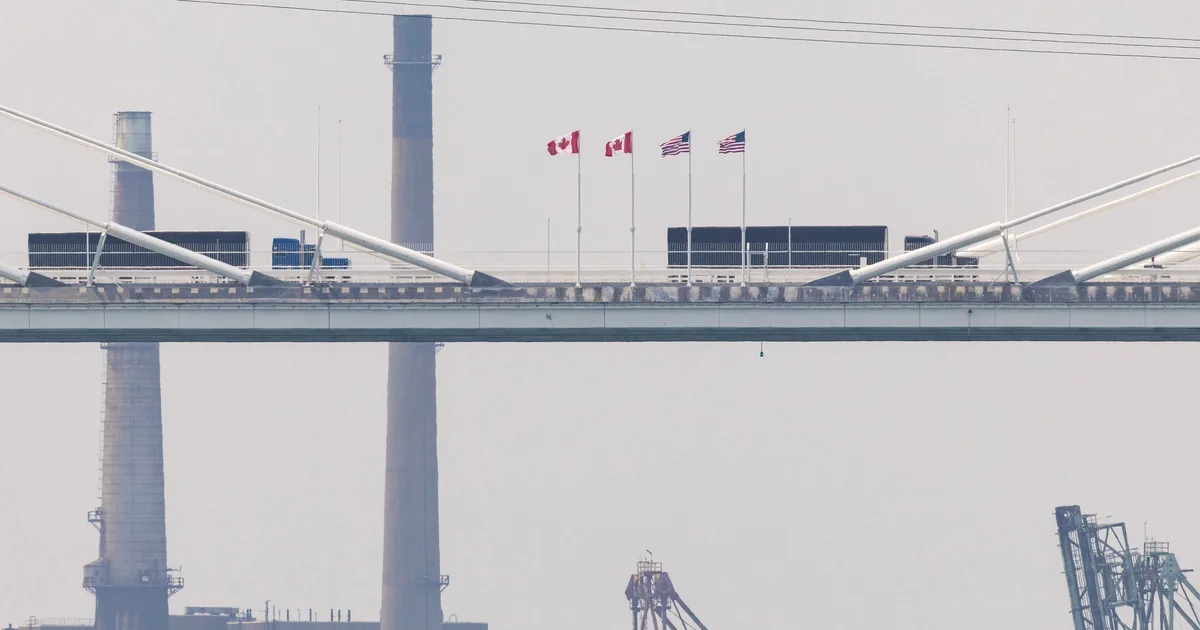
For most of the postwar period, Canada occupied an enviable position. Its only major land border was with the dominant power of the region, deeply integrated with its enormous market, and connected to a resurgent Europe through its Atlantic alliance.
The Trump years have changed the meaning of that geography.
Being at America’s doorstep is still an enormous advantage, but it also now represents a source of asymmetric vulnerability.
For the last decade, this has also been a Pacific problem. One from which Canada can learn.











Leave a comment