


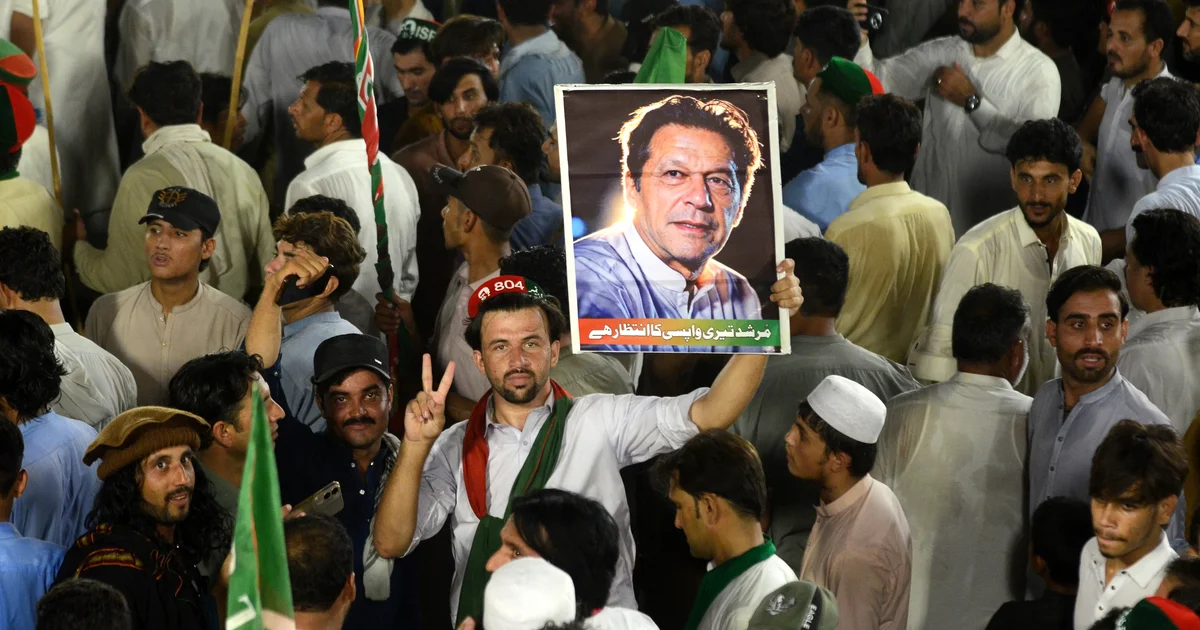
One of Khan’s closest aides, Zulfikar Bukhari, recently told Reuters (Opens in new window) that, if released, Khan would not confront the powerful army chief, Field Marshal Asim Munir – the Pakistani military leader who has cultivated an unusually close relationship with US President Donald Trump and whom Trump has publicly praised. Bukhari suggested that Khan would be prepared to put aside personal grievances and accept a “healing hand” from the military chief.
That is a strikingly softer message from Khan’s camp. But it needs to be treated carefully: it is Bukhari speaking about what Khan would do, rather than Khan himself making a public commitment.
Meanwhile, the PTI plans to mobilise nationwide on 27 September to demand his release. Sohail Afridi, his party’s chief minister for Khyber Pakhtunkhwa, has said he will lead the march towards Adiala Jail.
That means Pakistan is approaching September with two seemingly contradictory messages: confrontation on the streets and the possibility of reconciliation behind the scenes.
Field Marshal Asim Munir has become an increasingly consequential interlocutor between Washington and Tehran. Reuters reported that Trump spoke directly with Munir before the army chief travelled to Tehran, urging Pakistan to use its influence to encourage Iran back towards negotiations. Munir subsequently travelled to Tehran with Interior Minister Mohsin Naqvi, and Pakistan later said the talks had made “significant progress”.
There is a delicate foreign policy balancing act behind Pakistan’s new prominence. Islamabad has strong reasons to cultivate its relationship with Washington and has developed a notably close channel with Trump. But Pakistan cannot simply choose Washington over Tehran. It shares a border and substantial trade interests with Iran, maintains a deep strategic relationship with China, and has important religious, security, and economic relationships with the Gulf states.
Munir’s role in Iran diplomacy therefore reflects both Pakistan’s growing diplomatic relevance and the extraordinary concentration of foreign policy influence in the hands of the military leadership.
For Khan’s supporters, the irony is obvious. The military establishment they accuse of keeping their leader politically excluded is simultaneously presenting itself internationally as a pragmatic force capable of talking to Washington, Tehran and other regional capitals.
And this week, Khan’s extraordinary crossover from cricket legend to political icon was on display again. During the England–Pakistan Test, former England captain and broadcaster Michael Atherton interviewed Khan’s sons, Sulaiman and Kasim, during the lunch break about their father’s imprisonment.
The Pakistan Cricket Board subsequently complained (Opens in new window) to Sky Sports about the broadcast. The episode reportedly became so tense that there were discussions about whether Pakistan’s players would return to the field after lunch, although play ultimately resumed.










Leave a comment