


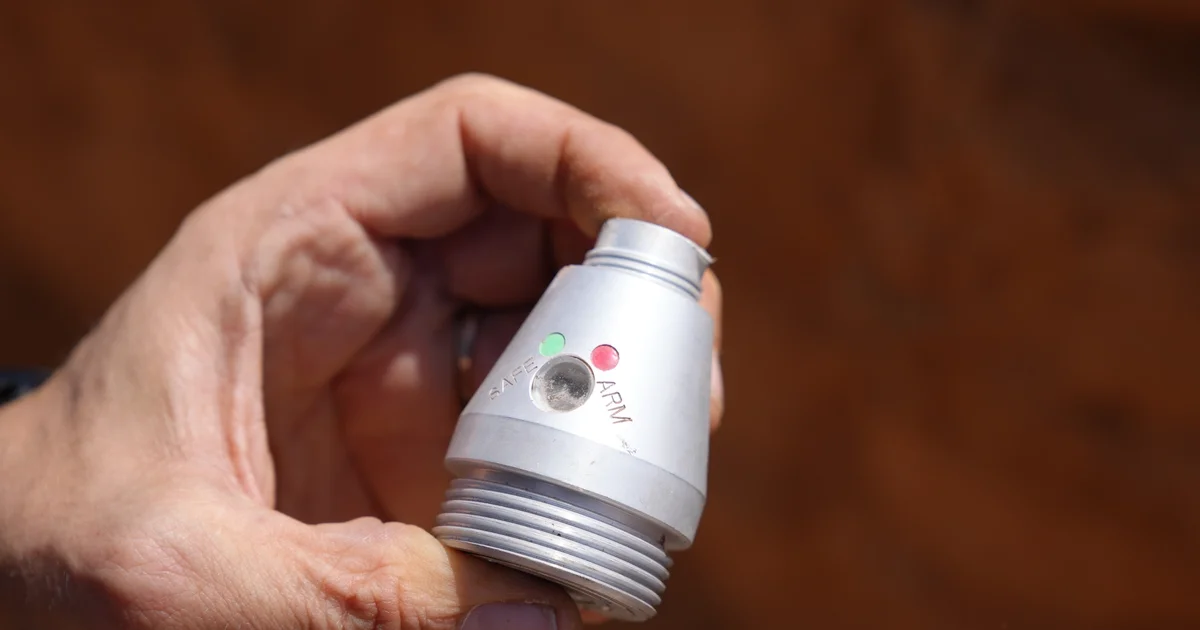
Drones are a cheap weapon on the battlefield and drone incidents affecting humanitarian operations increased by 150% in 2025 (Opens in new window), contributing to the deaths of at least 159 aid workers.
Drones challenge some of the fundamental approaches NGOs have used for decades to manage security risk.
Traditionally, if an NGO vehicle is shot at, or an aid distribution site is attacked, the NGO goes back to the armed group and asks what the problem was – “We thought we had an agreement”. The NGO would clarify any misunderstanding and find a new way of working, or make an informed decision that operations are no longer feasible. NGOs can even use an element of deterrence – if pushed, they may tell the community that this armed group’s actions are preventing the delivery of aid, putting the onus back on the armed group. This is a simplified summary of the sophisticated acceptance-based approach NGOs apply to risk management.
Drones undermine that approach, largely because of the anonymity they offer. This is off-the-shelf, dual-use technology that any number of actors can deploy. Even at military grade, long-endurance platforms such as the Chinese Wing Loong or the Turkish Bayraktar are operated by a range of actors (Opens in new window).
So even if you identify the drone behind an attack on aid workers, you don’t confidently know who is responsible. Was it the government or opposition forces? Who do you engage with to seek accountability? Did the assailant want to stop you delivering food aid to a particular community or was it mistaken identity?
Misinformation and disinformation from both sides then compound the ambiguity.
The threats to aid workers are not static. Generational improvements to drone technology can be measured in months. AI looms large as an accelerator of many capabilities.
Even at peak funding, no NGO could mitigate and adapt sufficiently quickly to the coalescing risks in isolation. The humanitarian sector has to be more coordinated to rise to the challenge. That means more shared risk management infrastructure and services, and more spaces for sustained collaboration.
While much work is already underway, it will require global political muscle to truly advance the system, and many are looking to the Australian-initiated Group of Friends for the Protection of Humanitarian Personnel (Opens in new window) to see whether the 132 state signatories can be enablers of this collective approach, and deliver on the potential of their unique political alignment.
It is no easy assignment given the trajectory of the world, but success means maintaining the access of those who contribute to the conditions for a stable and prosperous world.
This article draws on comments made on a panel at the International Conference on the Protection of Humanitarian Aid Workers (Opens in new window), 15 October 2026, in Brussels, hosted by the European Commission and the Irish Presidency.











Leave a comment