


The Quad has more policy space to undertake maritime security activities than its members’ policymakers have assumed. Our recent study, published on 13 October by the Hoover Institution at Stanford University, shows that Quad partners could expand security activities if they were to concurrently deliver benefits to Southeast Asian states, experiment with creative configurations of participation, and take advantage of fleeting opportunities in regional political relations.
Regional views should be investigated, not assumed. For good reason the Quad – the informal grouping comprising Australia, India, Japan, and the United States – has consistently sworn that it doesn’t seek to supplant the Association of Southeast Asian Nations (ASEAN) as the region’s primary international organisation or otherwise rattle Southeast Asian countries that fear intensifying security rivalry between the US and China. But every Southeast Asian country views the Quad’s security activities through the prism of its own distinct national interests. Their perceptions are not automatically opposed to Quad military activities, nor are they uniform across countries.
More specifically, Southeast Asian states’ policy approaches vary according to at least three factors that are within Quad countries’ control: the type of security activity the Quad considers; the country or combination of countries that lead the initiative; and the geographic location of that activity.
The first key variable shaping Southeast Asian approaches is the character of a security activity the Quad may consider. Southeast Asian countries are more likely to welcome initiatives that deliver tangible or capacity-building benefits. They are also more likely to resist initiatives that they perceive as generating risk of arms races or reprisals from Beijing.
The least sensitive activities, therefore, include efforts to develop increasingly sophisticated maritime domain awareness. The Indo-Pacific Partnership for Maritime Domain Awareness and its newer complement, the Indo-Pacific Maritime Surveillance Collaboration, are designed to aggregate a rich picture of illicit or threatening activities on the high seas. Further efforts to use that domain awareness to build regional states’ capacity to deter or counter those activities – including through coast guard cooperation – may be similarly welcome.
Southeast Asian states are also unlikely to oppose Quad initiatives that further develop regional capacity for humanitarian assistance and disaster relief (HADR). The Quad has inaugurated and begun to exercise its Indo-Pacific Logistics Network to build the capability to rapidly move personnel and supplies for relief operations. Developing those capabilities could significantly improve the Quad’s HADR capabilities, for example by involving potential recipient countries in future exercises or by pre-positioning relief supplies at key logistics nodes in the region.
Military activities designed to build combined combat capabilities are likely to meet the most resistance from Southeast Asia, but even here the picture is nuanced. The Philippines – a founding member of the Squad grouping with Australia, Japan and the US – is already well disposed to deeper military cooperation. Others, such as Indonesia and Singapore, may accept incremental increases in some conventional military activities, including field training exercises, depending on their scale and scope. The latest iteration of the biennial Australia-based Talisman Sabre exercise included participation from 19 countries, including all Quad members, as well as Southeast Asian countries such as Indonesia, the Philippines, Singapore and Thailand.
The second key variable shaping regional attitudes is the configuration of participating countries in an initiative: which Quad partners, and possibly also which Southeast Asian states, are involved in a proposed security activity. Not all activities among Quad partners must involve all Quad partners, and some activities may involve select Southeast Asian states as well.
Different Quad partners bring different material benefits and political risks. The US, for example, is the most militarily capable Quad partner but also the most likely to elicit a stern Chinese response. The Trump administration’s policy volatility may also prompt some countries, such as Indonesia, to seek proximity to Washington as a form of insurance against US unpredictability. A concrete offer of security cooperation from Quad members may therefore gain a hearing in Jakarta that it would not have had in years past. But regional governments will still be wary, not only of Beijing’s reaction, but also of the risk that any US proposal comes bundled with demands on spending and alignment they are unwilling to make.
In contrast, India lacks a sustained presence in maritime Southeast Asia east of the Malacca Strait, so initiatives led by India would likely generate fewer political repercussions for risk-sensitive countries such as Vietnam. The trade-off is India’s lack of capacity relative to other Quad members. Despite this, some countries may still prefer such proposals from less provocative partners such as India, to avoid rocking the boat, even if the proposals are likely to yield fewer material benefits.
A promising option, therefore, may be for Quad partners to pursue activities with more flexible participation. Activities involving only three Quad partners, or with rotating leadership, are less likely to be viewed as the actions of an exclusive strategic bloc, thereby mitigating signalling risks. Such flexible arrangements are more likely to gain regional acceptance and may even encourage some Southeast Asian countries to participate.
The third key factor shaping regional reactions is the location of proposed security activities. Most Southeast Asian countries share a similar assessment that activities by Quad partners in the contested waters of the South China Sea, for example, would be highly contentious. In contrast, the Indian Ocean – far removed from competing maritime claims – offers a much less controversial field for Quad partners to test and exercise military cooperation. Indeed, the Quad has recognised this by piloting its Indo-Pacific Maritime Surveillance Collaboration program in the Indian Ocean.
These three variables are interactive. The same military exercise may meet less resistance if conducted in the Indian Ocean than the South China Sea. Framing also matters: any activity is more likely to be well received if it is understood as a constructive capacity-building exercise rather than a step towards collective defence.
Aside from these three variables, some variables lie outside the Quad members’ control. Domestic political changes within Southeast Asian countries may also alter their risk acceptance. In Indonesia, for example, President Prabowo Subianto has taken greater control of foreign and defence policymaking. External proposals, including possibly from Quad partners, are therefore less likely to be screened by traditional diplomatic gatekeepers and may instead be assessed based on presidential calculus that prioritises material returns over normative wins. Prabowo may be more open to unorthodox partnerships, even if the bureaucratic level maintains its traditionally sceptical messaging posture to foreign partners. Such windows of policy opportunity may be time-limited if evolutions in domestic politics shift the policymaking power back to bureaucracy.
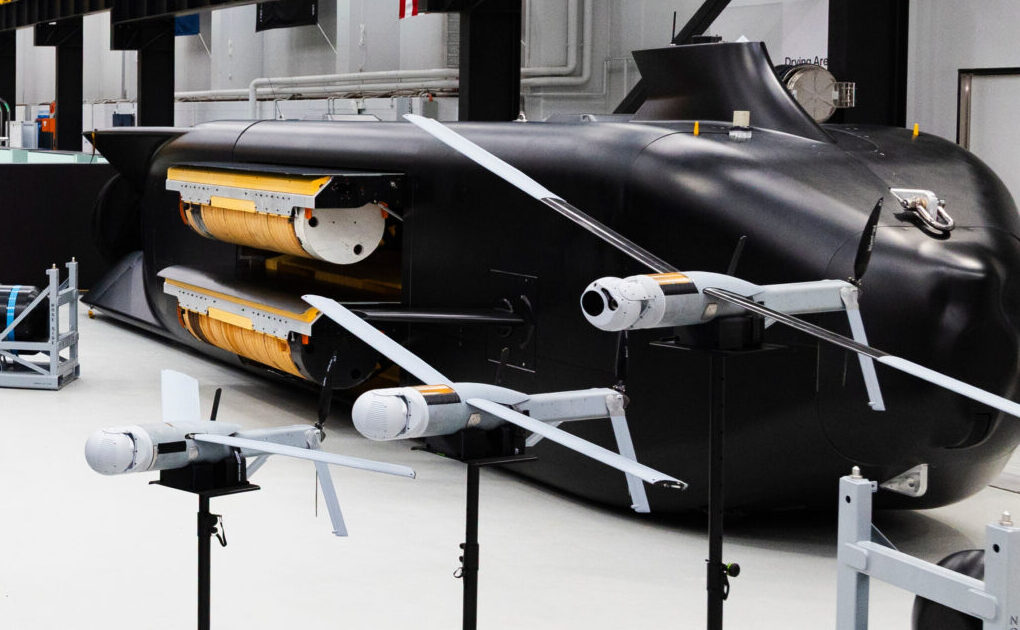
China’s actions may also alter Southeast Asian countries’ risk appetite. But Beijing’s behavior itself is a variable, not a constant. Its aggression against neighbors such as Vietnam and especially the Philippines is increasingly publicised and may tempt them to engage more closely with providers of maritime security. Chinese activities reach further, too: its survey drones fished out of Indonesian waters may strengthen arguments for region-wide capabilities for undersea domain awareness.
If the Quad partners seek to demonstrate their sensitivity to Southeast Asian interests and concerns, they should take every opportunity to consult with regional states directly. Next month’s Quad leaders’ summit in Manila may be one such opportunity, but it shouldn’t be the last. Continued Quad engagement with Southeast Asian countries – including through reciprocal invitations to Quad and ASEAN meetings – would allow the grouping to design and deliver maritime security activities for widest possible benefit to itself and the region.













Leave a comment