


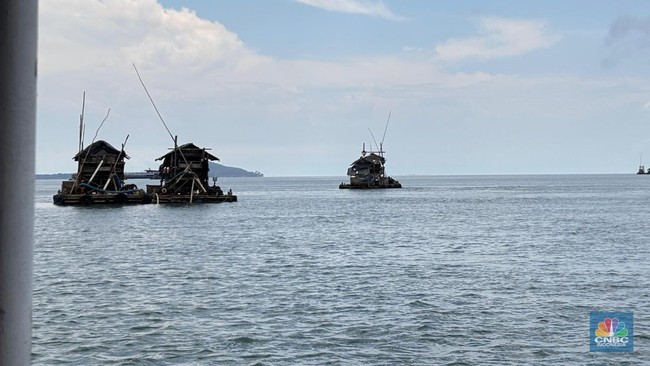
Indonesia’s defence policy is moving in two directions at once. Externally, it is pursuing procurement and modernisation while expanding defence diplomacy, training and international engagement. But domestically, its military focus is shaped by a broad understanding of security that encompasses food security, illegal mining and other civilian-facing priorities.
This dispersion of effort should prompt Canberra to consider Indonesia’s capacity for international military cooperation and to nail down with Jakarta just what the two countries can cooperate on. Building on their Jakarta Treaty, signed in February, they can focus on shared interests in securing archipelagic sea lanes as well as enhancing capability building, training and inter-force interoperability.
Both countries acknowledge that defence and security require a whole-of-government approach, but as an important defence partner of Indonesia, Australia must recognise that closer ties do not automatically translate into Indonesia becoming dependable for strengthening Australia’s northern defence environment and regional defence posture. Under fiscal pressure and Prabowo’s populist agenda, Jakarta’s domestic defence imperatives increasingly lie in expanding the military’s non-defence roles, which may limit its practical output on international cooperation.
Outwardly, Prabowo’s administration is ramping up Indonesia’s defence diplomacy and engagement. This is most visible in its relationship with Australia, particularly through the Jakarta Treaty, formally the Australia–Indonesia Treaty on Common Security. Indonesia has also strengthened defence cooperation with the United States, focusing on military modernisation and training, although recent debate over airspace access has raised sovereignty concerns.
In addition, Indonesia has accelerated procurement efforts, including the planned acquisition of the former Italian aircraft carrier Giuseppe Garibaldi, a deal with Prime Minister Narendra Modi to acquire Indian Brahmos supersonic cruise missiles, and a contract to buy 48 Kaan fighters from Turkish Aerospace Industries. Indonesia is also pursuing a broader naval procurement plan. Overall, Indonesia’s international engagement and procurement push signal Prabowo’s ambition to strengthen Indonesia’s defence capabilities while building greater trust and reliability with key regional partners.
However, Indonesia’s domestic defence priorities point in a different direction. Despite projecting itself externally as a modernising military, the defence establishment is increasingly focused on expanding the role of the armed forces in domestic governance and development.
Echoing Prabowo’s vision of self-reliance in food and agricultural security, the Ministry of Defence is executing its proposal of establishing 750 new territorial development battalions between 2025 and 2029. This requires a substantial expansion of personnel, with each battalion ideally given 1,000 members. Prabowo’s speeches and Ministry of Defence policy initiatives suggest that these battalions are among the government’s most tangible defence priorities. This reinforces longstanding concerns over the expanding role of the military in civilian affairs, with the armed forces increasingly functioning as a state instrument to implement domestic policy where civilian bureaucracy is perceived to be insufficient.
A clear indication of this inward-looking logic is the narrative shift framing the military as a ‘strategic force’, a concept that encompasses deployment in government priority programs, such as food security and resource governance. Another is the 2025 revision of military law, which expanded armed forces’ role in civilian affairs. These changes reflect Prabowo’s re-conceptualisation of military capacity, extending it beyond defence to support domestic state priorities.
The tension between external modernisation and internal deployment is sharpened by Indonesia’s fiscal constraints. The state budget is under pressure in the face of Prabowo’s populist programs and broader economic uncertainty, with the rupiah hitting its weakest historical level against the US dollar in June.
Under these conditions, Jakarta will find it increasingly difficult to achieve all its priorities at once. Without a clearer trade-off between external modernisation and domestic deployment, it risks stretching the defence agenda too widely and weakening the overall coherence of its planning. Eventually this will limit meaningful progress across all fronts.
This raises an important question for Australia–Indonesia defence cooperation. With the strongest political will focused on strengthening the Indonesian armed forces’ role in domestic non-military matters, attention and resources for defence cooperation may be limited. In light of this, Australia should be more specific about what it expects from Indonesia and capitalise on the momentum of the Jakarta Treaty to elevate the partnership.
Canberra should focus on maritime issues in which the two countries share genuine interests, particularly in securing the archipelagic sea lanes that link Indonesia to Australia’s northern approaches. While Australia cannot control Indonesia’s defence priorities, it can steer the partnership towards more practical capability-building, training and inter-force interoperability. This means developing integrated joint training focused on maritime surveillance, mobility, logistics and coordination across these waters, that matters for not just defence but also for the security of the strategic trade routes.









Leave a comment